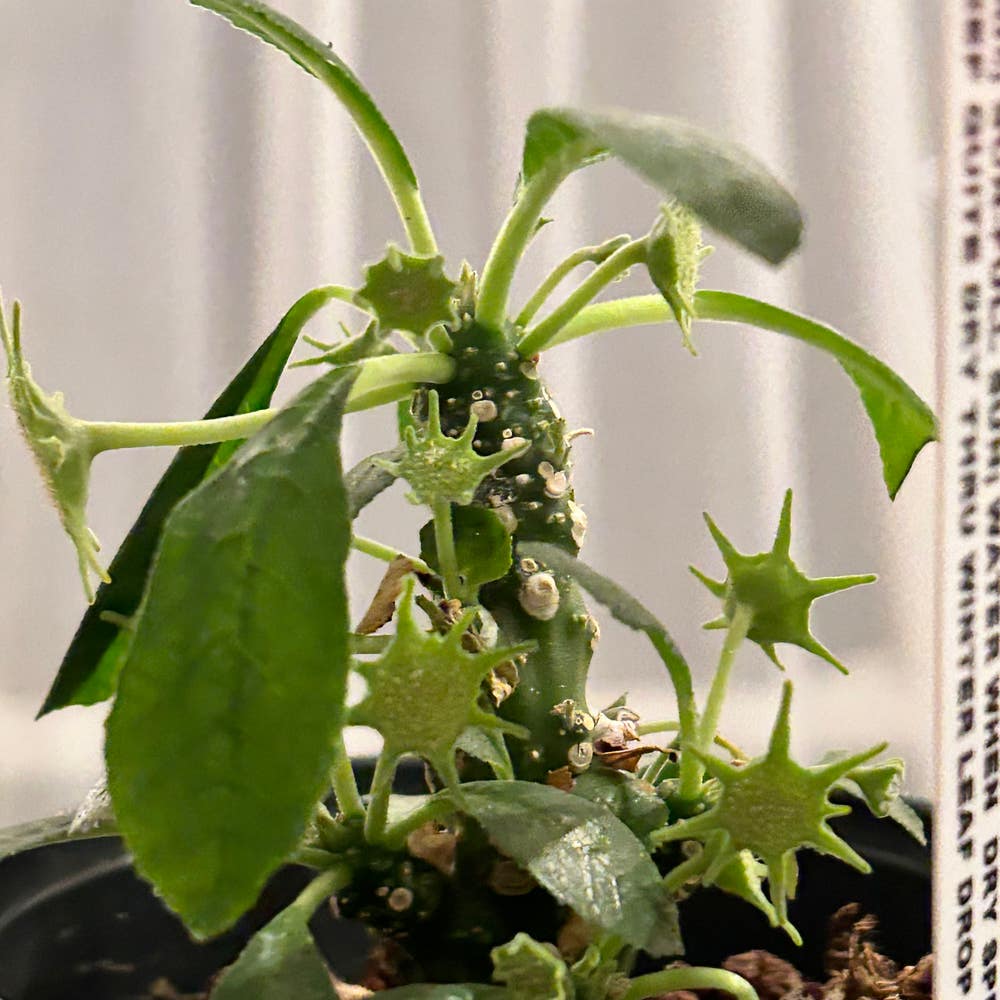
💧 How Much Humidity Does My Dorstenia horwoodii Need?
Dorstenia horwoodii
By the Greg Editorial Team
Apr 22, 2024•3 min read
This article was created with the help of AI so we can cover more plants for you. May contain errors. See one? Report it here.
- Ideal humidity for Dorstenia horwoodii: 40-50%.
- Crispy leaves and soggy stems signal incorrect humidity levels.
- Use hygrometers, pebble trays, and airflow to manage humidity.
Humidity: The Sweet Spot for Dorstenia horwoodii
💦 What Dorstenia horwoodii Craves
Dorstenia horwoodii, your green companion, thrives in humidity levels that mimic its native habitat. Aim for a relative humidity (RH) of 40-50%. This range is the sweet spot, keeping your plant perky without inviting unwanted moisture issues.
🌵 Signs of Humidity Distress
Crispy leaves? Your Dorstenia horwoodii is gasping for more humid air. On the flip side, soggy stems or a moldy base scream 'too much!' Keep a vigilant eye for these symptoms to maintain your plant's health.
🌡️ Quick Touch on Temperature
Temperature and humidity are in a tango; they move together. Warmer air can hold more moisture, which affects your plant's comfort. Ensure temperatures are stable to keep humidity levels in check, avoiding the shock of sudden changes.
Measuring and Adjusting Humidity for Your Plant
🌡️ Tools of the Trade
Hygrometers are your plant's BFF when it comes to humidity control. Think of them as little spies, gathering intel on the air's moisture levels. Placement is key—keep it near your Dorstenia horwoodii but away from sunlight or drafts that could mess with its readings.
📊 Making Sense of Readings
Interpreting your hygrometer's data is like decoding a secret message meant just for you and your plant. High numbers? You're in the rainforest zone. Low numbers? Welcome to the Sahara. Don't just glance at it and walk away; track the humidity over time to really understand what's happening in your plant's world.
Boosting Humidity: When Dorstenia horwoodii Wants More
💦 Creating a Mini Oasis
Pebble trays are the old-school yet effective method to give your Dorstenia horwoodii the humidity boost it craves. Here's how you do it:
- Select a tray that's wider than your plant's pot.
- Fill it with pebbles or stones.
- Add water until it's just below the top of the pebbles.
- Place your plant on top, ensuring it's not taking a dip.
This setup acts as a personal evaporative cooler, increasing the moisture in the air right where your plant needs it most.
🌿 The Power of Plant Buddies
Grouping plants together is like throwing a humidity potluck; everyone brings something to the table. Each plant releases moisture, which collectively raises the humidity level around them. It's a simple trick with a big payoff:
- Cluster your plants, but don't cram them. Airflow is still crucial.
- Think of it as a communal microclimate, a small-scale rainforest right in your living room.
By combining these strategies, you'll create a cozy, humid haven for your Dorstenia horwoodii to thrive in.
Lowering Humidity: When There's Too Much of a Good Thing
💨 Airflow is Your Friend
Open windows and fans are simple fixes to combat high humidity. They promote air movement, which is essential in preventing your Dorstenia horwoodii from feeling like it's living in a rainforest. Remember, good circulation is key to avoiding mold and fungal growth.
🌬️ The Dehumidifier Option
When humidity levels stubbornly hover above the ideal range, it's time to bring out the dehumidifier. This device acts as a moisture sentry, ensuring that your plant's environment remains within the comfort zone. Use it wisely to maintain the right balance; you're aiming for a tropical vibe, not a desert climate. Keep an eye on the hygrometer to avoid over-dehumidifying.
⚠️ Safety First
This content is for general information and may contain errors, omissions, or outdated details. It is not medical, veterinary advice, or an endorsement of therapeutic claims.
Always consult a qualified healthcare professional before using any plant as food, medicine, or supplement.
Never eat any plant (or feed one to pets) without confirming its identity with at least two trusted sources.
If you suspect poisoning, call Poison Control (800) 222-1222, the Pet Poison Helpline (800) 213-6680, or your local emergency service immediately.
Spotted an error? Please report it here.
Ensure your Dorstenia horwoodii thrives in ideal humidity with Greg's environmental tracking 🌡 and tailored care advice, avoiding crispy leaves or moldy woes.