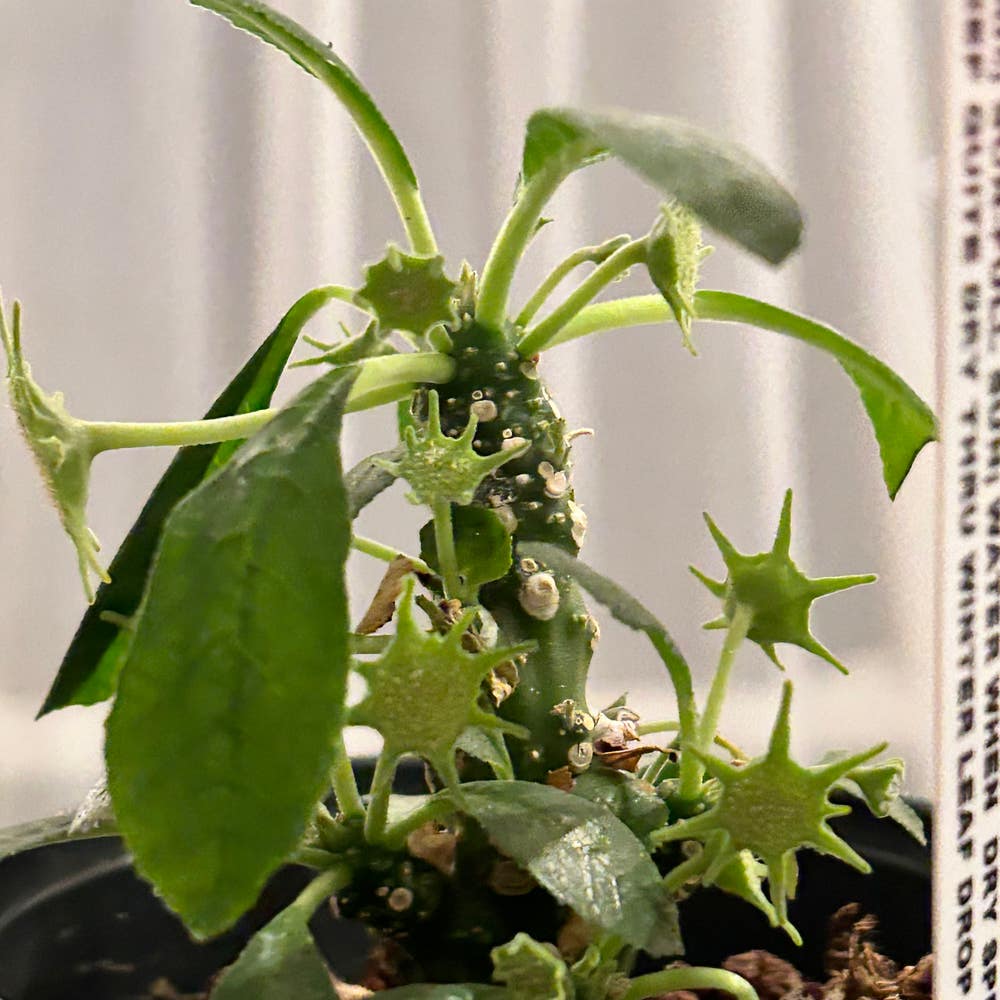
Why Are My Dorstenia horwoodii Leaves Curling?
Dorstenia horwoodii
By the Greg Editorial Team
Apr 22, 2024•5 min read
This article was created with the help of AI so we can cover more plants for you. May contain errors. See one? Report it here.
- 🌞 Bright, indirect light prevents leaf curling; rotate for even exposure.
- 💧 Water wisely—let topsoil dry out between waterings to avoid curling.
- 🐛 Pest control: Regular inspections and cleanliness keep bugs at bay.
When Light Levels Make Leaves Lament
Dorstenia horwoodii leaves curling could be a light issue. Too little light, and leaves start reaching out like a crowd-surfing plant desperate for the sun.
⛅️ Low Light: The Curl Culprit
Leaves curl in low light as a survival tactic. They're trying to increase their surface area to catch every possible photon. It's a plant's silent scream for more lumens.
🌞 The Sunlight Sweet Spot
Finding the right balance is key. Bright, indirect light is the Dorstenia horwoodii's jam. It's like the perfect pair of sunglasses—protection without missing out on the sunny goodness.
Rotate for Even Tan
Remember to rotate your plant regularly. This ensures all sides get their fair share of light, preventing the botanical equivalent of a lopsided tan.
💡 Grow Lights: The Indoor Sun
No sunny spot? Consider a grow light. It's like installing a mini sun in your living room, minus the heatstroke.
🚫 Avoiding the Scorched Leaf Scenario
Direct sunlight is a no-go. It's like putting your plant in the middle of a desert with a magnifying glass overhead. Bright, indirect sunlight for a few hours a day will keep your Dorstenia horwoodii from turning into a crispy critter.
Water Woes: Too Much or Too Little
💧 Recognizing the Red Flags
Overwatering turns your Dorstenia horwoodii into a sopping mess. Yellow leaves are the plant's white flag of surrender, while a soil that clings to your fingers like a needy pet is a sure sign you've been overzealous with the watering can. If the pot feels like it's been hitting the gym—too heavy—it's time to back off and let it breathe.
🏜️ Underwatering Symptoms
Conversely, underwatering leaves your plant looking more deflated than a balloon a week after the party. When the soil is as dry as yesterday's toast, and the leaves droop like they've just heard bad news, it's a clear cry for water. A pot lighter than your conscience after confessing your plant neglect is another tell-tale sign.
💦 Watering Wisdom
Establishing a watering routine is like finding the perfect coffee strength—it's personal and essential. Water deeply, but let the topsoil dry out to avoid root rot. Think of it as a plant's version of a good night's sleep—restorative but not endless. Adjust your approach with the seasons; plants are like us, their needs change throughout the year.
🌊 The Sweet Spot
Finding the right balance is key. After watering, your plant should look perky, not overwhelmed or still parched. If it perks up, you've hit the hydration sweet spot. Keep an eye on the leaves; they're better communicators than most people. Remember, consistency is king. Same time, same amount, same love. Your Dorstenia horwoodii will thank you with a flourish of happy, uncurled leaves.
Climate Control: Temperature and Humidity
🌡️ The Effects of Temperature Swings and Humidity on Leaf Curling
Temperature and humidity are like the yin and yang for Dorstenia horwoodii's well-being. Temperature swings can make leaves curl faster than a bad hair day in humidity. Aim for a stable 60-80°F (15-27°C) to keep your plant from throwing a tantrum. Humidity levels are equally pivotal; too low, and you'll have leaves crispier than autumn leaves, too high, and you're in a moldy mess territory. Keep it balanced, around 50-60%, to avoid the extremes.
🏡 Creating a Cozy Climate: Managing Your Plant's Environment
To create a climate haven, dodge drafts and give radiators the cold shoulder. Consistency is your new best friend. If your home's air is drier than a comedian's wit, consider a humidifier or a pebble tray. And remember, no plant enjoys a surprise chill, so keep those temperatures as steady as your love for coffee in the morning. Use gadgets like digital thermometers and hygrometers to be on top of your game. Your Dorstenia horwoodii will thank you with perfectly uncurled leaves.
Uninvited Guests: Pest Problems
🐜 Spotting the Culprits
Pests can turn your Dorstenia horwoodii from a lush green beauty into a curled-up mess. Spider mites, mealybugs, and aphids are the usual suspects. Look for fine webbing, white cottony substances, or sticky honeydew residue. These signs scream infestation and demand immediate attention.
🕵️ Pest Patrol Tactics
Natural defenses are your first line of defense. Ladybugs and lacewings are like the secret service for your plants, taking down aphids with precision. For a more hands-on approach, a gentle shower can dislodge the freeloaders, especially under the leaves where they love to hide.
💣 Chemical Warfare
When natural methods don’t cut it, it’s time for the big guns. Insecticidal soaps and neem oil are the snipers in the pest control world, targeting the pests without collateral damage. Apply with care and follow the instructions to avoid overkill.
🚨 Prevention is Key
Preventative measures are like a good home security system. Regular inspections act as your CCTV, catching pests before they become squatters. Keep the area clean and quarantine new plants to prevent any pest from thinking they've found a new home.
🌿 Environmental Adjustments
Sometimes, it's about creating an unwelcoming environment for pests. A slight decrease in humidity and an increase in airflow can make your plant a fortress against fungal allies of pests. It's all about giving your Dorstenia horwoodii the upper hand.
🍄 Fungus Foes
Watch out for fungus, the silent accomplice to pests. They thrive in the same conditions and can exacerbate the problem. A systemic fungicide can act as a preemptive strike, keeping your plant healthy and less appealing to pests and their fungal friends.
⚠️ Safety First
This content is for general information and may contain errors, omissions, or outdated details. It is not medical, veterinary advice, or an endorsement of therapeutic claims.
Always consult a qualified healthcare professional before using any plant as food, medicine, or supplement.
Never eat any plant (or feed one to pets) without confirming its identity with at least two trusted sources.
If you suspect poisoning, call Poison Control (800) 222-1222, the Pet Poison Helpline (800) 213-6680, or your local emergency service immediately.
Spotted an error? Please report it here.
Banish leaf curl and pests 🛡️ with Greg's custom light and watering plans, plus community advice to keep your Dorstenia horwoodii thriving!