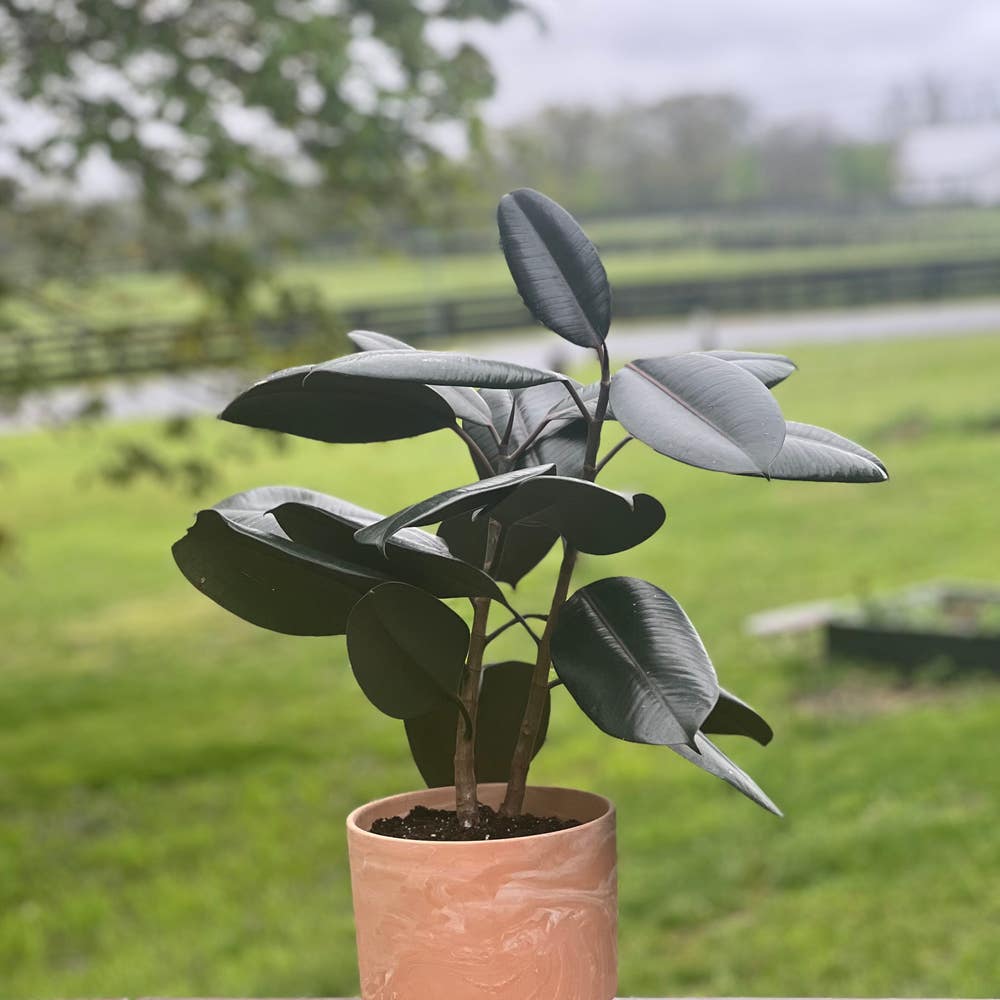
Propagating Your Burgundy Rubber Tree: Step-by-Step Guide
Ficus elastica 'Burgundy'
By the Greg Editorial Team
Jun 18, 2024•6 min read
This article was created with the help of AI so we can cover more plants for you. May contain errors. See one? Report it here.
Propagate your own lush 🌿 Burgundy Rubber Tree effortlessly with this fail-proof guide!
- 🌱 Air layering and stem cuttings are two effective propagation methods.
- Bright, indirect sunlight and patience are essential for rooting success.
- Proper moisture, warmth, and gentle transplanting ensure healthy growth.
Choosing Your Propagation Adventure
✂️ Air Layering: The High-Flying Method
Air layering isn't for the faint of heart—it's the high-wire act of plant propagation. Here's how to pull it off with your Burgundy Rubber Tree:
🌱 The Nitty-Gritty
- Select a branch that's healthy and about 1-2 inches thick. Think of it as picking a lead actor for your favorite play.
- Make an upward cut about one-third into the branch and a second cut an inch below, then remove the bark between them to expose the cambium.
- Apply rooting hormone if you have it—it's like giving your plant a motivational speech.
- Wrap the exposed area with moist sphagnum moss, then cover it with plastic wrap to create a mini greenhouse.
- Secure everything with twist ties or rubber bands, but don't go overboard—no one likes a tight squeeze.
- Wait for roots to show up like uninvited guests at a party—visible through the plastic wrap.
🏡 Keeping it Cozy
- Ensure the moss stays moist, like a sponge that's just right for wiping a counter.
- Keep your tree in a warm spot with indirect light, but not in the limelight—no scorching sunbathing sessions.
- Patience is key. Roots might take their sweet time, anywhere from 2-3 weeks to a few months.
🌿 Stem Cuttings: The Classic Approach
If air layering is a high-wire act, then stem cuttings are the trusty bicycle of propagation—reliable and straightforward.
✂️ Snip and Dip
- Choose a stem with a couple of leaves and whisper sweet nothings to it before giving it a clean snip.
- Strip the bottom leaves to create a bare stage about 2-4 inches long.
- Dip the cut end in rooting hormone—think of it as plant pixie dust.
🌱 Rooting for Success
- Plant the cutting in a moist potting mix, like tucking it into a cozy bed.
- Water just enough to keep the soil damp, not drenched—nobody enjoys soggy socks.
- Place the cutting in a spot with indirect light and wait for the magic to happen. Roots should start throwing a party in a few weeks.
Remember, whether you're walking the tightrope with air layering or cruising with stem cuttings, the goal is the same: new plant life. Keep your eyes peeled for roots, and don't let mold crash the party.

The Root of the Matter: Caring for Your New Plant Babies
🌞 The Perfect Spot: Finding the Ideal Location for Your Propagations
Bright, indirect sunlight is the VIP lounge for your Burgundy Rubber Tree babies. Direct sun is their nemesis, akin to a scorching day at the beach without an umbrella. Position them where the light is gentle yet generous, like the glow from a north-facing window or a spot shielded by sheer curtains.
🕰 The Waiting Game: How to Patiently Care for Your Cuttings and Air Layers
Patience isn't just a virtue; it's a necessity in the propagation game. Monitor moisture levels like a hawk—your plantlets crave a moist, not soggy, environment. Think of the potting mix as a moist cake, tempting but not dripping.
🌱 Air Layering Aftercare
For air-layered progeny, keep the sphagnum moss just right—Goldilocks would approve. A plastic wrap can help maintain humidity, but watch for condensation; it's the secret handshake indicating you're doing things right.
✨ Stem Cutting TLC
Stem cuttings are the introverts of the plant world; they need a warm, cozy corner to thrive. Temperature is their silent ally, with a sweet spot between 75° and 80°F. No bottom heat? Compensate with ambient warmth and keep the faith—roots take time, but they're worth the wait.
Remember, your green thumb is their lifeline. Keep the soil airy, the light kind, and the vibes positive. Soon enough, you'll witness the first tender shoots of success.

When Things Get Sticky: Troubleshooting Propagation Problems
🌱 Why isn't it rooting? Dealing with common propagation pitfalls
Propagation can be a fickle friend. When roots are more fantasy than reality, it's time for a reality check. First, scrutinize your watering habits. Overwatering is the root of all evil here—literally. It's a one-way ticket to root rot. Make sure your potting mix isn't holding onto water like a grudge.
Temperature and humidity are your cuttings' besties. If they're not in the sweet spot, your plants will throw a fit. Keep them warm, not hot, and moist, not drenched. Think of it as setting the mood for root romance.
✂️ To cut or not to cut: Making the call on when to start over
Sometimes, you've got to be ruthless. If your cutting is more brown mush than green machine, it's time to let go. Snip away the rot, and if there's nothing left, it's back to the drawing board. Remember, it's not failure—it's strategic retreat.
Clean tools are non-negotiable. Dirty shears are like inviting germs to a dinner party. Keep them sharp and sanitized to give your cuttings a fighting chance. And if you're not using a rooting hormone, consider it. It's like a pep talk for your plants' roots.
When you've tried it all and your cuttings still act like moody teenagers, remember: propagation is an art. Adjust one thing at a time, and watch how your green babies respond. With patience and a bit of sass, you'll get to the root of the problem.

The Big Move: Potting Your Propagated Burgundy Rubber Trees
🏡 Home Sweet Home: Choosing the Right Pot and Soil
When it's time to upgrade your Burgundy Rubber Tree's residence, think 'Goldilocks': a pot that's just right. Too large, and you're inviting a swamp; too small, and it's cramped quarters for your plant's roots. Drainage holes are non-negotiable—unless you're fond of root rot.
Opt for a pot that's a size up from your plant's current one, ensuring it's not swimming in excess soil. The soil itself should be a well-draining indoor mix, rich enough to welcome your plant's roots without holding onto water like a bad habit.
🕺 The Transplant Tango: How to Move Your New Plants Without a Hitch
When transplanting, it's all about the roots. Gently coax your plant from its current pot, maintaining the integrity of the root ball. If the roots are circling the pot, give them a little tease to encourage outward growth.
Settle your plant into its new pot at the same depth it was previously growing. This isn't a time for deep burials or high-rise living. Water thoroughly post-move, but skip the welcoming party with fertilizer—your plant needs time to acclimate to its new digs. Keep it in a bright spot, but shield it from the harsh midday sun to prevent leaf scorch.
⚠️ Safety First
This content is for general information and may contain errors, omissions, or outdated details. It is not medical, veterinary advice, or an endorsement of therapeutic claims.
Always consult a qualified healthcare professional before using any plant as food, medicine, or supplement.
Never eat any plant (or feed one to pets) without confirming its identity with at least two trusted sources.
If you suspect poisoning, call Poison Control (800) 222-1222, the Pet Poison Helpline (800) 213-6680, or your local emergency service immediately.
Spotted an error? Please report it here.
Ensure your Burgundy Rubber Tree cuttings thrive 🌿 with Greg's personalized reminders for ideal moisture and temperature, making propagation a breeze from this guide!