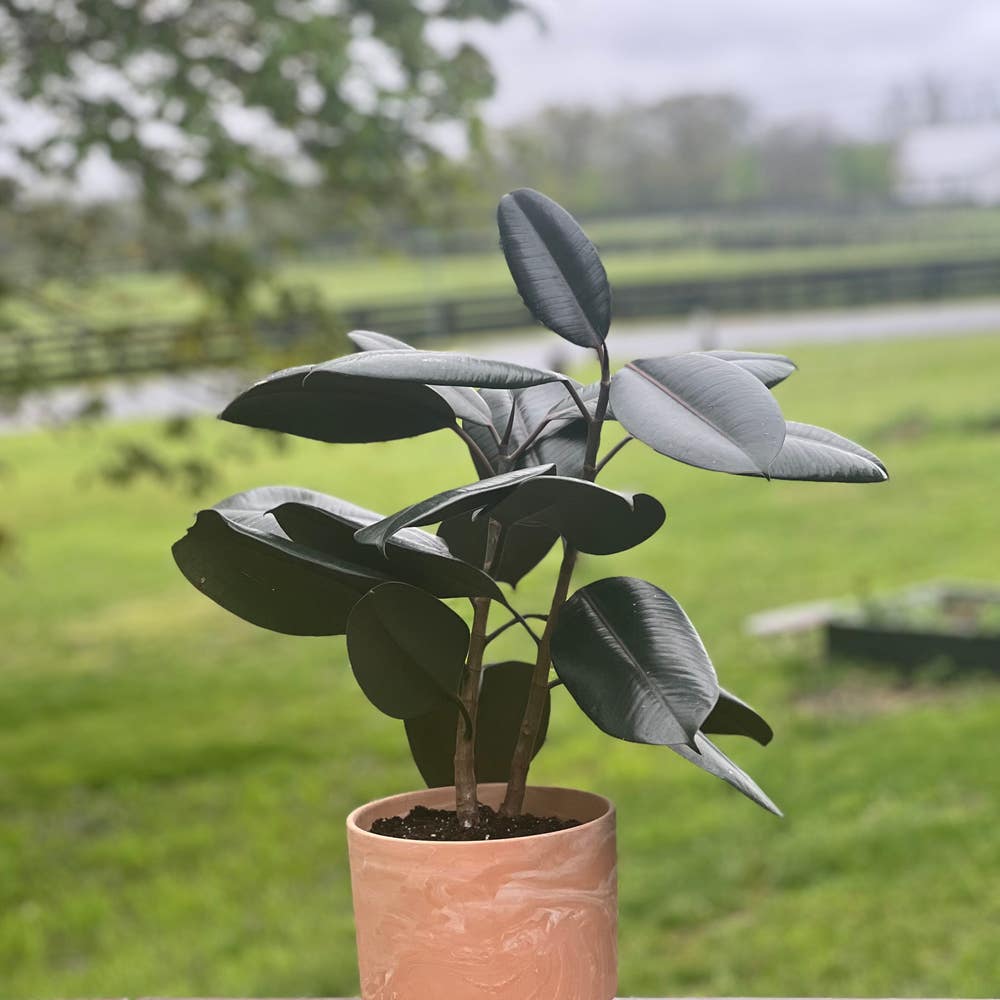
Best Soil for Burgundy Rubber Tree
Ficus elastica 'Burgundy'
By the Greg Editorial Team
Jun 18, 2024•4 min read
This article was created with the help of AI so we can cover more plants for you. May contain errors. See one? Report it here.
Unlock your Burgundy Rubber Tree's potential 🌿 with the ultimate soil mix for peak health and growth!
- 🌱 Mold, compaction, poor drainage signal soil issues for rubber trees.
- Ideal mix: peat moss, perlite, pine bark fines for balance.
- DIY vs. store-bought soil: control and customization versus convenience and cost.
Spotting Trouble: When Your Rubber Tree's Soil Goes Bad
🚩 Telltale Signs of Unhappy Soil
Mold on your soil is like a bad tattoo: it's a regrettable sign that something's gone awry. If your rubber tree's soil is sporting a fuzzy coat or smells like last week's gym socks, it's screaming for a change. Compaction is another buzzkill for roots; they need room to breathe, not a soil straitjacket. Poor drainage? That's the soil equivalent of a traffic jam. Water should flow through with ease, not pool on top like a lazy river.
🌿 The Impact on Your Leafy Friend
Bad soil doesn't just cramp your plant's style—it's a health hazard. Yellow leaves? Could be your soil's cry for help. Drooping, falling foliage is the plant's equivalent of waving a white flag. And if your rubber tree's growth is as slow as a snail on a salt flat, it's time to audit that dirt. Remember, root rot is the silent assassin here; it'll take down your plant's roots faster than a sinkhole. Keep an eye out for these red flags and act swiftly to prevent your leafy friend from becoming a botanical cautionary tale.

The Perfect Blend: Crafting Your Burgundy Rubber Tree's Ideal Soil Mix
🌱 Key Ingredients for Success
Creating the ideal soil mix for your Burgundy Rubber Tree is like being a chef in a gourmet kitchen. Peat moss is your base, holding moisture like a sponge. Perlite steps in as the drainage maestro, ensuring your tree's roots aren't swimming 24/7. Lastly, pine bark fines keep the mix light and airy, giving roots the room they need to stretch out.
Mixing It Right
The secret sauce is in the ratios: aim for a mix of 2 parts peat moss, 1 part perlite, and 1 part pine bark fines. This concoction strikes the right balance between moisture retention and drainage. When mixing, think of it as a ritual; combine the ingredients with the reverence of a tea ceremony, ensuring each particle is evenly distributed. If the mix clumps when squeezed, channel your inner Goldilocks—it's too wet. Add more perlite. If it falls apart like a house of cards, it's too dry; sprinkle in more peat moss. Your goal is a mix that holds together with a gentle squeeze but breaks apart without a fuss, like a tender, flaky pie crust.

Store-Bought vs. Homemade: Soil Mix Showdown
🌱 Evaluating Commercial Mixes
When you're eyeing commercial soil mixes, think of them as the fast food of the plant world—quick, convenient, but not without their downsides. Check the label like you're deciphering a secret code: you want a mix that boasts good drainage and is light as a feather, hinting at aeration excellence. Organic matter should be a given, not a luxury, so peat moss or compost on the ingredients list is a green thumbs-up.
The Pros and Cons
Store-bought mixes are the plant parent's shortcut, saving you time and sparing you from dirt under your nails. Brands like Sol Soils and Bonsai Jack are praised for their sharp drainage, but remember, the price tag might make your wallet wince. On the flip side, DIY soil mixing is your ticket to full control—tweak the ratios of potting soil, coarse sand, and perlite until you hit the jackpot for your Burgundy Rubber Tree. It's a dirt-cheap option, but it'll cost you in time and effort.

Reviving Your Rubber Tree: Fixing Soil Fiascos
🌱 Out with the Old
When your rubber tree's soil has gone south, it's time for a reboot. Replace the soil when repotting to tackle compaction and potential diseases head-on. If leaves have ditched their waxy sheen for a crisp feel or are curling like a shy fern, your soil mix might be the culprit.
Swap it out with a blend that strikes a balance between moisture retention and drainage. If your plant has bulked up since the last potting, consider a sandier mix to support its new heft.
🛡️ Prevention Is Key
Keep your soil game strong and avoid future mishaps with regular check-ups. Stick a finger in the soil; if it's damp past the first knuckle, hold off on the watering can.
Aerate the soil occasionally to prevent compaction and ensure roots can breathe. If you're dealing with a case of overwatering, let the soil dry out before you give it another drink.
Remember, your rubber tree craves consistency, so keep that soil mix uniform and your watering schedule predictable. And if all else fails, don't be afraid to start fresh with a new pot and a clean slate of soil.
⚠️ Safety First
This content is for general information and may contain errors, omissions, or outdated details. It is not medical, veterinary advice, or an endorsement of therapeutic claims.
Always consult a qualified healthcare professional before using any plant as food, medicine, or supplement.
Never eat any plant (or feed one to pets) without confirming its identity with at least two trusted sources.
If you suspect poisoning, call Poison Control (800) 222-1222, the Pet Poison Helpline (800) 213-6680, or your local emergency service immediately.
Spotted an error? Please report it here.
Ensure your Burgundy Rubber Tree thrives 🌱 with Greg's personalized reminders for soil moisture balance and check-ups, keeping your plant's roots happy and healthy.