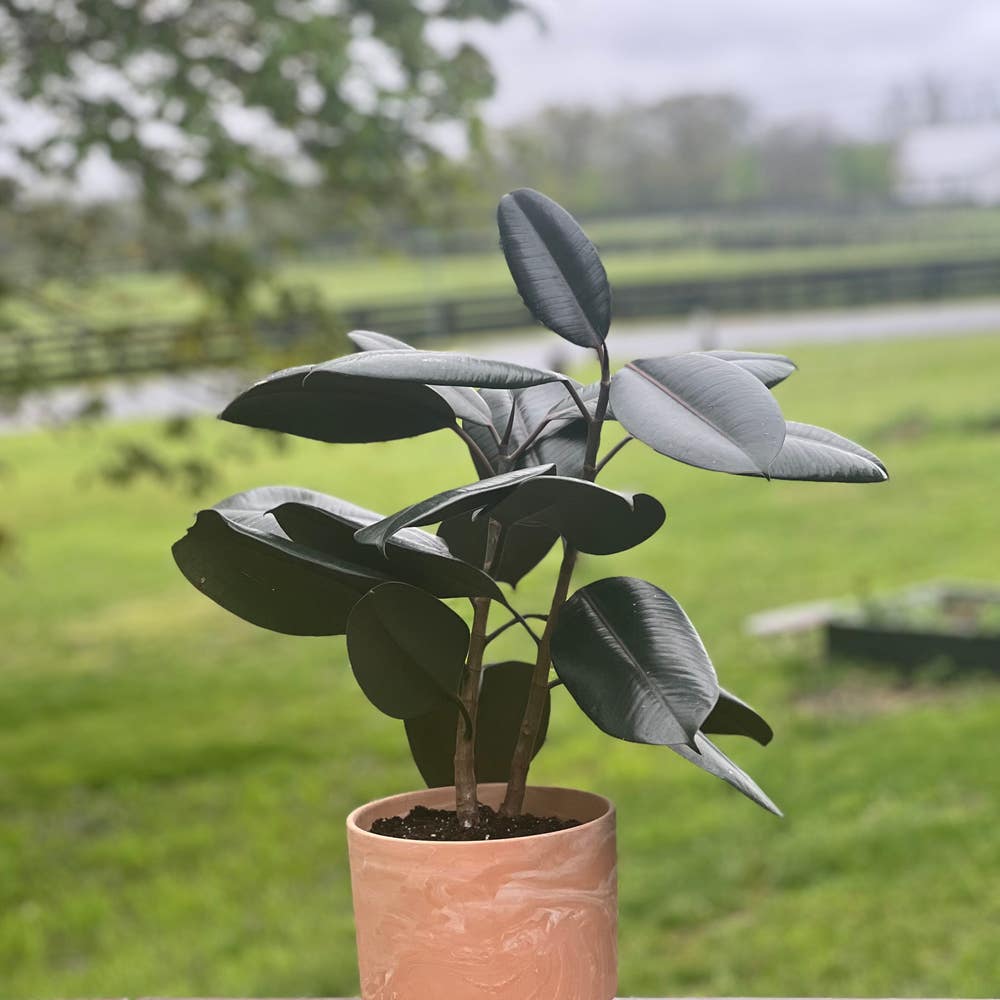
Why Are My Burgundy Rubber Tree Leaves Curling?
Ficus elastica 'Burgundy'
By the Greg Editorial Team
Jun 18, 2024•4 min read
This article was created with the help of AI so we can cover more plants for you. May contain errors. See one? Report it here.
Unravel the mystery behind curling Rubber Tree leaves and revive your plant's splendor! 🍃🔍
- Over/underwatering and poor drainage can lead to leaf curling.
- 🌡️🌿 Stable temperatures and humidity are vital for healthy leaves.
- Pests, diseases, and nutrient deficiencies also cause leaves to curl.
Spotting the Signs: Leaf Curling in Action
🍃 Visual cues of leaf curling
Crisp edges and a scroll-like appearance are the unmistakable hallmarks of leaf curling in your Burgundy Rubber Tree. When leaves take on the look of a gymnast's ribbon, it's a clear signal that your plant is in distress.
🤔 Common misconceptions about leaf curling
It's a common blunder to misread the leaf's message; curling isn't just a quirky trait but a cry for help. Overlooking this can lead to a cascade of care mistakes. Remember, leaf curling is less about plant aesthetics and more about an urgent botanical SOS.

Thirsty Roots or Drowning? Watering Woes Unraveled
🚰 The fine line between overwatering and underwatering
Overwatering and underwatering can send your Burgundy Rubber Tree into a spiral of despair. It's like walking a tightrope; lean too much on either side, and you're in for a tumble. Overwatered roots are like party guests who've overstayed their welcome—they're just too much. Underwatered roots, on the other hand, are the forgotten hermits, parched and desperate for a drop.
💧 Checking soil moisture: Tips and tricks
Moisture meters are like a plant's best friend—they tell you exactly what's going on beneath the surface. No meter? No problem. Stick your finger into the soil up to the second knuckle. If it feels like a dry handshake, it's time to water. If it's damp, like a sponge that's been wrung out, hold off. Remember, consistency is your ally in the battle against leaf curl.
🛁 The role of drainage in preventing soggy soil
Drainage is the unsung hero in the world of plant care. Ensure your pot has holes that are free-flowing, not clogged up like city traffic. A pot without proper drainage is like a bathtub without a plug—it's just going to fill up and drown everything inside. Keep your soil loose and airy, and your Burgundy Rubber Tree will reward you with the perkiest of leaves.

It's Not You, It's the Climate: Environmental Tweaks for Happy Leaves
🌞 The Goldilocks Zone: Light and Temperature for Burgundy Rubber Trees
Your Burgundy Rubber Tree craves stability in its life—especially when it comes to light and temperature. Aim for a steady 65°-85°F (18.3°-29.4°C) to avoid temperature tantrums. Bright, indirect light is the sweet spot; too little and it gets leggy, too much and the leaves throw a fit. Think of it as the plant version of a cat basking in the afternoon sun—totally content, not a care in the world.
💦 Humidity Hacks: Keeping Your Plant from Getting Thirsty
Humidity is like your plant's favorite drink—it can't get enough of it. But too much, and it's like a bad hangover. Keep it comfortable with a humidity level around 40-50%. If your air's drier than a stand-up comedian's wit, consider a humidifier. Or, go old school with a pebble tray—just make sure it's not a breeding ground for mosquitoes. Remember, consistency is key; your plant's not looking for a spa day, just a stable environment to thrive in.

Unwanted Guests: Tackling Pests and Diseases
🐛 Identifying critters that make leaves curl
Mealybugs, spider mites, and aphids are the usual suspects when it comes to leaf curling. They're like the obnoxious neighbors who show up uninvited and refuse to leave. Check for sticky residues, webbing, or the pests themselves; they're not exactly masters of disguise.
🌱 Root rot: A silent leaf curler
Root rot is the ninja of plant problems—silent and devastating. It's a sign you've been too generous with water or your plant's drainage is as effective as a sieve with no holes. Look for wilting, yellowing leaves, or a mushy base to catch this silent leaf curler in action.
🛡️ Prevention and treatment: Keeping pests and diseases at bay
Prevention is your best weapon. Regularly inspect your plant like it's a top-secret mission, and ensure good drainage to avoid waterlogged soil. If pests crash the party, show them the door with insecticidal soap or neem oil. For root rot, trim the affected roots and repot in fresh soil. Remember, it's a marathon, not a sprint; stay vigilant.
Feeding Finesse: Nutrients for Non-Curly Leaves
🔍 Spotting signs of nutrient deficiencies
Yellow leaves scream nitrogen shortage. Burned edges? Your plant's begging for potassium. It's like being a plant detective, decoding distress signals in the foliage.
🌱 The best fertilizers to prevent curling leaves
Grab a balanced, water-soluble fertilizer—think of it as a plant's three-course meal. But remember, moderation is key. Over-fertilization is like a food coma for your plant—unpleasant and unhealthy.
🌿 Soil amendments for long-term health
Soil testing is not optional; it's like reading the recipe before you bake. Know what's missing and serve up the right nutrients. Consider slow-release fertilizers for a steady diet, avoiding those nutrient spikes that can cause more harm than good.
⚠️ Safety First
This content is for general information and may contain errors, omissions, or outdated details. It is not medical, veterinary advice, or an endorsement of therapeutic claims.
Always consult a qualified healthcare professional before using any plant as food, medicine, or supplement.
Never eat any plant (or feed one to pets) without confirming its identity with at least two trusted sources.
If you suspect poisoning, call Poison Control (800) 222-1222, the Pet Poison Helpline (800) 213-6680, or your local emergency service immediately.
Spotted an error? Please report it here.
Keep your Burgundy Rubber Tree thriving 🌿 with Greg's custom watering schedule and pest alerts, ensuring your plant gets the perfect amount of TLC to prevent those pesky leaf curls.