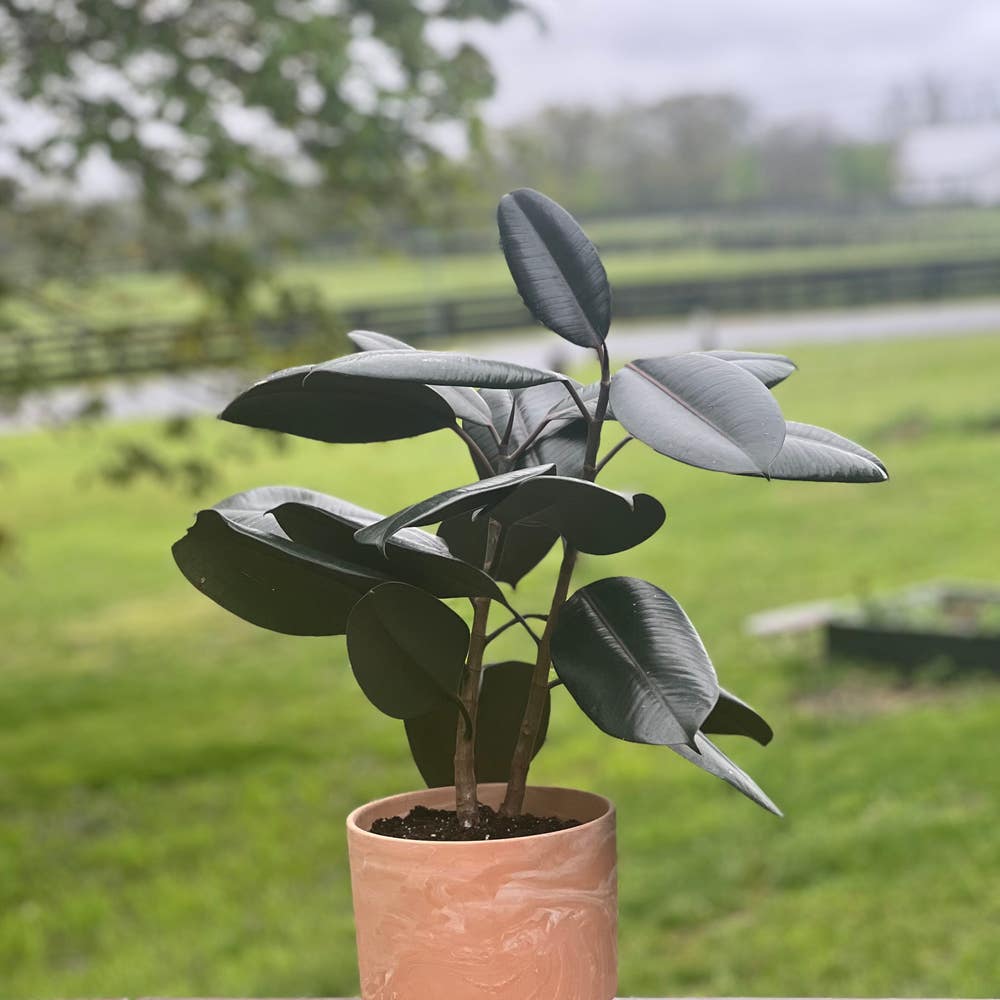
Fertilizing My Burgundy Rubber Tree to Double Its Growth
Ficus elastica 'Burgundy'
By the Greg Editorial Team
Jun 18, 2024•4 min read
This article was created with the help of AI so we can cover more plants for you. May contain errors. See one? Report it here.
Discover how to double your Rubber Tree's size 🌿 with the perfect fertilizing strategy—growth guaranteed!
- N-P-K ratio matters for balanced nutrition; 10-10-10 is a solid choice.
- Seasonal fertilizing boosts growth; more in spring/summer, less in winter.
- Monitor and adjust based on plant health; avoid over-fertilization signs.
Picking the Perfect Fertilizer
🌿 Balanced Diet for Your Burgundy Beauty
The N-P-K ratio is like the nutrition label for your plant's meal. For your Burgundy Rubber Tree, a balanced diet is key, and a 10-10-10 ratio is a solid choice. This ensures your leafy friend gets equal parts nitrogen for lush leaves, phosphorus for strong roots, and potassium for overall health.
💧 Liquid gold: Using balanced liquid fertilizers
Liquid fertilizers are the quick-fix snack for your plant, offering nutrients that are readily available. Apply them after watering to avoid chemical burns and to give your Rubber Tree a growth kick.
⏳ Time-release treasures: When to opt for slow-release granular fertilizers
Granular fertilizers are the steady meal, slowly releasing nutrients over time. They're a set-it-and-forget-it solution, perfect for the plant parent who prefers a low-maintenance approach to plant care.
🌱 Organic vs. Synthetic: Making the Right Choice
Organic fertilizers are the gourmet option, made from all-natural ingredients, and they're kinder to the soil. They might cost more, but they're a long-term investment in your plant's health. Synthetic fertilizers, on the other hand, are the fast food of plant nutrition—cheap, quick, and effective, but use them with caution to avoid over-fertilization.

Timing is Everything: When to Fertilize
🌱 Growth Spurts and Dormant Dreams
Growth cycles dictate your Burgundy Rubber Tree's appetite for nutrients. Fertilize when it's in the throes of a growth spurt, typically spring and summer, to maximize impact. This is when your plant is most receptive to the extra nourishment, using it to churn out those lush, burgundy leaves.
📅 Seasonal Smarts: Adapting Your Fertilizing Schedule
Spring is your cue to ramp up the feeding schedule. It's like flipping the switch for your Rubber Tree to enter beast mode, growth-wise. During this time, a monthly dose of a balanced fertilizer can lead to a significant size increase.
Come winter, it's time to ease off. Your plant's metabolism slows down, like a bear hibernating. Continuing a heavy fertilizing regimen during this time can do more harm than good. It's the plant equivalent of force-feeding, which can lead to nutrient burn or worse.

Application Mastery: Techniques for Top Growth
💦 The Art of Liquid Fertilizer Application
Liquid fertilizers are the espresso shots of plant nutrition—fast-acting and potent. To apply, mix with water as directed and drench the soil at the base of your Burgundy Rubber Tree. This ensures the roots get a direct hit of nutrients, leading to immediate growth results. Remember, even coverage is key, so don't just pour in one spot.
🌱 Granular Goodness: Getting It Right
Granular fertilizers are the slow-release marathon runners in the nutrient game. Sprinkle them on the soil surface, near the base of your plant, not directly on the foliage. Watering activates them, so keep the soil consistently moist to unlock their long-term growth benefits. It's a set-it-and-forget-it approach, but don't actually forget to check moisture levels regularly.

Keeping an Eye Out: Monitoring and Adjusting
🌱 Growth Check-ins: What to Look For
Your Burgundy Rubber Tree can't slide into your DMs, but it's communicating through its leaves. Lush, deep burgundy leaves signal your green thumb is on point. If the leaves are a pale imitation of their former glory, it's time to reassess your fertilizing strategy.
🌿 Tweaking the Menu: When to Adjust Fertilization
Like a DJ fine-tuning a mix, adjust your fertilizing approach based on your plant's feedback. If growth is more sluggish than a Monday morning, it might be craving more nutrients. Conversely, if the leaves start to look like they've had too much sun, dial back on the fertilizer. Keep it balanced – your plant's growth is a testament to your care.
The No-Nos: Avoiding Over-Fertilization
🚫 Spotting Trouble: Early Warning Signs
Leaf burn is your Rubber Tree's cry for help. If you notice the tips and margins turning brown, it's time to rethink your fertilizing strategy. Crusty white salts on the soil surface are another telltale sign you've gone too far. These symptoms are the plant's equivalent of waving a white flag.
🤦♂️ Oops, Too Much! Now What?
When you've crossed the line into over-fertilization, it's not the end of the world. Flush the soil with water to dilute the excess nutrients. Pruning damaged leaves is like hitting the reset button—it won't undo the past, but it sets the stage for healthier growth. Remember, moderation is key. It's easier to ramp up feeding than to fix an overfed plant. Keep a close eye on your Rubber Tree post-intervention; it'll show you whether you're back on track.
⚠️ Safety First
This content is for general information and may contain errors, omissions, or outdated details. It is not medical, veterinary advice, or an endorsement of therapeutic claims.
Always consult a qualified healthcare professional before using any plant as food, medicine, or supplement.
Never eat any plant (or feed one to pets) without confirming its identity with at least two trusted sources.
If you suspect poisoning, call Poison Control (800) 222-1222, the Pet Poison Helpline (800) 213-6680, or your local emergency service immediately.
Spotted an error? Please report it here.
Nurture your Burgundy Rubber Tree to its fullest potential with balanced fertilization 🌿, and rely on Greg to tailor your plant's feeding plan for vibrant, healthy growth.