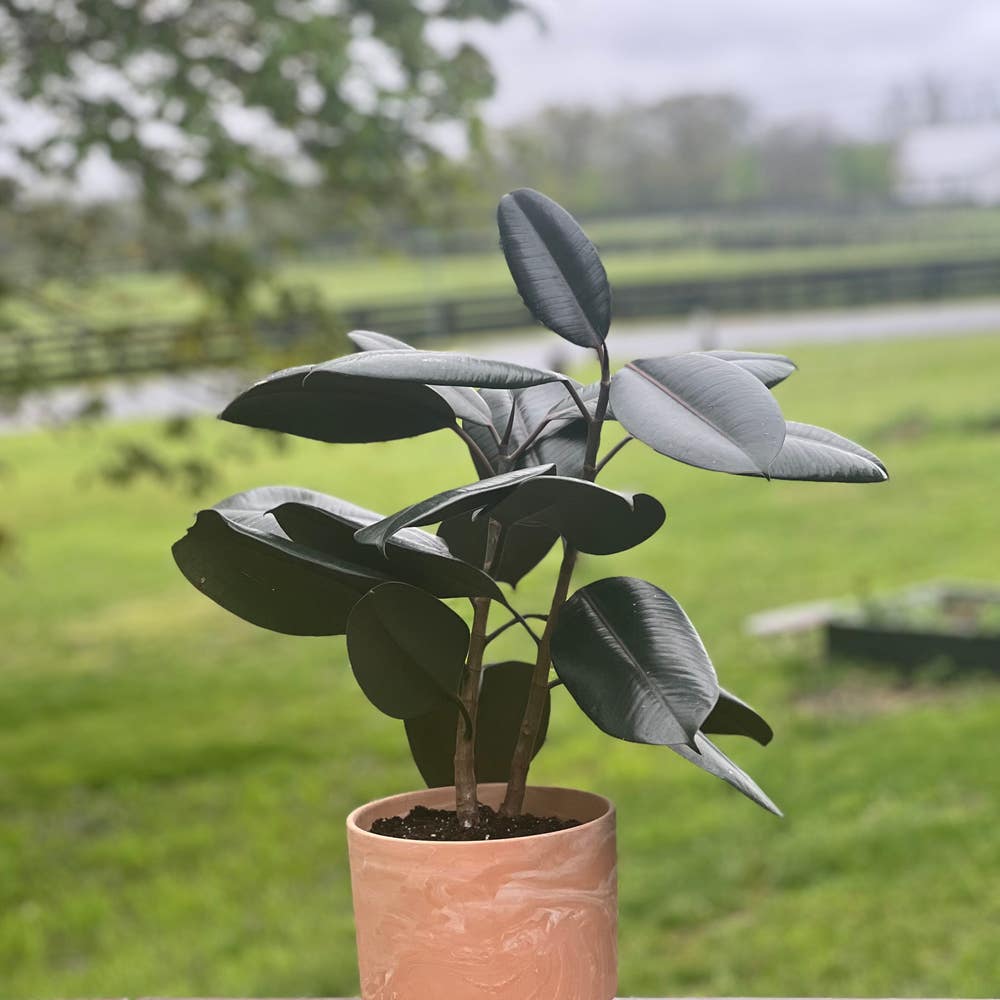
Why Are My Burgundy Rubber Tree Leaves Turning Yellow? 🍂
Ficus elastica 'Burgundy'
By the Greg Editorial Team
Jun 18, 2024•3 min read
This article was created with the help of AI so we can cover more plants for you. May contain errors. See one? Report it here.
Prevent the dismay of yellow leaves and ensure your Rubber Tree thrives with these essential care tips! 🌿🛠️
- 💦 Inconsistent watering leads to yellow leaves; check soil moisture regularly.
- 🌞 Bright, indirect light is key to keeping Rubber Tree leaves green.
- 🌡️ Warm, humid climate and balanced fertilizing prevent stress-induced yellowing.
Pinpointing the Culprits Behind Yellow Leaves
💧 Inconsistent Watering Habits
Overwatering and underwatering can send your Burgundy Rubber Tree into a yellow-leaf spiral. Check the soil; if the top few inches are dry, it's time to water. Ensure your pot has good drainage to avoid soggy soil situations.
🌞 Light Exposure: Finding the Sweet Spot
Your plant's leaves might be crying out for help with a yellow hue if the light's not right. Aim for bright, indirect light—too much sun can scorch leaves, while too little can lead to a lackluster display of greenery.
🌡️ Temperature and Humidity: Creating a Comfort Zone
Rubber Trees don't appreciate the cold shoulder. Keep them in a warm, humid environment to prevent stress-induced yellowing. Think tropical, not tundra.
🍽️ Nutrient Balance: Feeding Your Plant Right
Yellow leaves can signal a nutrient deficiency. A balanced fertilizer, used sparingly, can turn things around. But remember, too much of a good thing can lead to overfertilization and its own set of problems.

Turning Over a New Leaf: Remedies and Adjustments
💧 Fine-Tuning Watering Techniques
Overwatering and underwatering can send your Rubber Tree into a yellow-leaf spiral. To hit the moisture sweet spot, water when the top inch of soil feels dry. Ditch the routine; your plant's thirst varies with the seasons. Use a moisture meter if you're not confident about the finger-test.
🌞 Shifting to the Perfect Light
Your Rubber Tree craves bright, indirect light. Too much sun can scorch leaves, causing yellowing. Too little, and they'll lose their luster. Find a spot where the light is just right—think of a space near a window with sheer curtains. Rotate the plant occasionally for even growth.
🌡️ Stabilizing Your Tree's Climate
Rubber Trees don't appreciate the cold shoulder. Keep them away from drafts and maintain a room temperature between 60-75°F. Humidity matters too; if your home's air is drier than a stand-up comedian, consider a humidifier or a pebble tray to up the ante.
🌿 Nutritional Supplements: Fertilizing Wisely
Yellow leaves can signal a cry for nutrients. Use a balanced, water-soluble fertilizer every few months, but don't go overboard—overfeeding can harm more than help. If you suspect a specific deficiency, like manganese, targeted supplements can turn things around. Remember, moderation is key.

Keeping the Green: Preventive Practices
📅 Establishing a Tailored Care Schedule
Consistency is your Rubber Tree's best friend. To fend off yellow leaves, sync your care routine with the plant's natural rhythms. Adjust watering to match seasonal shifts—less in winter, more in summer. Fertilize with a measured hand; your plant prefers a steady diet over a feast-or-famine approach.
👩⚕️ Regular Health Check-Ups
Vigilance is key. Regularly inspect your Rubber Tree for early signs of distress. Yellowing leaves can be the first whisper of an issue. Act swiftly to tweak care practices, and you might just nip problems in the bud. Remember, your plant communicates through its leaves—make sure you're fluent in its language.

⚠️ Safety First
This content is for general information and may contain errors, omissions, or outdated details. It is not medical, veterinary advice, or an endorsement of therapeutic claims.
Always consult a qualified healthcare professional before using any plant as food, medicine, or supplement.
Never eat any plant (or feed one to pets) without confirming its identity with at least two trusted sources.
If you suspect poisoning, call Poison Control (800) 222-1222, the Pet Poison Helpline (800) 213-6680, or your local emergency service immediately.
Spotted an error? Please report it here.
Banish yellow leaves and keep your Rubber Tree thriving 🍃 with Greg's personalized watering reminders and light metering, plus get community support for any plant care hiccups!