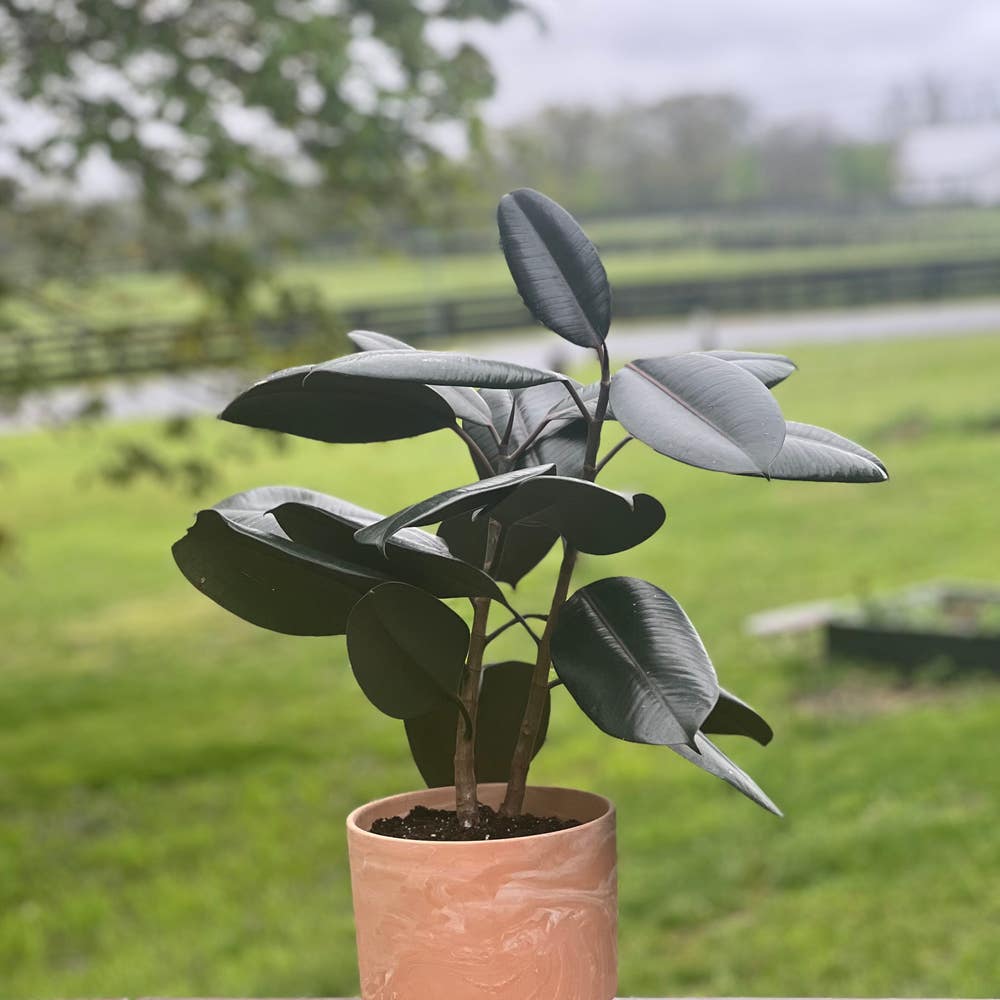
🌡 What Temperature Should My Burgundy Rubber Tree Be Kept At?
Ficus elastica 'Burgundy'
By the Greg Editorial Team
Jun 18, 2024•3 min read
This article was created with the help of AI so we can cover more plants for you. May contain errors. See one? Report it here.
Ensure your Burgundy Rubber Tree's health and beauty by mastering its ideal climate 🌡️🍃.
- Ideal range 60-75°F (15-24°C) for a happy Burgundy Rubber Tree.
- Consistent temperature prevents stress, use thermometers for monitoring.
- Avoid drafts and direct sunlight, relocate gradually for seasonal changes.
Keeping It Just Right: The Ideal Temperature Range
🌡️ What Your Burgundy Rubber Tree Loves
60-75°F (15-24°C) is the sweet spot for your Burgundy Rubber Tree. It's not just a preference; it's a necessity for robust health and vibrant leaves.
Consistency is Key
Stability in temperature doesn't just make your plant happy; it prevents a world of stress. Think of it as the plant equivalent of not having to switch between shorts and a parka.
Tips for Temperature Control
- Thermometers are your truth-tellers. Place one near your plant to keep a vigilant eye on the temperature.
- Smart thermostats can automate comfort, ensuring your plant's environment stays consistently in the Goldilocks zone.
- Avoid placing your plant near drafty windows or heat sources like radiators, which can cause harmful fluctuations.
- During temperature extremes, relocate your plant to a more temperate area of your home—your plant will silently thank you.

When Your Plant Feels the Heat: Recognizing Temperature Stress
🌡️ Telltale Signs of Discomfort
Leaf wilting and browning are your Burgundy Rubber Tree's way of saying, "I'm not okay." These symptoms, along with leaf drop, are distress signals you can't afford to ignore.
🥵 Extreme Temperature Woes
Scorching heat can push your plant to the brink, causing leaves to crisp up or the plant to drop them like hot potatoes. Conversely, cold snaps can lead to dark, mushy spots, as if your plant's leaves are throwing in the towel.

Avoiding the Shivers and Sweats: Preventing Temperature Stress
🌬️ Draft Dodging
Drafts are the silent saboteurs of indoor plant health, sneaking in chills and heat waves that can leave your Burgundy Rubber Tree in distress. To shield your leafy friend from these invisible foes, keep it away from areas prone to drafts, such as near doors, windows, or air conditioning vents.
🌡️ Smooth Transitions
Plants, much like people, prefer a steady state over a roller coaster of temperature changes. When relocating your Burgundy Rubber Tree, do it gradually. Think of it as acclimating to a new culture—slow and steady wins the race. This approach minimizes the risk of temperature shock, which can cause your plant to send out distress signals in the form of drooping or shedding leaves.

Seasonal Shifts: Helping Your Plant Adapt
❄️ Winter Warmth
During the winter months, your Burgundy Rubber Tree's growth may slow as it enters a dormant phase. Toasty temperatures are key to keeping it comfortable. Ensure your plant is situated away from icy windows and cold drafts that can mimic its natural tropical habitat's never-winter. Consider a space heater for added warmth, but keep it at a safe distance to avoid leaf scorch.
☀️ Summer Strategies
When summer hits, your Burgundy Rubber Tree can feel like it's in a sauna. Avoid direct sunlight that can turn leaves crispy. Think of a sheer curtain as sunscreen for your plant, diffusing harsh rays. Increase watering slightly—imagine giving your plant a refreshing spritz, not a bath. And remember, your plant's thirst for water increases with the temperature.
💦 A Quick Note on Humidity
Humidity is the sidekick to temperature—get it right, and your plant thrives. Burgundy Rubber Trees prefer it on the drier side, so skip the misting. Excess moisture can invite fungi to the party, and nobody wants that. If you're using a humidifier to combat dry indoor air, monitor closely to maintain that delicate balance.
⚠️ Safety First
This content is for general information and may contain errors, omissions, or outdated details. It is not medical, veterinary advice, or an endorsement of therapeutic claims.
Always consult a qualified healthcare professional before using any plant as food, medicine, or supplement.
Never eat any plant (or feed one to pets) without confirming its identity with at least two trusted sources.
If you suspect poisoning, call Poison Control (800) 222-1222, the Pet Poison Helpline (800) 213-6680, or your local emergency service immediately.
Spotted an error? Please report it here.
Keep your Burgundy Rubber Tree happy 😌 by using Greg to monitor your home's climate, ensuring it stays within the ideal temperature sweet spot!