Why Are My Burgundy Rubber Tree Leaves Droopy? 🥀
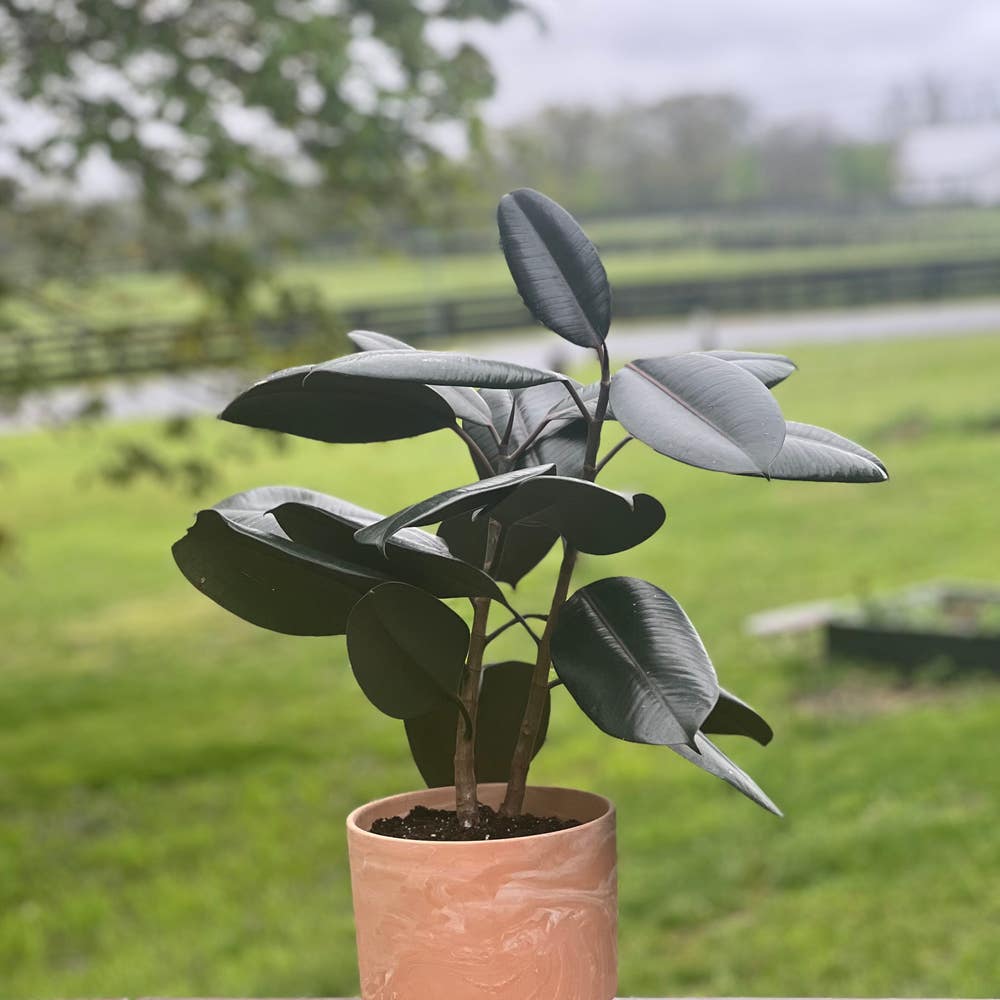
Ficus elastica 'Burgundy'
By the Greg Editorial Team
Jun 18, 2024•7 min read
This article was created with the help of AI so we can cover more plants for you. May contain errors. See one? Report it here.
Rescue your Rubber Tree from droopiness with the right care balance—vital for plant health and aesthetics. 🌿💦
- Overwatering? Let soil dry, improve drainage.
- Underwatering signs: Droopy, dry, brittle leaves.
- Consistent care routine: Water, light, check-ups.
When Too Much Love Leads to Droopiness: Overwatering Woes
🚱 Recognizing the Signs of Overwatering
Yellowing leaves may be the first SOS signals your Burgundy Rubber Tree sends out. If the foliage feels more like a soggy salad than a crisp leaf, it's time to reassess your watering habits. A base that's mushier than your morning oatmeal? That's root rot knocking at the door. And if you spot a mold or fungus fiesta on the soil, consider it an uninvited consequence of excessive moisture.
🛠 The Quick Fix: Drying Out Your Plant
Caught in the act of overwatering? Don't panic. Here's the game plan: First, halt all watering and let the soil dry out. If the pot feels as heavy as your heart realizing the mistake, it's waterlogged. Give the roots some breathing room by ensuring proper drainage. If the situation is dire, a pot switch might be necessary—opt for one with better drainage and a fresh, well-draining potting mix. Remember, your plant's not auditioning for a swim team; it craves a drink, not a dive.

Thirsty for Attention: The Underwatering Plight
🌊 Spotting the Cry for Hydration in Droopy Leaves
If your Burgundy Rubber Tree's leaves hang lower than a teenager's jeans, hydration is likely the issue. The plant's plea for water manifests in a droopy, sad-looking posture that can't be ignored. Dry soil and brittle leaves are the telltale signs screaming for a drink.
🚰 Balancing the Scales: Finding the Sweet Spot for Watering Frequency
Finding the right watering rhythm is like hitting the perfect stride in a run—too slow and you're just strolling, too fast and you're sprinting to plant exhaustion. Start with a thorough watering and let the excess drain; think of it as a spa day for your plant's roots. Then, establish a consistent schedule. Touch the soil; if the top inch is dry, it's time for another round. If it's damp, give it a break. Remember, your plant's thirst isn't on your calendar's schedule—it's on nature's.

Light and Temperature: The Balancing Act
🌡️ Identifying Droop from Light Deprivation or Thermal Shock
Droopy leaves can signal your Burgundy Rubber Tree is craving more light or shivering from cold. Too little light leaves foliage languishing, while thermal shock from sudden temperature changes can cause leaves to droop dramatically.
🌞 Fine-Tuning Your Plant's Sunbathing and Climate Control
Bright, indirect sunlight is the sweet spot for your Rubber Tree. Direct sun can scorch, and too much shade can lead to a lackluster plant. Keep temperatures consistent, avoiding the drama of drafts or the shock of sudden heat waves.
Light-Related Stress Signals
Yellow leaves? Your plant's flashing a warning. Browning tips? It's feeling the heat. These are distress signals that demand your immediate attention.
🚦 Remedial Measures
If light is lacking, consider grow lights as a backup. Not too close though, or you'll swap droop for crisp. For temperature tantrums, prune away the damage and adjust watering to match the current climate.
Acclimatization
Gradually introduce your plant to new light conditions. A sudden leap from low light to high can leave your plant in shock, like a night owl thrust into a sunrise jog.
The Balancing Act of Light
Rotate your plant to ensure even exposure. It's like making sure everyone gets a turn at the window seat. Keep an eye on the thermometer, too—your plant's comfort is a priority.
Understanding Direct Sunlight
Direct sunlight is a no-no. Aim for that sweet, shaded spot where your plant can soak up the rays without the risk of a nasty burn.
Temperature: The Comfort Zone
Steady temperatures are key. Avoid placing your plant near heaters or AC units, as these can create a rollercoaster of temperatures that no plant would want to ride.
Air Circulation: The Invisible Dance Partner
Good air flow is essential, but beware of drafts. It's like choosing the right dance partner for your plant—one that complements rather than steps on its toes.
Monitoring and Adjusting
Use thermometers and light meters to take the guesswork out of the equation. It's like having a backstage pass to your plant's needs.
Environmental Changes
As seasons shift, so should your care. Light levels, heating, and humidity all play their part in the ongoing dance of plant care. Be ready to adapt and mix it up like a pro DJ.
Light and Temperature Requirements for Leaf Stability
Keep the light consistent and the temperature stable. It's the duo that will keep your Rubber Tree's leaves perky and proud.

Cramped Quarters: When Roots Need Room
🌱 Recognizing when your tree is feeling root-bound
Roots peeking out of drainage holes are the plant's SOS signal. If your Burgundy Rubber Tree's growth has hit the brakes, it's likely feeling the squeeze. When the soil dries out faster than a forgotten cup of coffee, it's time to take action.
🌿 The repotting remedy: Giving roots the space to thrive
Repotting is like a spa day for your plant's roots. Choose a new pot that's a size larger with proper drainage to prevent waterlogged soil parties. During the repot, gently coax the roots outward; think of it as a gentle encouragement to explore their new digs. Remember, a pot too large can be overwhelming, like moving from a cozy room to an empty hall. Aim for a pot that's just right—not too tight, not too spacious.
The Proactive Plant Parent: Keeping Leaves Lively
Consistency is your plant's best friend. Just like you wouldn't ghost your BFF, don't neglect your Burgundy Rubber Tree. Establish a care routine that's as reliable as your daily scroll through social media.
🌱 Crafting a Consistent Care Routine
Watering and lighting aren't just on the care tag for their health; they're the lifeline. Stick to a watering schedule that respects the plant's needs and the current season. Your plant's thirst isn't static—it changes like your playlist preferences.
🕵️♂️ Regular Check-ups: The Key to Early Detection and Intervention
Inspect your plant like it's under investigation. Flip those leaves, check the stems, and stay ahead of any issues. If you spot droopy leaves, don't just sigh and move on—act. Adjust your care routine faster than you'd swipe left on a bad dating profile.
🌱 Soil and Fertilizer Checks
Keep an eye on the soil like a hawk. It should be moist but not soggy—think of the perfect brownie texture. Fertilize with a gentle hand; your plant isn't at an all-you-can-eat buffet.
🌞 Temperature and Light Adjustments
Bright, indirect light keeps your plant's leaves perky. Avoid the extremes of a plant tanning bed or a dimly lit dungeon. And keep the temperature more stable than your favorite takeout spot's delivery time.
✂️ Pruning and Maintenance
Prune with the precision of a master chef. It's not just about looks; it's about redirecting energy to the leaves that matter. Plus, it's like giving your plant a pep talk for growth.
🐜 Pest Patrol and Disease Defense
Be on the lookout for freeloaders like spider mites or funky spots. Catching these party crashers early means you can show them the door with less fuss. Use insecticidal soap or neem oil as your bouncers.
💦 Humidity and Airflow
Consider a humidity boost if your plant's leaves are more limp than a forgotten salad. A pebble tray or humidifier can be the equivalent of a spa day for your plant. And don't let stale air cramp its style—keep the air moving.
📈 Long-Term Adjustments
Monitor your plant like it's the star of a reality show. Changes in leaf texture or color are your cues to tweak your care routine. Keep a log; it's not just for the plant's sake but for honing your green thumb skills.
Remember, being a proactive plant parent is like being a good friend—it's all about the regular check-ins and knowing when to step in with some TLC.
⚠️ Safety First
This content is for general information and may contain errors, omissions, or outdated details. It is not medical, veterinary advice, or an endorsement of therapeutic claims.
Always consult a qualified healthcare professional before using any plant as food, medicine, or supplement.
Never eat any plant (or feed one to pets) without confirming its identity with at least two trusted sources.
If you suspect poisoning, call Poison Control (800) 222-1222, the Pet Poison Helpline (800) 213-6680, or your local emergency service immediately.
Spotted an error? Please report it here.
Ensure your Burgundy Rubber Tree leaves stay perky and healthy 🌿 with Greg's moisture monitoring and custom care reminders, turning proactive plant parenting into a breeze.