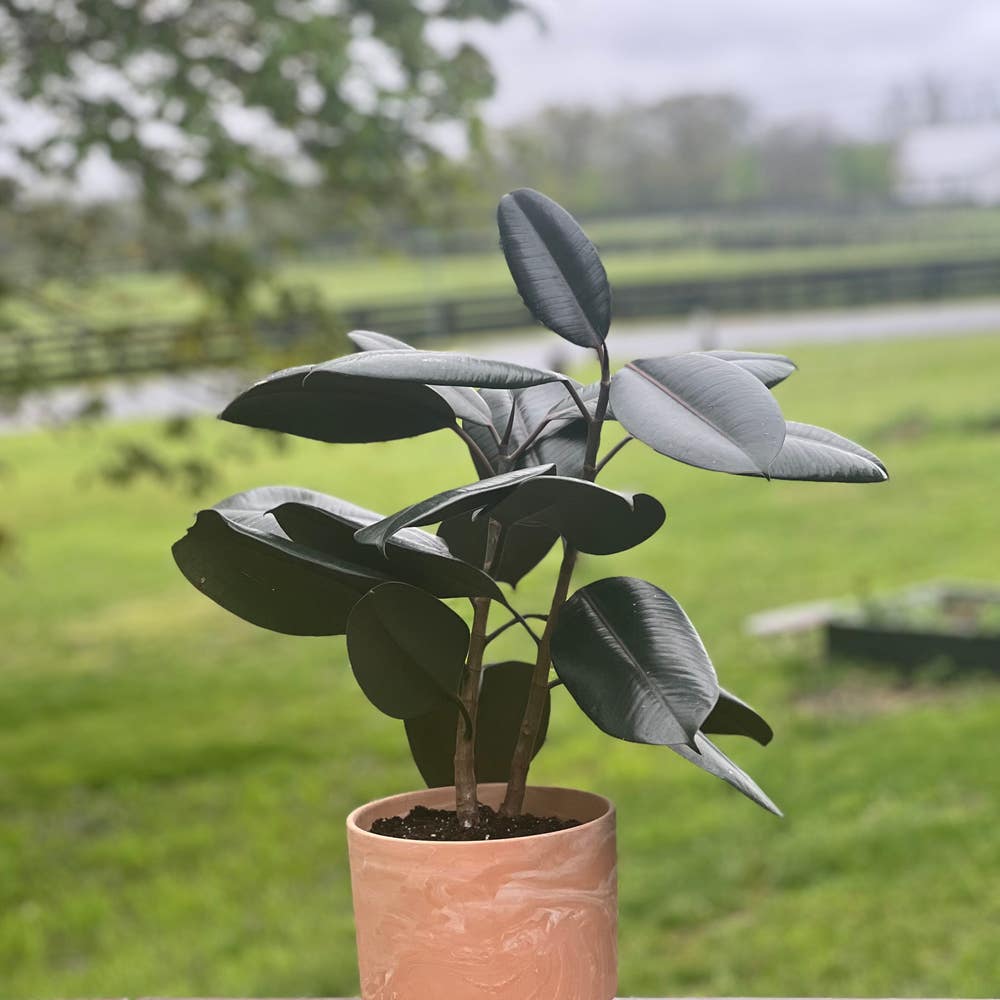
What To Do About Bugs on My Burgundy Rubber Tree? 🐛
Ficus elastica 'Burgundy'
By the Greg Editorial Team
Jun 18, 2024•5 min read
This article was created with the help of AI so we can cover more plants for you. May contain errors. See one? Report it here.
Protect your leafy friend 🌿 from bug bullies with top-notch, plant-saving tactics!
- 🕷️ Spider mites show webbing; use water, predators, or organic miticides.
- 🍷 Alcohol treats mealybugs and scale insects; quarantine new plants.
- 🌱 Regular inspections prevent pests; use neem oil and insecticidal soap responsibly.
Meet the Pests: Identifying Your Unwanted Guests
🕷️ Spider Mites
Webbing on leaves and leaf damage are the hallmarks of a spider mite invasion. These tiny terrors can be hard to spot but their effects are not. A magnifying glass can help confirm their presence by shaking a leaf over white paper and watching for movement.
🕸️ Quick Fixes and Long-Term Spider Mite Strategies
Blast them with water or introduce predatory insects like ladybugs for a natural approach. For more stubborn cases, organic miticides or wiping leaves with soapy water can help. Always check the undersides of leaves, a favorite hideout for these pests.
🦟 Scale Insects
Scale insects masquerade as waxy bumps on your plant, often accompanied by sticky honeydew secretion. These freeloaders can be scraped off with a soft toothbrush or treated with soapy water or rubbing alcohol.
🛡️ Scale-Busting Tactics for a Clean Rubber Tree
Repeated applications of homemade sprays every 7 days can be effective. Be sure to treat the entire plant, including the soil surface to eliminate eggs, and always quarantine new plants to prevent spread.
🦟 Fungus Gnats and Fruit Flies
Signs of fungus gnats and fruit flies include unexpected guests in the soil. These pests are more than a nuisance; they can harm your plant's roots.
🪰 How to Ground These Pesky Fliers for Good
Sticky traps and reducing moisture can help control adult gnats. For larvae, a mixture of hydrogen peroxide and water can cleanse the soil. Always let the soil dry out between waterings to discourage their return.
🐛 Mealybugs
The white fluff of mealybugs is a giveaway sign of infestation. These pests prefer cozy spots like leaf axils and stems.
🧼 Mealybug Management: From Cottony Clumps to Clear Leaves
Rubbing alcohol on a cotton swab is a quick fix. For larger invasions, insecticidal soap or neem oil treatments can clear the infestation. Regular checks help catch these pests early.
🦗 Thrips and Aphids
Thrips and aphids are tiny terrors that can cause stippling or silvering of the leaf surface. They're often found on new growth and can be washed off with a strong stream of water.
🌱 Thwarting Thrips and Annihilating Aphids: Effective Methods
Insecticidal soap or neem oil can be effective against these pests. Ensure thorough coverage, especially on new growth where these pests love to congregate. Regular plant inspections are key to early detection and control.

Bug Off: Remedies and Prevention for a Healthy Rubber Tree
🌿 Natural and Organic Solutions
Neem oil is the eco-warrior's choice for battling pests on your Burgundy Rubber Tree. It's a triple threat: it tackles pests, fights fungal diseases, and is gentle on the environment. Mix it with water and spray it on the leaves for a natural defense. Insecticidal soap is another green gladiator, perfect for wiping out those pesky bugs without the collateral damage of harsh chemicals.
Remember, regular leaf inspections and a clean living space for your plant are the unsung heroes of pest prevention. Keep those leaves shiny and the soil debris-free to avoid giving bugs a home base.
💣 Chemical Warfare: When to Escalate
Sometimes, the bug invasion calls for the big guns. If you're facing a severe infestation, it might be time to consider chemical treatments. But don't go spraying willy-nilly—use these potent potions as directed, because overdoing it can lead to resistant superbugs, and nobody wants that.
When you do use chemicals, think of it as a surgical strike rather than a blanket bomb. Targeted application is key to preserving the health of your plant and the planet. Remember, with great pesticidal power comes great responsibility.

Keeping the Peace: Long-Term Plant Health
💧 The Balancing Act: Water and Humidity
Watering your Burgundy Rubber Tree is less about sticking to a strict schedule and more about reading the room—or soil, to be exact. If the top inch is dry, it's time to hydrate. But don't flood the scene; soggy soil is a no-go.
Humidity needs to be just right. Think Goldilocks, not a sauna. Use a hygrometer to avoid the extremes. A pebble tray or humidifier can help maintain that tropical vibe without turning your home into a rainforest.
🦠 Quarantine: The Unsung Hero
When new plants arrive, don't just introduce them to the gang. Quarantine them for a couple of weeks. It's like a background check for pests and diseases—better safe than sorry.
Regular checks are your plant's best friend. Spot a pest? Isolate the patient and clean up the area. Remember, a clean plant is less likely to attract unwanted guests.
🌡️ Climate Control: Keeping It Steady
Avoid the drama of temperature swings. Your plant isn't a fan of surprise parties, especially the kind that involve sudden chills or heatwaves. Keep the temperature consistent, and your Rubber Tree will thank you.
Air circulation is key. Stagnant air is about as welcome as a mosquito at a barbecue. Make sure your plant isn't suffocating in stillness—give it some breathing room.
🌱 Soil and Roots: The Foundation of Health
Get to know your soil like it's your new hobby. Testing for pH and nutrients isn't just for science geeks; it's for anyone who wants a thriving plant. And don't forget the roots—healthy roots equal a happy Rubber Tree.
👀 Long-Term Vigilance: The Ultimate Pest Deterrent
Stay vigilant. Regular inspections are like neighborhood watch for your plant. Catch those pests early, and you'll avoid the headache of a full-blown infestation. Remember, prevention is always better than cure.

⚠️ Safety First
This content is for general information and may contain errors, omissions, or outdated details. It is not medical, veterinary advice, or an endorsement of therapeutic claims.
Always consult a qualified healthcare professional before using any plant as food, medicine, or supplement.
Never eat any plant (or feed one to pets) without confirming its identity with at least two trusted sources.
If you suspect poisoning, call Poison Control (800) 222-1222, the Pet Poison Helpline (800) 213-6680, or your local emergency service immediately.
Spotted an error? Please report it here.
Eradicate pests from your Burgundy Rubber Tree with savvy strategies and keep them at bay using Greg's 🌱 tailored care reminders and expert community tips for plant health triumphs!