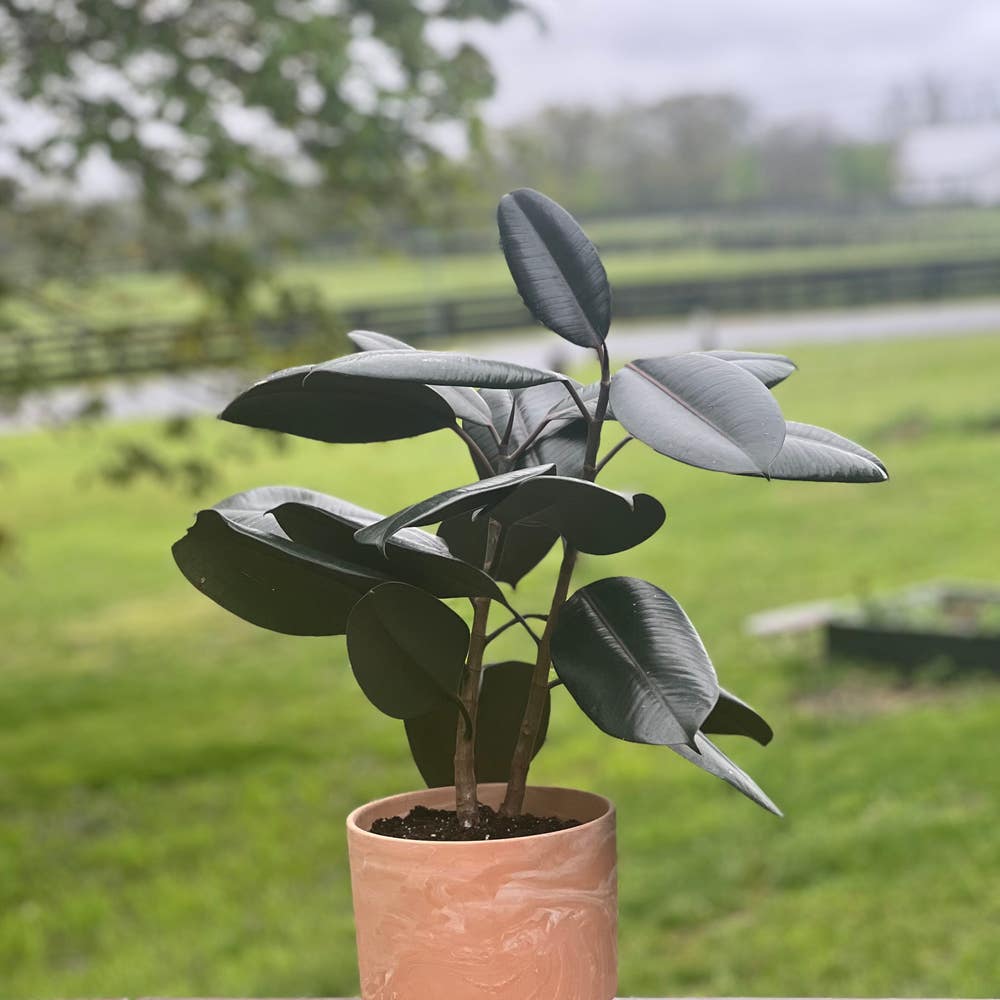
Diagnosing Burgundy Rubber Tree Root Rot
Ficus elastica 'Burgundy'
By the Greg Editorial Team
Jun 18, 2024•4 min read
This article was created with the help of AI so we can cover more plants for you. May contain errors. See one? Report it here.
Rescue your rubber tree 🌳 from root rot's grip with this life-saving diagnosis guide! 🚑
- Yellow leaves and foul smell signal potential root rot.
- Inspect roots for firmness and color; prune if necessary.
- Prevent with proper watering, drainage, and ventilation.
Spotting the Red Flags: Symptoms of Root Rot
💛 Yellowing Leaves: The Plant's Distress Signal
Yellowing leaves are the first warning; they're the plant's SOS. This discoloration could be the plant's way of saying, "Hey, I'm not okay down here!" It's the equivalent of a check engine light for your Burgundy Rubber Tree.
🌱 Unearthing the Problem: Unhealthy Roots Exposed
Healthy roots should be firm and white, a sign of vigor. When they turn brown, mushy, or slimy, it's a clear distress call. These compromised roots are the plant's version of a bad cold that needs immediate attention.
👃 The Smell Test: Olfactory Evidence of Decay
Trust your nose. A foul smell from the soil is like a silent alarm for root rot. If it smells like something died in the pot, it's time to play plant detective and get to the root of the issue—literally.

Getting to the Root of the Issue: Diagnosis
🕵️ How to Safely Inspect Your Plant's Roots
Gloves on and plant out. It's time to play detective with your Burgundy Rubber Tree. Gently remove your plant from its pot and brush away excess soil. Healthy roots are firm and white, while trouble spells brown, mushy, and stinky.
🕵️ Distinguishing Between Healthy and Compromised Root Systems
Visual cues are your first informants. If roots look like they've seen better days—think zombie apocalypse—it's bad news. Firm and white is right; anything else, and you've got issues. Squishy roots are a no-go. If they crumble at your touch, sound the alarms. Remember, the nose knows; a foul odor is a telltale sign that rot has set in.
Remember, this isn't a race. Take your time to inspect thoroughly. Missed signs could mean a death sentence for your leafy friend.

First Aid for Roots: Immediate Treatment Steps
🌱 The Snip Strategy: Pruning Away the Rot
When root rot rears its ugly head, immediate surgery is your first line of defense. Suit up and sterilize those shears because you're about to play plant doctor. Snip off the mushy, discolored roots like you're cutting away the bad parts of a potato. It's a delicate operation—leave the healthy, firm roots alone. They're your plant's lifeline.
💧 Drying Out: Balancing Soil Moisture to Halt Rot Progression
After the amputation, it's time to let things dry out. Overwatering is often the culprit, so back off on the H2O. Let the soil become the Mojave Desert for a bit—bone-dry on top before the next watering. This isn't neglect; it's tough love for your green buddy.
🦠 Fungicide to the Rescue: Choosing and Applying the Right Treatment
With the bad roots gone, it's time for some antifungal artillery. Consult with a plant health expert or hit the books to find the right fungicide. Copper-based options are a go-to. Apply it according to the label's battle plan, and don't go rogue with the dosage. Remember, this isn't a seasoning; it's medicine.
Quick Tips for Recovery
- Adjust your watering routine to avoid overwatering.
- Keep the base of the plant dry.
- Sterilize your tools after pruning.
- Consider planting on raised beds or berms for better drainage.

Building a Strong Defense: Prevention Tactics
💧 Watering Wisdom: Hydration Sweet Spot
Watering your Burgundy Rubber Tree is less about sticking to a rigid schedule and more about understanding its needs. Check the soil's moisture by feeling it; if the top inch is dry, it's time for a drink. Overwatering invites root rot, so let the soil dry out between waterings. Think of it as a thirst meter rather than a time clock.
🏠 The Right Home: Drainage-Forward Pots and Soil
Choosing a pot for your plant is like picking a house with good plumbing; drainage holes are a must. Combine that with a well-draining soil mix, perhaps with added perlite or sand, to keep those roots breathing easy and dry.
🌬 Keeping the Air Flowing: Ventilation is Key
Good ventilation is crucial. It's like giving your plant room to breathe in a crowded subway. Ensure there's enough space around your plant for air to circulate, preventing moisture from becoming a permanent guest. If you can't provide a natural breeze, a small fan can be a great stand-in to keep the air moving.
🌡 Adjusting to Environmental Conditions
Be mindful of the temperature and adjust your watering accordingly. Hot days might see your plant guzzling water, while cooler times call for restraint. It's about reading the room—or in this case, the leaves.
🛡 Preventing Future Root Rot: Proactive Measures
Prevention is your plant's armor against root rot. Regular checks, careful watering, and a keen eye for drainage and airflow set the stage for a healthy, rot-resistant plant. Remember, it's easier to prevent root rot than to fight it.
⚠️ Safety First
This content is for general information and may contain errors, omissions, or outdated details. It is not medical, veterinary advice, or an endorsement of therapeutic claims.
Always consult a qualified healthcare professional before using any plant as food, medicine, or supplement.
Never eat any plant (or feed one to pets) without confirming its identity with at least two trusted sources.
If you suspect poisoning, call Poison Control (800) 222-1222, the Pet Poison Helpline (800) 213-6680, or your local emergency service immediately.
Spotted an error? Please report it here.
Combat root rot 🛡️ in your burgundy rubber tree with Greg's tailored watering plans and care alerts to keep your plant healthy and thriving.