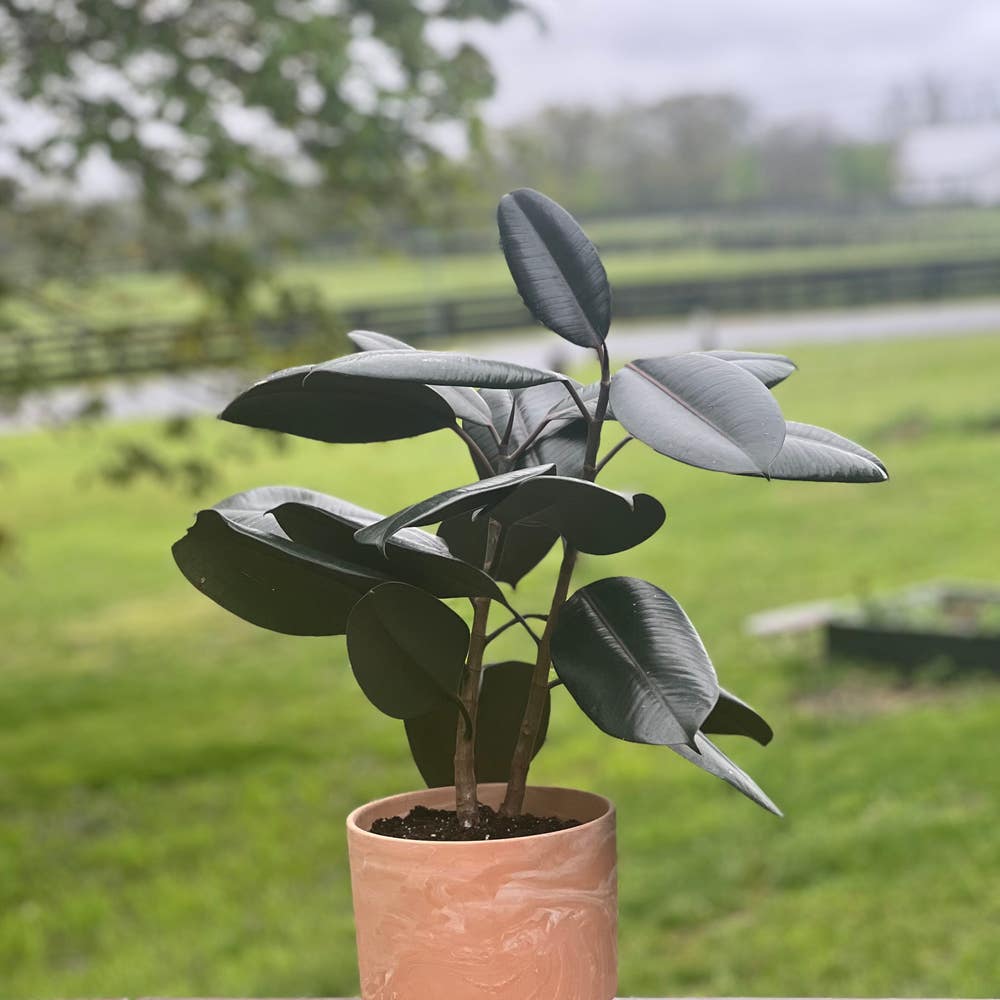
💧 How Frequently Should I Water My Burgundy Rubber Tree?
Ficus elastica 'Burgundy'
By the Greg Editorial Team
Jun 18, 2024•3 min read
This article was created with the help of AI so we can cover more plants for you. May contain errors. See one? Report it here.
Nurture your rubber tree to perfection 🌿—learn the signs and avoid the watering guesswork!
- 🌱 Check soil moisture before watering; droopy leaves mean it's time.
- 🌞🌨️ Adjust watering with seasons; more in spring/summer, less in fall/winter.
- 💧 Use room temperature water; let tap water sit or filter it.
When to Water: Reading Your Plant's Thirst
🌱 Checking Soil Moisture
Before watering, check the soil's moisture. Forget the calendar; your rubber tree's thirst doesn't hinge on dates. Plunge your finger into the soil up to 2-3 inches deep. If it feels like a dry debate club meeting, it's time to water. For the dirt-averse, a wooden chopstick or a moisture meter can be your clean-fingered scouts.
🌿 Observing Plant Signals
Your rubber tree is quite the dramatist when parched. Droopy leaves are its way of crying out for a drink. Conversely, if the leaves take on a yellow tinge or the stem feels mushy, it's a sign of overindulgence. Keep an eye out for leaves curling inward or feeling less waxy—subtle hints that your plant is entering a dry spell.

How Much Water Does Your Rubber Tree Crave?
💧 Seasonal Watering Rhythms
Your rubber tree's water needs shift with the seasons. During the spring and summer, its thirst ramps up as it enters its growth phase—think of it as hitting the gym and needing extra hydration. Water more frequently during these months, perhaps once a week. As the days get shorter and the temperature drops, your plant's water needs wane. In winter, you might only need to water it once every three to four weeks, depending on the warmth of your home.
🌱 Pot Size and Type Impact
Pot size is a big deal. A larger pot means more soil and moisture, extending the time between waterings. On the flip side, a smaller pot dries out quicker, so you'll be reaching for the watering can more often. The type of pot also plays a role. Terracotta breathes, letting moisture escape and soil dry out faster, while plastic is like a mini raincoat, holding in the wet. And let's not forget about drainage—good drainage holes are non-negotiable, unless you're into the whole root rot chic.

The Perils of Over and Underwatering
💧 Symptoms of Overindulgence
Overwatering your burgundy rubber tree can lead to a soggy situation. Look out for yellowing leaves that feel soft and mushy to the touch. This is your plant's cry for less hydration. Root rot could be the next stage if you don't ease up on the water. To rescue your plant, let the soil dry out and consider repotting with fresh, well-draining soil.
🏜️ The Drought Stress Signals
On the flip side, underwatering turns your rubber tree into a sad, droopy mess. Leaves may curl and brown at the tips, signaling a thirsty plant. If the soil feels like a barren desert, it's time to quench your plant's thirst. Water deeply until moisture seeps from the drainage holes, and then let the excess drain away. Remember, your rubber tree prefers consistency, so adjust your watering schedule to avoid future droughts.

Watering Best Practices
💧 Technique Matters
Deep watering is key. It's like giving your rubber tree a full meal rather than just snacks. This method encourages the roots to grow downwards, creating a stable and healthy plant. Water until you see it escape through the drainage holes, then you know you've done it right.
💦 Water Quality and Temperature
The water you use should be like a gentle hug for your plant's roots. Room temperature is the sweet spot—too cold can shock them, too hot is just cruel. If your tap water is a chemical cocktail, let it sit out overnight or treat your plant to some filtered goodness.
⚠️ Safety First
This content is for general information and may contain errors, omissions, or outdated details. It is not medical, veterinary advice, or an endorsement of therapeutic claims.
Always consult a qualified healthcare professional before using any plant as food, medicine, or supplement.
Never eat any plant (or feed one to pets) without confirming its identity with at least two trusted sources.
If you suspect poisoning, call Poison Control (800) 222-1222, the Pet Poison Helpline (800) 213-6680, or your local emergency service immediately.
Spotted an error? Please report it here.
Keep your Burgundy Rubber Tree perfectly hydrated 💧 with Greg's personalized reminders that consider seasons, pot size, and your home's environment for optimal watering.