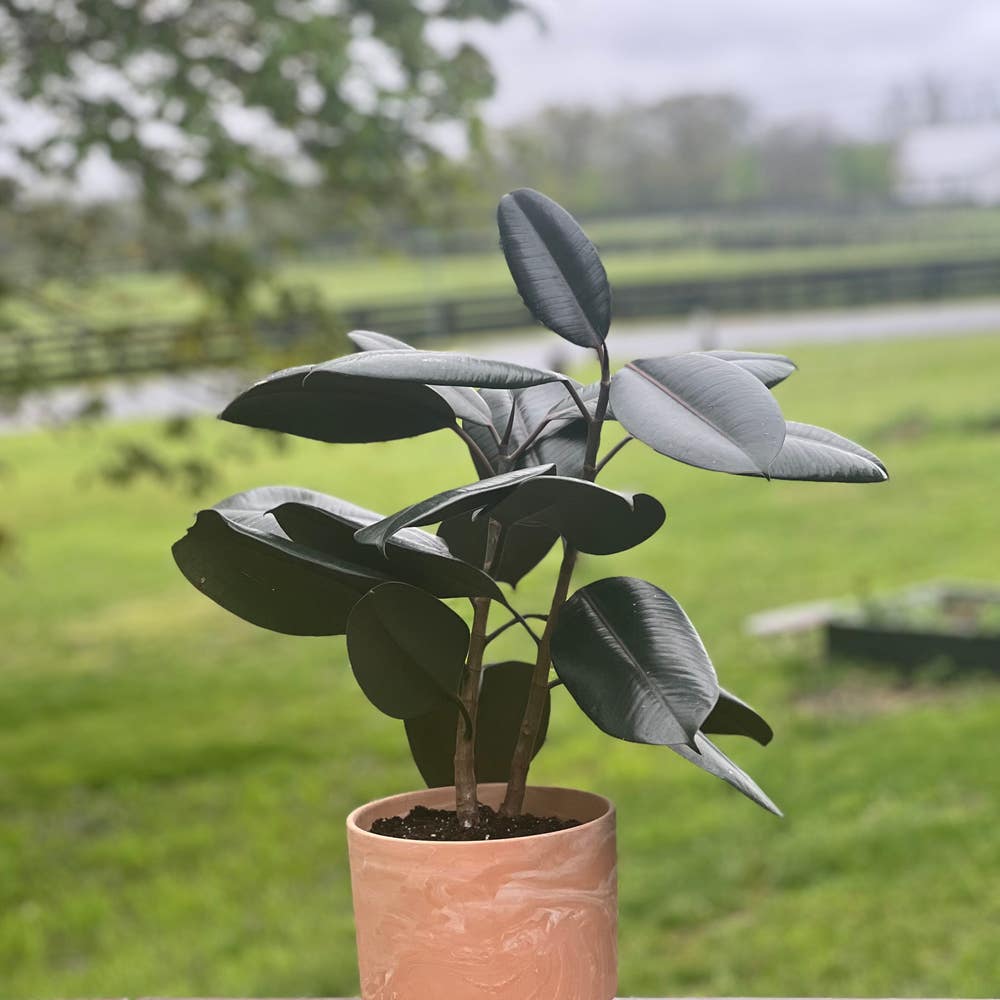
💧 Why Are My Burgundy Rubber Tree Leaves Mushy?
Ficus elastica 'Burgundy'
By the Greg Editorial Team
Jun 18, 2024•4 min read
This article was created with the help of AI so we can cover more plants for you. May contain errors. See one? Report it here.
Revive your wilting Rubber Tree 🌳 and banish mushy leaves with life-saving care secrets! 🚫💧
- 🚱 Overwatering causes mushy leaves; let soil dry if swampy.
- 🌱 Prune damaged leaves to focus energy on healthy growth.
- 🌳 Consistent care with light, temperature, and air flow keeps Rubber Trees healthy.
Spotting the Trouble: Signs Your Rubber Tree is Too Wet
💦 Overwatering Symptoms
Overwatering your Burgundy Rubber Tree can lead to a soggy situation. Leaves turning a sickly yellow and stems that feel like a squishy sponge are your plant crying out for help.
🚱 Root Rot Red Flags
Below the surface, root rot lurks like a silent assassin. If the roots are mushy, dark, and give off a foul odor, it's a distress signal. They're drowning in excess moisture and suffocating without air.
🌧 Drainage Drama
The pot and soil you choose can be accomplices in this watery crime. If your potting mix clings to moisture like a clingy ex, and your pot lacks proper drainage, you're setting the stage for a root rot tragedy.

First Aid for Your Foliage: Immediate Steps to Take
🚱 Halting the H2O
Stop watering your Burgundy Rubber Tree immediately. If the soil feels more like a swamp than a garden, it's time to let it dry out. This isn't a spa; your plant doesn't need a daily dip. Check the top inch of soil and only consider watering again when it's as dry as a forgotten loaf of bread.
🌿 The Pruning Prescription
Grab your sterilized scissors and get to work. Snip off the mushy leaves with the precision of a bonsai master. This isn't just a trim; it's a strategic strike to reroute vital energy to the parts of your plant that aren't waving a white flag. Remember, don't go Edward Scissorhands on it—remove only the damaged parts to avoid plant shock.

The Long-Term Fix: Reviving Your Rubber Tree
🌱 Soil and Pot Makeover
Choosing the right setup is crucial for a healthy, happy plant. Your Burgundy Rubber Tree craves a well-draining potting mix; think of it as the plant's comfy bed. A blend of soil that retains moisture yet drains excess water is the sweet spot. Mix in some sand or perlite to keep the roots breathing easy and prevent them from drowning in soil that's too clingy.
When it comes to pots, size and material matter. Earthenware pots are your plant's best friend, allowing for moisture to escape and not just sit there like an unwanted guest. Ensure the pot has a drainage hole—it's not just decorative, it's a lifeline. The pot should be cozy, allowing for about 2 inches of soil around the rootball, giving your plant room to grow without feeling lost in space.
🌿 Repotting the Right Way
Repotting is like moving day for your plant—stressful but sometimes necessary. When your plant's roots are staging a coup, it's time. First, stop watering a few days in advance to avoid a muddy mess. Gently remove your plant, whispering apologies for the upheaval. Trim any rotten roots—they're not doing your plant any favors.
Now, the pot. It should be a tad larger than the last; think of it as a size upgrade in the plant world. Fill it with your pre-moistened potting mix, and settle your plant in. The top of the rootball should be just below the rim, like a plant peeking out of a foxhole. Water it well, but don't throw a pool party in the pot.
Remember, repotting is a shock to the system. Your plant might sulk by dropping a leaf or two. Don't take it personally; just adjust your watering routine and check for root rot if it throws a tantrum with excessive leaf-dropping. Yellowing leaves may signal a need for more light or a high-five for getting the repotting right.

Keeping It Comfy: Preventative Measures
💧 Watering Wisdom
Moderation is key. Your Burgundy Rubber Tree craves a drink when the soil feels dry an inch below the surface. Resist the urge to water on a strict schedule; instead, adapt to your plant's needs, which can change with the seasons. In winter, it's a bit of a camel, but summer turns it into a bit more of a lush. Use room-temperature water to avoid shocking the roots—think of it as serving your plant a relaxing herbal tea rather than a jolting espresso shot.
🌿 Environment Essentials
Stability makes for a happy plant. Ensure your Burgundy Rubber Tree enjoys consistent indirect light—too much sun and it'll fry, too little and it'll sulk. Keep the temperature steady; sudden changes are as unwelcome as a cold draft at a barbecue. Use a hygrometer to keep humidity levels in check; your plant's not into desert vibes. And remember, good air circulation is crucial—stagnant air is about as popular as last week's leftovers. Keep your plant out of drafts and away from heating or cooling vents to avoid the botanical equivalent of a bad hair day.
⚠️ Safety First
This content is for general information and may contain errors, omissions, or outdated details. It is not medical, veterinary advice, or an endorsement of therapeutic claims.
Always consult a qualified healthcare professional before using any plant as food, medicine, or supplement.
Never eat any plant (or feed one to pets) without confirming its identity with at least two trusted sources.
If you suspect poisoning, call Poison Control (800) 222-1222, the Pet Poison Helpline (800) 213-6680, or your local emergency service immediately.
Spotted an error? Please report it here.
Prevent mushy leaves and root rot in your Burgundy Rubber Tree by letting Greg tailor a watering schedule that ensures just-right moisture 🌿.