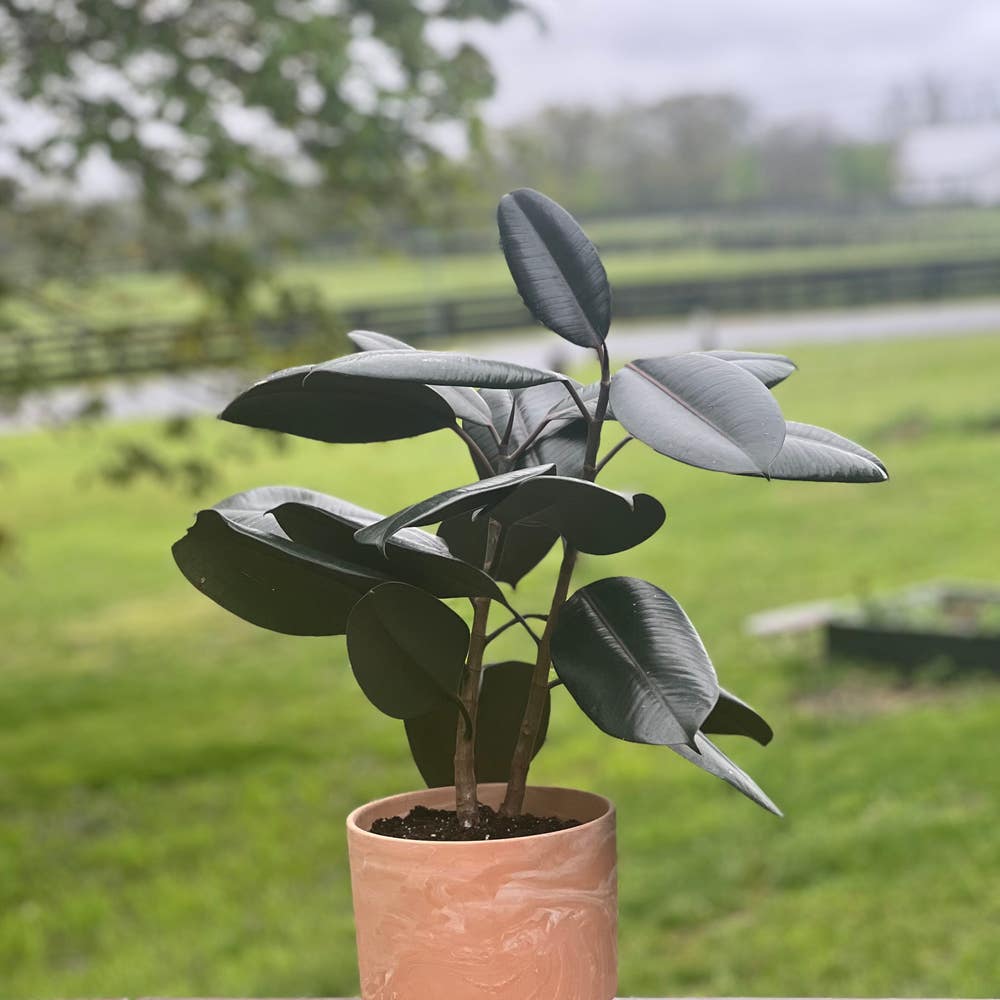
How Should Burgundy Rubber Tree Be Cut Back?
Ficus elastica 'Burgundy'
By the Greg Editorial Team
Jun 18, 2024•5 min read
This article was created with the help of AI so we can cover more plants for you. May contain errors. See one? Report it here.
Transform your space into a verdant retreat 🌿 by mastering the art of spring pruning for your Burgundy Rubber Tree!
- Spring pruning aligns with growth for ideal Burgundy Rubber Tree shaping.
- Sharp, sanitized tools are crucial for clean cuts and disease prevention.
- Post-prune care ensures recovery and vitality—monitor growth and health.
Best Times to Get Snippy with Your Rubber Tree
🌱 Spring into Action: Pruning in the Right Season
Early growth periods are prime time for pruning your Burgundy Rubber Tree. This typically means spring or early summer, when the plant's energy is focused on growth, making it more resilient to trimming.
🌿 Growth Cues: Knowing When Your Tree is Ready
Active growth is your cue to get snippy. Look for new leaves or an increase in height as signs that your tree is ready for a prune-fest. Don't be fooled by dormancy; a static tree isn't in the mood for a haircut.

Making the Cut: Pruning Techniques for a Gorgeous Rubber Tree
✂️ Topping for Triumph: Controlling Your Tree's Skyward Ambitions
Pruning isn't just about keeping your Burgundy Rubber Tree from turning into a ceiling-scraper; it's about aesthetic mastery. Here's how to keep that growth in check:
- Identify the Height: Decide how tall you want your tree to be.
- Find the Node: Look for the set of leaves just below your ideal height.
- Snip with Precision: Cut right above that node, leaving a stump to halt vertical growth.
- Be Bold: Don't be afraid to remove up to half of the lateral branches for a balanced look.
- Propagate: Use the cuttings to fill out the base and add lushness.
Remember, sharp tools are non-negotiable for clean cuts.
🌿 Branching Out: Shaping Your Tree's Canopy
To avoid a lanky, one-dimensional tree, you've got to get strategic with your snips. Here's the game plan:
- Select Your Branches: Choose which limbs will form your tree's elegant silhouette.
- Angle Your Approach: Cut just after a node at a 45-degree angle to encourage bushiness.
- Thin to Win: Remove excess branches to let light and air flirt with the inner leaves.
Aim for a canopy that's not just full, but has that "I woke up like this" level of effortless charm.
🍃 Leafing Through: When to Snip Leaves
Leaves are the Rubber Tree's solar panels, but sometimes you need to declutter:
- Yellow or Damaged: These leaves are out. They're not doing you any favors.
- Crowded Areas: If leaves are fighting for space, thin them out. Peace is the goal.
- Lower Leaves: Dropping? They're begging for a trim. Listen to them.
By pruning, you're not just playing plant stylist; you're ensuring your Rubber Tree's vitality.

The Right Tools for the Snip
🔪 Sharp Choices: Selecting the Best Pruning Tools
Pruning your Burgundy Rubber Tree starts with precision. Grab shears or scissors that feel like an extension of your hand—comfort is key for those accurate snips. Avoid the temptation to use anything resembling a machete; this is a delicate operation, not a jungle expedition.
Choose tools that make clean cuts. Think of it as the difference between a surgical incision and a paper tear. Sharp, single-bladed pruning shears are your best bet for most cuts, while scissors are ideal for smaller, more precise work. Dull blades are the enemy here, crushing plant tissue like a bad handshake—unpleasant for both parties.
🧼 Clean Cuts: Keeping Your Tools and Tree Disease-Free
Sanitization isn't just for surgeons; it's a must for gardeners too. Disinfect your tools before and after each use to prevent your Rubber Tree from catching something nasty. A quick wipe with rubbing alcohol or a bleach solution does the trick, killing off pathogens like a hand sanitizer for your shears.
Remember, it's not just about the tree's looks; it's about its health. Dirty tools can introduce diseases, turning your pruning session into a plant's nightmare. So, keep it clean—your tree will thank you for it with robust growth and that gorgeous Burgundy hue.

After the Snip: Ensuring Your Rubber Tree Bounces Back
🌱 Tender Loving Care: Post-Pruning Pampering
Pruning can leave your Burgundy Rubber Tree feeling a bit naked and vulnerable. Immediate care is like a warm hug; it tells your plant everything's going to be alright.
💧 Water Wisely
Post-pruning, your tree's thirst will change. Keep the soil moist, but not soggy, to prevent stressing the already shocked roots.
🌟 Light the Way
Ensure your tree has a bright spot without direct sunlight scorching its delicate leaves. A south-facing window with a sheer curtain is the sweet spot.
🍽️ Feed, but Don't Fatten
Overfeeding is the plant equivalent of comfort eating—it doesn't help. Stick to a half-strength fertilizer once a month to maintain a balanced diet.
🚫 Avoid Double Trouble
If you've just repotted, give your tree some space. Pruning and repotting are like two major life events happening at once—too overwhelming.
🌱 Watch It Grow: Monitoring Your Tree's Response
Your Rubber Tree doesn't need a babysitter, but it does appreciate some vigilant oversight. Keep an eye out for new growth—it's a sign of a successful prune job.
🍂 Leaf Loss: A Tell-Tale Sign
If leaves start dropping like hot potatoes, it's a distress signal. Your tree might be telling you it's missing something vital—usually light or water.
🌱 New Shoots: The Reward
When new branches spring up where you made the cuts, it's like your tree is giving you a high-five. Celebrate these little victories.
💦 Sap Management
That sticky sap can be a nuisance. If it oozes, wrap the wound with a damp rag to prevent a mess. It's like putting a band-aid on a scraped knee.
🔍 Stay Sharp
Keep an eye out for any signs of distress. If your tree starts looking more like a sad salad than a luscious canopy, it's time to troubleshoot.
⚠️ Safety First
This content is for general information and may contain errors, omissions, or outdated details. It is not medical, veterinary advice, or an endorsement of therapeutic claims.
Always consult a qualified healthcare professional before using any plant as food, medicine, or supplement.
Never eat any plant (or feed one to pets) without confirming its identity with at least two trusted sources.
If you suspect poisoning, call Poison Control (800) 222-1222, the Pet Poison Helpline (800) 213-6680, or your local emergency service immediately.
Spotted an error? Please report it here.
Prune your Burgundy Rubber Tree 🌿 with confidence and watch it flourish, as Greg guides you on the perfect timing and post-trim care for robust growth.