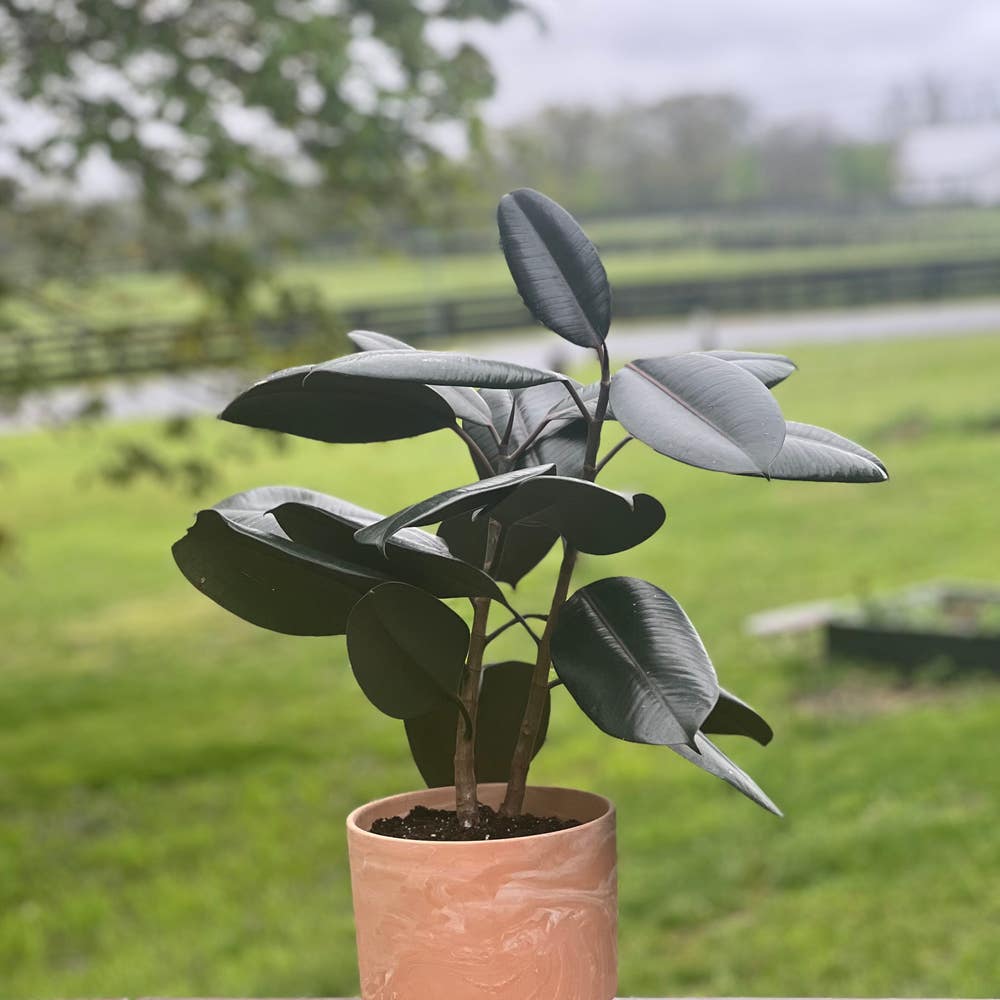
Why Are There Brown Spots on My Burgundy Rubber Tree Leaves? 🍂
Ficus elastica 'Burgundy'
By the Greg Editorial Team
Jun 18, 2024•5 min read
This article was created with the help of AI so we can cover more plants for you. May contain errors. See one? Report it here.
Eradicate brown spots on your Rubber Tree 🍂 and restore its lush, vibrant leaves with these expert insights!
- Brown spots indicate thirst, light, or pests; location and texture are clues.
- 🚰💡 Overwatering and direct sunlight are common culprits; adjust care routine.
- 🌱 Prevent with proper soil, watering, and pest control; inspect regularly.
Spotting the Trouble: Identifying Brown Spots
🔍 Recognizing Brown Spots
Brown spots on Burgundy Rubber Tree leaves can be as telling as a secret handshake. They might show up as tiny speckles or large blotches, each with its own story. The appearance of these spots can vary—they might be water-soaked, suggesting a thirst issue, or crispy like fall leaves, hinting at a sunlight snafu.
🗺 Mapping the Spots
Location is key. Brown spots may prefer the center stage on a leaf, the tips, or they might be party-crashers scattered across the leaf's surface. The spots' real estate choice helps pinpoint the underlying issue. Young leaves might sport fresh spots, while mature leaves could carry the battle scars of past problems.
🚨 Immediate Steps for Treating Brown Spots
Upon spotting these blemishes, it's time for a hands-on approach. Gently poke the spots. If they squish, you might be over-loving with water. If they crackle, your plant could be throwing shade at your light management. And if the spots feel bumpy, you're likely hosting a fungal fiesta.
👁️ Visual Symptoms
Take note of the spots' fashion sense. Are they dry, brittle, or do they have a yellow halo? These details are the fingerprints at a crime scene, leading you to the culprit. Remember, early detection is your plant's best defense. Catching these spots early is like catching a typo before hitting send—it can save you a world of trouble.

Rooting Out the Causes
💧 Water Woes: Overwatering and Poor Water Quality
Overwatering is like a love that smothers; too much can be fatal. If your Burgundy Rubber Tree's leaves sport soft, brown spots, it's screaming for you to ease up on the H2O. Brown spots from overzealous watering are mushy to the touch, and the soil will feel like a wet sponge. Remember, plants need to breathe too, and drowning roots can't catch a breath.
Water quality matters. If you're dousing your plant with tap water straight from the Arctic, you're shocking its system. Room-temperature water is the way to go, preventing those brown spots that appear when your plant's roots are in distress.
🌞 Light and Heat: Finding the Sweet Spot
Too much sun and your plant will look like it's trying to rock a sunburn; crispy spots on the leaves are a dead giveaway. The Burgundy Rubber Tree craves a consistent light source, but direct sunlight is a no-no. Aim for that perfect, sun-kissed glow without turning your plant into a leafy crisp.
🐜 Unwanted Guests: Pest-Related Brown Spots
Pests are the uninvited party crashers that leave behind brown spots as their calling card. If you spot tiny critters, it's time for pest patrol. These spots are different from the waterlogged variety—they're more like a sign that your plant is being nibbled on by something with more legs than you have.
Keep a vigilant eye; pests are sneakier than a cat burglar. Regular cleaning and inspection are your best defense. If you find your plant's leaves looking like a bug buffet, it's time to show those pests the door—safely and effectively.

Turning Over a New Leaf: Solutions for Brown Spots
💧 Thirst Control: Fine-tuning Your Watering Routine
Overwatering is a common misstep. To avoid this, let the soil's top layer dry out before watering again. Stick your finger in the soil; if it's moist, hold off on the H2O. Alternatively, use a chopstick as a makeshift moisture meter—dry stick means it's time to drink. Consider bottom watering to give your plant autonomy over its hydration needs.
🌞 Basking in the Right Light: Adjusting Light Exposure
Your Burgundy Rubber Tree craves the perfect amount of light. Shield it from the harsh midday sun to prevent scorching. Instead, aim for bright, indirect light. If brown spots persist, play around with the plant's position until you find a spot where it thrives—think sunbathing, not sunburning.
🐜 Pest Patrol: Eradicating Pests Safely and Effectively
Pests are the ninjas of the plant world, often leaving a trail of brown spots in their wake. Keep an eye out for the usual suspects—mites, scale, and aphids. A gentle wipe with soapy water or isopropyl alcohol can evict these uninvited guests. For more stubborn infestations, insecticides might be necessary. Remember, the best offense is a good defense; regular check-ups are crucial for a pest-free existence.

Keeping the Spots at Bay: Prevention Strategies
🌱 The Right Foundation: Choosing the Best Soil and Pot
Well-draining soil is the unsung hero in the plant world. It's the difference between a thriving Burgundy Rubber Tree and a sad, spotty mess. Opt for a mix that lets roots breathe and water flow freely.
As for pots, think of drainage holes as a non-negotiable lease agreement for healthy roots. No holes, no deal. This isn't a '70s waterbed situation; it's about keeping those roots dry and happy.
🌿 Stable Surroundings: Managing Environmental Factors
Consistency is key in the plant game. Your Burgundy Rubber Tree craves a stable environment like a cat craves a sunny windowsill. Aim for that sweet spot of bright, indirect light and avoid temperature swings that could stress your plant out.
Water at the base to avoid a leaf-soaking fiesta that invites all sorts of fungal freeloaders. And remember, cleanliness is plant godliness—keep those leaves dry and the air flowing like a well-ventilated, troublemaker-free club.
Rotate your pots occasionally. It's not just for an Instagram-worthy plant display; it's about promoting even growth and thwarting disease before it even thinks about crashing the party.
Lastly, embrace the art of the check-up. Regularly inspecting your plant is like a health screening—it helps catch issues early, so you can nip them in the bud before they bloom into full-blown problems.
⚠️ Safety First
This content is for general information and may contain errors, omissions, or outdated details. It is not medical, veterinary advice, or an endorsement of therapeutic claims.
Always consult a qualified healthcare professional before using any plant as food, medicine, or supplement.
Never eat any plant (or feed one to pets) without confirming its identity with at least two trusted sources.
If you suspect poisoning, call Poison Control (800) 222-1222, the Pet Poison Helpline (800) 213-6680, or your local emergency service immediately.
Spotted an error? Please report it here.
Keep your Burgundy Rubber Tree spot-free 🌿 with Greg's tailored care plans that help you manage watering, sunlight, and pests, ensuring your plant stays healthy and vibrant!