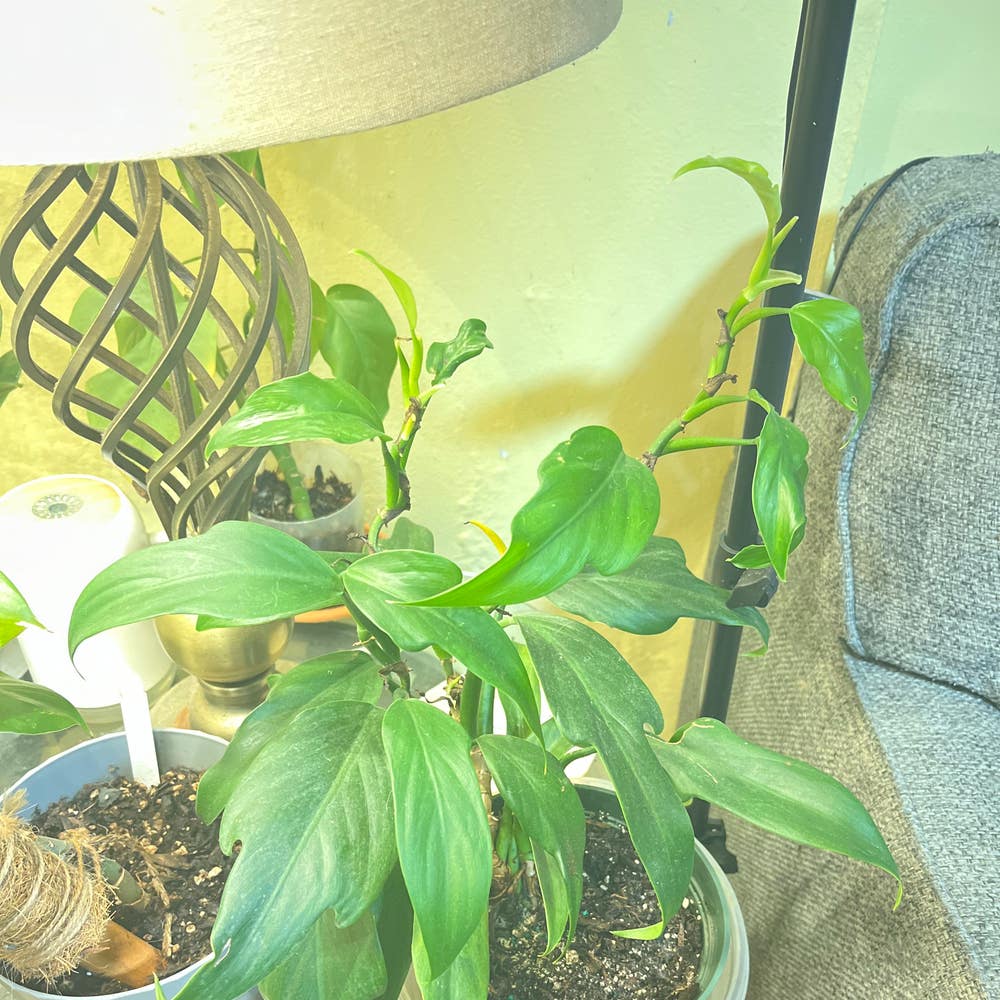
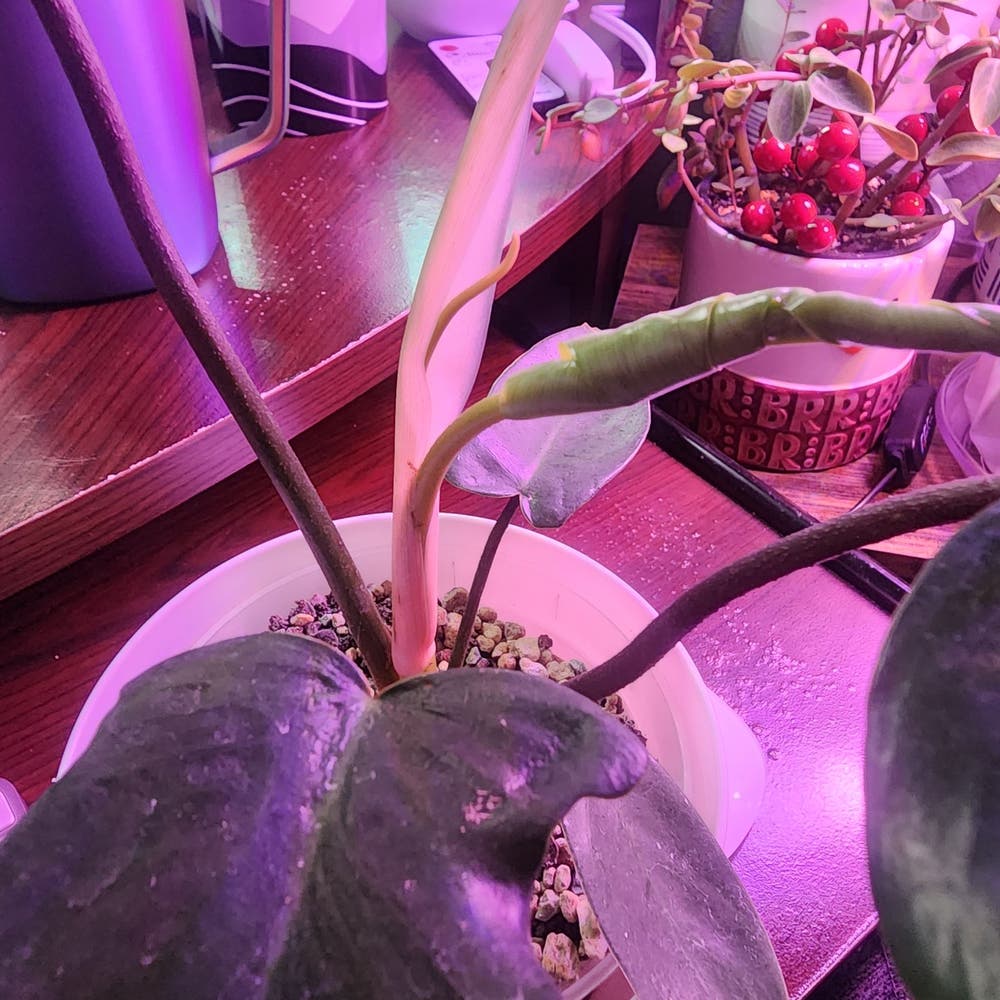
💧 Why Are My Philodendron panduriforme Leaves Mushy?
Philodendron panduriforme
By the Greg Editorial Team
Jun 18, 2024•4 min read
This article was created with the help of AI so we can cover more plants for you. May contain errors. See one? Report it here.
- 🚿 Overwatering leads to mushy leaves; adjust watering to when soil is dry.
- 🍂 Prune mushy leaves to focus energy on healthy growth and prevent pathogens.
- 🌱 Prevent root rot and fungi with well-draining soil and proper plant care.
Spotting the Trouble: Signs Your Philodendron's Leaves Are Too Mushy
🚩 Visual Cues of Mushiness
Discoloration is your plant's way of waving a red flag. If your Philodendron panduriforme leaves are turning a sickly yellow or brown, it's like they're crying out in plant distress. And if they're as droopy as a teenager on Monday morning, you've got a visual cue that something's not right.
🖐 Tactile Clues: The Feel Test
Get hands-on and give those leaves a gentle squeeze. If they're collapsing under your fingers like a deflated balloon, that's a sign of trouble. Healthy leaves should have a bit of resistance; they shouldn't feel like a soggy sponge.
🚨 When to Sound the Alarm
A single soft leaf might just be a fluke, but if you're dealing with an epidemic of mushiness, it's time to take action. If the leaves feel like a horror movie prop and the roots smell like something died, you're in crisis mode. Don't wait for a plant zombie apocalypse—act swiftly.

The Usual Suspects: Identifying Causes of Mushiness
💦 Overwatering Woes
Overwatering turns your Philodendron panduriforme into a soggy mess. Roots need air, and too much water snuffs that out, leading to mushy leaves. If the soil feels more like a swamp than a garden, you've probably been too generous with the watering can. Signs of overindulgence include yellowing leaves and a soil surface that's perpetually wet.
🌱 Root Rot: A Silent Saboteur
Root rot is the ninja of plant problems—silent but deadly. It's a consequence of overwatering, where roots turn into a mushy graveyard. You'll know it's struck when you detect a foul smell from the soil or see roots that resemble overcooked spaghetti. Above ground, the leaves tell the tale with their mushy, sad state.
🍄 Fungal Foes
Fungi are the uninvited party crashers in your Philodendron's life. They thrive in moist conditions, turning leaves into mushy casualties. Look for moldy soil or strange growths—these are the red flags of a fungal invasion. If you spot them, it's time to act fast and get your plant back to health.

Turning Over a New Leaf: Fixing the Mushiness
💧 Fine-Tuning Your Watering Technique
Adjusting your watering schedule is key to reviving your Philodendron panduriforme. It's like knowing when to hold 'em and when to fold 'em—water only when the top inch of soil feels dry. Forget the calendar; your plant doesn't care what day it is.
Tools and tricks for checking soil moisture include the classic finger test or a moisture meter. It's not rocket science, just stick your finger in the soil. If it's dry, give it a drink; if not, walk away.
🌱 Soil and Drainage: The Foundation of Health
Choosing the right soil mix can make or break your Philodendron's health. Aim for a mix that's as well-draining as a sieve, incorporating perlite or coarse sand to keep it light and airy.
Ensuring proper drainage is non-negotiable. Your pot should have more holes than a detective's alibi. No drainage equals a one-way ticket to Soggy Town for your plant's roots.
✂️ Pruning with Purpose
To safely remove mushy leaves, think like a ninja—be swift and decisive. Cut away the damaged parts to redirect energy to the healthy foliage. It's not just a trim; it's a strategic strike.
Keeping your Philodendron in shape helps avoid future mushiness. It's like keeping fit; regular pruning encourages healthy growth and prevents a buildup of moisture-loving pathogens.

Keeping It Firm: Preventative Measures
💧 Water Wisdom: Preventing Overwatering
Establishing a watering routine that keeps leaves firm is crucial. Philodendrons prefer their soil to be like a wrung-out sponge—moist but not drenched. Water only when the top inch of soil feels dry. This simple check can save you from the perils of overindulgence.
🛡️ Defending Against Decay
Root rot is the silent assassin of the plant world. Prevent it by ensuring your pot has drainage holes that could make a colander jealous. Mix perlite or peat moss into your soil to keep it airy. Remember, a Philodendron's roots need to breathe, not swim.
🍄 Fungal Infection Prevention
To keep fungal invaders at bay, water at the base to avoid leaf wetness. Cleanliness is your plant's shield; wipe down leaves and sterilize your tools. Think of it as hygiene for plant health. And don't let your Philodendron sit in stagnant air—circulation is its best friend.
⚠️ Safety First
This content is for general information and may contain errors, omissions, or outdated details. It is not medical, veterinary advice, or an endorsement of therapeutic claims.
Always consult a qualified healthcare professional before using any plant as food, medicine, or supplement.
Never eat any plant (or feed one to pets) without confirming its identity with at least two trusted sources.
If you suspect poisoning, call Poison Control (800) 222-1222, the Pet Poison Helpline (800) 213-6680, or your local emergency service immediately.
Spotted an error? Please report it here.
Banish mushy leaves and nurture resilience 🌱 in your Philodendron panduriforme with Greg's custom watering reminders and soil moisture tips.