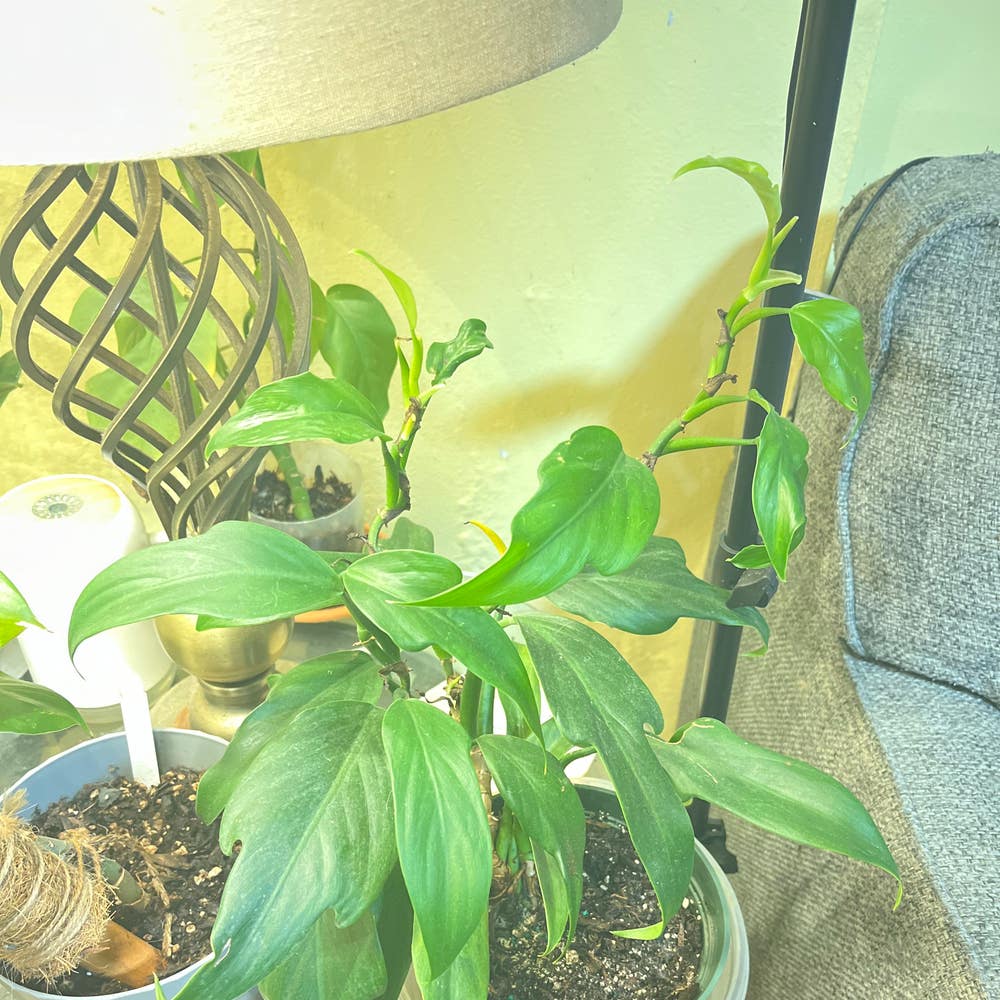
Philodendron panduriforme - Fertilizing 101
Philodendron panduriforme
By the Greg Editorial Team
Jun 18, 2024•3 min read
This article was created with the help of AI so we can cover more plants for you. May contain errors. See one? Report it here.
- Balanced NPK is crucial for Philodendron panduriforme's health.
- 🌱 Liquid fertilizers preferred indoors for control and convenience.
- Ease up in winter; monthly in growing season for optimal feeding.
Choosing the Right Fertilizer
🌱 Balanced NPK: What Does Philodendron panduriforme Crave?
Philodendron panduriforme, like a hungry teenager, needs a balanced diet. The NPK ratio—nitrogen (N), phosphorus (P), and potassium (K)—is the plant equivalent of carbs, protein, and fats. For these leafy lovers, a 20-20-20 mix hits the sweet spot.
Reading a fertilizer label shouldn't require a PhD. Look for the NPK numbers front and center, and ensure they're in harmony, like a well-rehearsed choir.
🌿 Liquid vs. Granular: Pros and Cons
Liquid fertilizers are the quick fix—easy to mix and fast-acting. They're like an espresso shot for your Philodendron panduriforme, giving it a rapid boost. But they're also fleeting, requiring more frequent applications.
Granular fertilizers, on the other hand, are the slow burners. They release nutrients over time, offering a steady supply. It's the difference between a snack and a full meal.
For the indoor Philodendron panduriforme, liquids often win the race. They're less messy and allow for precise control over dosage, reducing the risk of overfeeding. Plus, you can't beat the convenience of a quick pour during your watering routine.

Timing is Everything: When to Fertilize
🌱 Growing Season Game Plan
Spring heralds growth for your Philodendron panduriforme, making it the perfect time to start your fertilizing routine. Monthly applications are the sweet spot during this period of vigorous activity.
❄️ Winter Wisdom
Come winter, your plant hits the snooze button. Ease up on the feeding—think of it as a diet for your green friend during its rest phase. Over-fertilization now is like pouring water into an already full glass.

The Fertilizing Process: Step by Step
💧 Mixing it Up: Dilution Ratios and Solutions
To mix liquid fertilizers, always follow the label's dilution instructions. Overdoing it can lead to a root-roasting disaster. A common ratio is half-strength, but this can vary. Measure meticulously; a cavalier approach can lead to plant peril.
For granular fertilizers, it's a different ball game. They're the slow-release cousins in the fertilizer family. Sprinkle them on the soil's surface, then introduce them to water. It's like setting the stage for a slow dance between the granules and the soil.
🌱 Application Techniques
When applying liquid fertilizer, think of it as a watering session with benefits. The goal is to provide an even spread of nutrients, so water the soil first if it's parched. This prevents the equivalent of a nutrient shock to your Philodendron panduriforme.
For granular types, after your sprinkle-and-water routine, leave them to their own devices. They'll release nutrients at a leisurely pace, like a time-release capsule for your plant's health. Remember, consistency is key; erratic feeding leads to erratic growth.

Recognizing and Fixing Fertilizer Faux Pas
🚩 Spotting the Signs of Overindulgence
Yellowing leaves and stunted growth are red flags for over-fertilization in your Philodendron panduriforme. If you notice a white crust on the soil or roots that are brown and limp, it's time to intervene. Wilting leaves can be deceptive, crying out for water when in fact, they're drowning in nutrients.
🗺 The Recovery Roadmap
Cease all fertilization immediately upon noticing symptoms of overindulgence. Remove any visible fertilizer from the soil's surface. Begin recovery by flushing the soil with water to wash away excess nutrients; repeat every few days. Trim away any damaged foliage to prevent further stress. If the plant is potted, consider repotting with fresh soil. Hold off on fertilizing again until the plant has fully recovered, which could take several weeks. Remember, over-fertilization symptoms can mimic over-watering, so ensure you're diagnosing the right issue.
⚠️ Safety First
This content is for general information and may contain errors, omissions, or outdated details. It is not medical, veterinary advice, or an endorsement of therapeutic claims.
Always consult a qualified healthcare professional before using any plant as food, medicine, or supplement.
Never eat any plant (or feed one to pets) without confirming its identity with at least two trusted sources.
If you suspect poisoning, call Poison Control (800) 222-1222, the Pet Poison Helpline (800) 213-6680, or your local emergency service immediately.
Spotted an error? Please report it here.
Ensure your Philodendron panduriforme thrives with spot-on 🎯 fertilization by using Greg to remind you when and how much to feed, preventing over-fertilization and promoting lush growth.