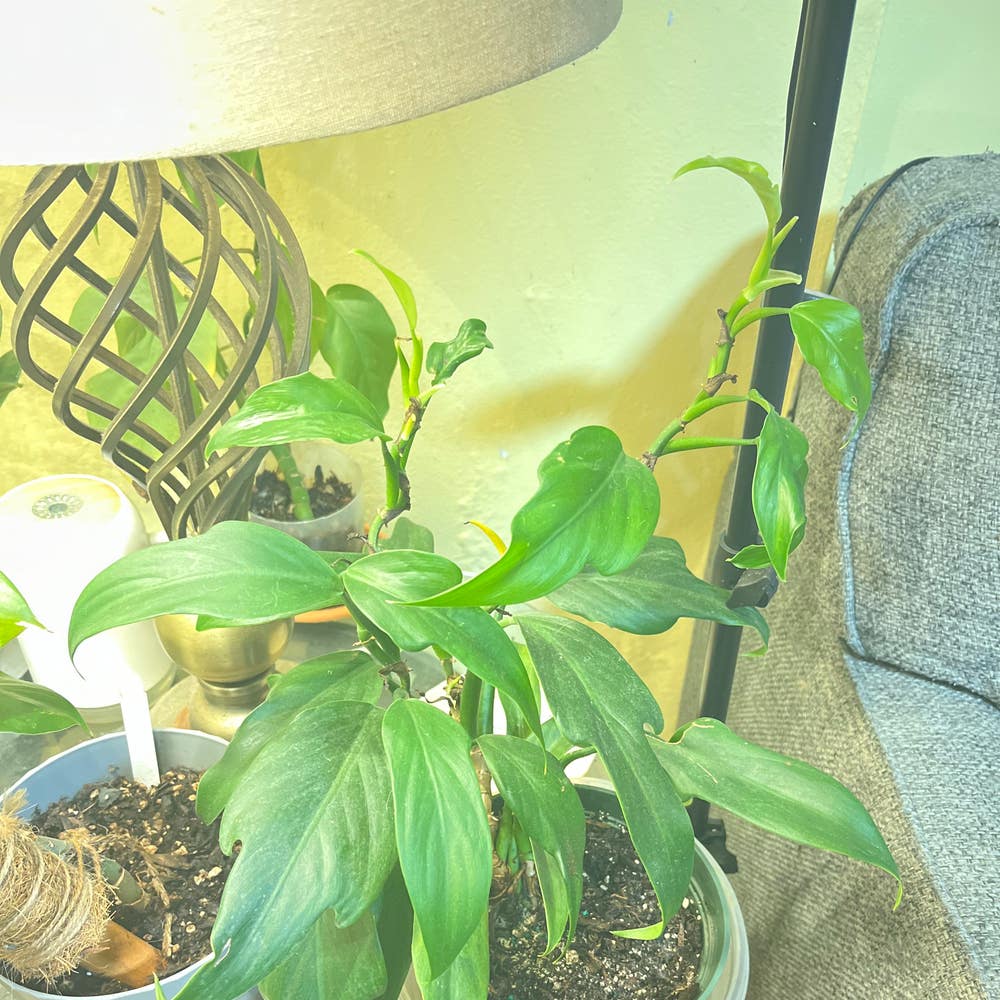
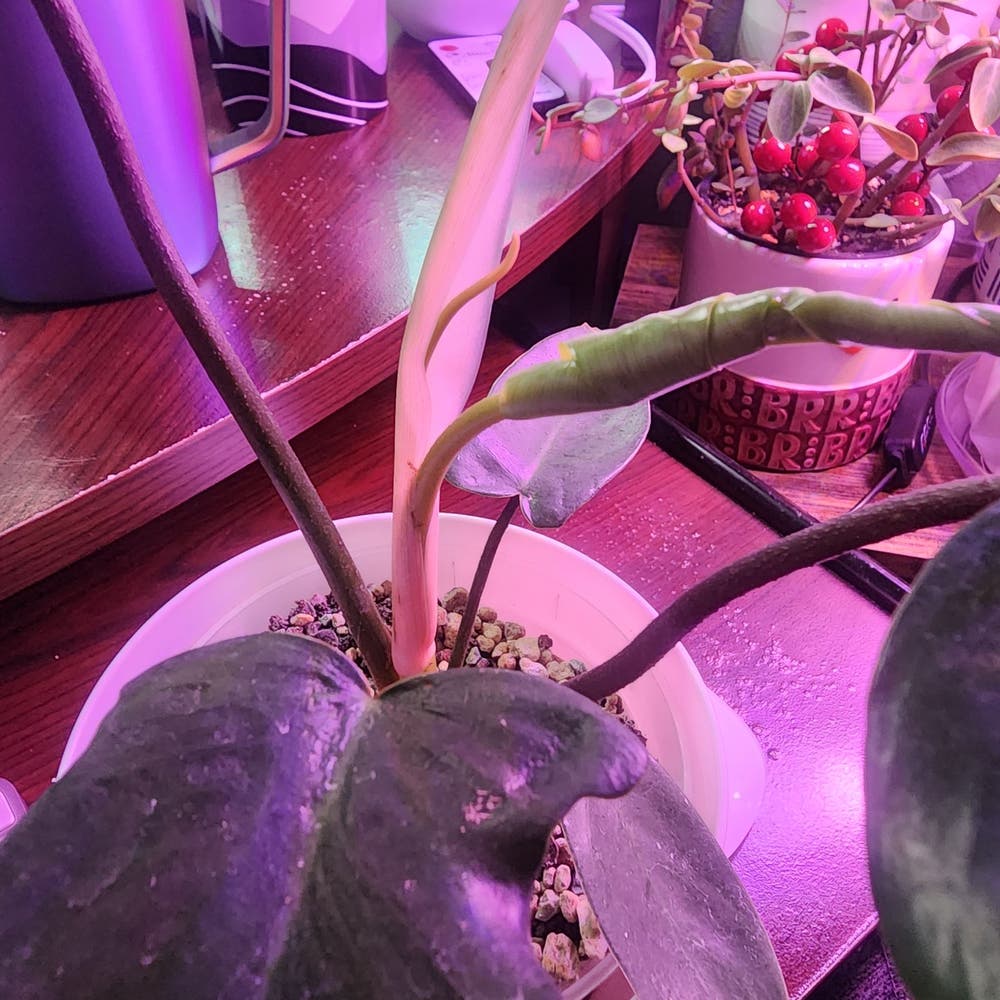
🌀 Why Are My Philodendron panduriforme Leaves Curling?
Philodendron panduriforme
By the Greg Editorial Team
Jun 18, 2024•5 min read
This article was created with the help of AI so we can cover more plants for you. May contain errors. See one? Report it here.
- Water wisely: Over/underwatering causes curling; water when top inch of soil is dry.
- Consistent climate: Keep temperature 65-75°F and humidity 40%-60%.
- Prevent pests and drafts: Check leaves for bugs and avoid strong air currents.
When Thirst Strikes: Watering Woes and Fixes
Curling leaves in your Philodendron panduriforme can signal a watering misstep. Let's dive into the causes and solutions.
💧 Spotting the Signs of Water Stress
Yellowing leaves and limp stems shout overwatering, while dry, brittle foliage whispers of underwatering. The soil should feel like a well-wrung sponge—moist but not drenched.
💦 Fine-Tuning Your Watering Technique
To uncurl those leaves, monitor the soil. When the top inch is dry, it's time to water; if it's damp, hold off. Use a long-spouted watering can to target roots and avoid wetting the leaves, which can invite unwanted fungal raves. Consistency is key—adapt to your plant's needs, not the calendar.

The Climate Culprit: Temperature and Humidity
Temperature and humidity are critical to the well-being of your Philodendron panduriforme. Incorrect levels can lead to the dreaded leaf curl.
🌡️ Creating a Cozy Environment
Adjusting your plant's environment is key to preventing temperature and humidity stress.
🌡️ Temperature: The Goldilocks Zone
Philodendrons prefer a consistent climate. Fluctuations can cause leaves to curl as if bracing against the elements. Keep the temperature steady, ideally between 65-75°F. Avoid placing your plant near air conditioners, heaters, or drafty windows.
💧 Humidity: Just Right
Aim for a humidity level of 40%-60%. Too low, and leaves curl up, too high, and you risk mold. Use a humidifier, or place your plant on a pebble tray with water to increase humidity. This creates a microclimate that mimics their natural tropical habitat without overdoing it.
💨 Air Circulation: The Unseen Ally
Good air circulation is vital but avoid strong drafts. A gentle fan can help, as long as it's not directly blowing on your plant. This helps mimic the natural breezes of a tropical environment, without the risk of desiccating the leaves.
🌞 Light: Bright but Indirect
Ensure your plant receives bright, indirect light. Direct sunlight can amplify temperature extremes, leading to leaf curl. If your plant's location receives direct sun, consider using a sheer curtain to diffuse the light.
🕵️ Monitoring: The Proactive Approach
Regularly check the temperature and humidity around your plant. Small, portable thermometers and hygrometers can help you keep tabs on the environment. Adjustments might be necessary with the changing seasons.
Remember, your Philodendron panduriforme isn't just being dramatic—it's reacting to its environment. By controlling temperature and humidity, you can keep your plant's leaves as flat and unwrinkled as a sheet of paper.

Unwelcome Guests: Tackling Pests and Diseases
Pests and diseases can turn your Philodendron panduriforme into a leaf-curling mess. Let’s dive into the gritty details of bug hunts and disease combat.
🕵️ Going on a Bug Hunt
Check under the leaves; if you spot tiny dots or bumps, you've got uninvited guests. Thrips, aphids, and spider mites are the usual suspects, treating your plant like a free-for-all buffet. They suck the sap and leave the leaves curled and dejected.
- Eviction notice: A strong spray of water can dislodge these pests. For a more lasting solution, insecticidal soap or neem oil can be your plant's best friends. Apply thoroughly, especially under leaves, and repeat as necessary.
💉 Nipping Diseases in the Bud
Diseases can be stealthy, creeping up and causing mayhem before you know it. Bacterial leaf spot and fungi are the common cold of the plant world, with symptoms like brown patches and, yes, curling leaves.
- Treatment plan: Remove affected areas to stop the spread. A targeted approach with fungicides can help, but use them like a sniper—precisely and sparingly. Prevention is better than cure, so keep an eye out for early signs of trouble. Regular check-ups can save your Philodendron from a world of hurt.

The Air Around Us: Circulation and Drafts
Leaf curling can be a silent alarm for poor air circulation or exposure to drafts. Let's dive into how to keep the air around your Philodendron panduriforme just right.
🌬️ Keeping the Air Moving
Proper air circulation is crucial for preventing leaf curling. Stagnant air can create a breeding ground for pests and diseases, while drafts can cause stress and dehydration.
- Position your plant in an area where air can move freely but is not subject to constant strong drafts or gusts from heating or cooling systems.
- Consider using a ceiling fan on a low setting or an oscillating fan placed at a distance to promote gentle air movement.
- Avoid placing your Philodendron panduriforme near doors, windows, or vents where sudden temperature changes are common.
- Space out your plants to ensure they're not overcrowded, which can restrict airflow and increase humidity levels around the foliage.
- If you're using a fan, make sure it's not pointed directly at the plant, as this can cause leaves to dry out and curl. Instead, aim for an indirect breeze that circulates the air in the room.
- In winter, be mindful of heating sources that can create dry, hot drafts. These can be as damaging as cold drafts and lead to similar curling issues.
By keeping these tips in mind, you can create an environment with ideal air circulation that helps keep your Philodendron panduriforme's leaves flat and healthy.
Prevention is Key: Keeping Leaves Happy and Flat
Taking proactive steps can prevent your Philodendron panduriforme from turning into a botanical bad hair day. Let's keep those leaves flat and fabulous.
🕵️ A Routine Check-Up
Regular monitoring is like a health check-up for your plant. Catching issues early can save you from the headache of a full-blown plant tantrum. Check the soil moisture, look for pests, and ensure your plant isn't throwing shade with discolored leaves. A moisture meter can be your best friend here, letting you know when it's time to water without the guesswork.
🦸 The Proactive Plant Parent
Consistency in care is the secret sauce to a happy Philodendron panduriforme. Maintain a stable environment—think steady temperatures and humidity levels that don't swing more wildly than your mood on a Monday morning. Keep pests at bay with regular inspections and treat any freeloaders with insecticidal soap or neem oil. Remember, a strong plant is like a fortress, less likely to be breached by pests or diseases.
⚠️ Safety First
This content is for general information and may contain errors, omissions, or outdated details. It is not medical, veterinary advice, or an endorsement of therapeutic claims.
Always consult a qualified healthcare professional before using any plant as food, medicine, or supplement.
Never eat any plant (or feed one to pets) without confirming its identity with at least two trusted sources.
If you suspect poisoning, call Poison Control (800) 222-1222, the Pet Poison Helpline (800) 213-6680, or your local emergency service immediately.
Spotted an error? Please report it here.
Keep your Philodendron panduriforme's leaves from curling by letting Greg track the environment 🌡️ and remind you when it's time to water for a thriving, happy plant.