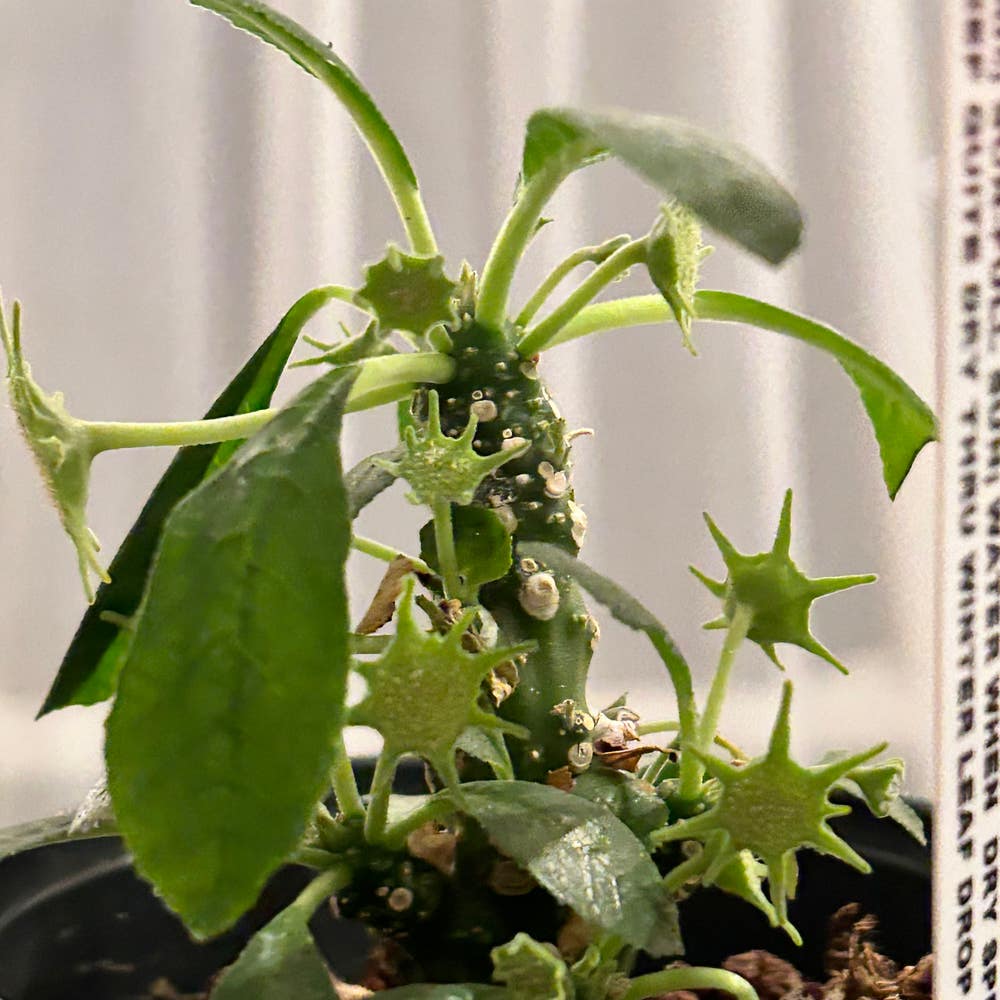
Should I Repot My Dorstenia gigas And If So, How?
Dorstenia gigas
By the Greg Editorial Team
Mar 30, 2024•4 min read
This article was created with the help of AI so we can cover more plants for you. May contain errors. See one? Report it here.
Give your Dorstenia gigas a growth spurt 🌿 with this free guide on when and how to repot for peak health!
- 🌱 Repot when roots show, leaves yellow, or growth slows.
- 🌞 Spring/early summer best for repotting Dorstenia gigas.
- 🏺 Choose terracotta for breathability, plastic for lightness, or ceramic for balance.
When Your Dorstenia gigas Craves a New Pot
🌱 Spotting the Telltale Signs
Roots making a break for it outside the pot? That's your Dorstenia gigas yearning for more room. If the roots are staging a coup, it's time to act.
Yellow leaves or growth that's more sluggish than a Monday morning? These are distress signals from your plant. It's not just being dramatic; it's suffocating in its current home.
Watering used to be a simple affair, but now it's a guessing game? If water drains faster than your patience on hold with customer service, or if it just sits there, stubborn as a stain, your pot's drainage is compromised.
🕰 Timing is Everything
Spring or early summer—that's your window. Your Dorstenia gigas is waking up, stretching its leaves, ready to grow. This is the best season for repotting.
Keep an eye on the growth cycles. If your plant's putting out new leaves like it's going out of style, it's prime time for a pot upgrade. Typically, this means a repotting frequency of every two to three years. But hey, your plant doesn't wear a watch. Watch for the signs, not the calendar.
Picking the Perfect Pot
🏺 Material Matters
Terracotta is the breathable choice for Dorstenia gigas, allowing air and water to circulate through its walls, which helps prevent root rot. However, it's heavy and can dry out quickly, requiring more frequent watering. Plastic pots are lightweight and retain moisture well, which is great for those who tend to forget watering. But overwatering can lead to a soggy mess. Ceramic pots strike a balance with some breathability and better moisture retention, but ensure they have drainage holes.
Size and Shape Considerations
The ideal pot size for Dorstenia gigas is typically one that's 2 inches larger in diameter than the current one. This provides enough room for growth without excess soil causing moisture issues. Pot shape affects drainage and root distribution; a pot that's too deep can lead to water accumulation at the bottom, so opt for a shape that allows even soil moisture and root expansion.
The Repotting Rundown
🌱 Prepping Your Plant
Before you uproot your Dorstenia gigas, water it the day before to ease the transition. Gently coax it out of its current pot, being mindful not to damage the roots. Inspect the root ball; trim any dead or overgrown roots with sterilized scissors—think of it as a root health check-up.
🏺 The Perfect Potting Mix
For the new pot, aim for a soil mix that's the botanical equivalent of a memory foam mattress: well-draining yet supportive. Mix in perlite or coarse sand to improve drainage. Ensure the first layer in the pot allows for breathability and drainage—no one likes wet feet, especially not your plant.
🌿 Settling into the New Space
Place your plant in the center of the new pot, maintaining the same soil level as before to avoid stem burial. Fill in around the plant with your well-draining mix, tamping down gently to eliminate air pockets but not so much that you're compacting the soil. Water sparingly right after repotting—think hydration, not a flood.
Aftercare for Thriving Growth
💧 The First Few Weeks
After repotting your Dorstenia gigas, it's crucial to get the watering just right. Adjust your watering schedule to accommodate the plant's new environment. Initially, the soil may dry out differently than before, so check the top inch of soil and water only when it feels dry. Keep a vigilant eye for signs of stress, like drooping leaves or yellowing, which could indicate your plant is either too thirsty or overwatered.
🌱 Long-term Success
In the weeks following repotting, hold off on fertilizing to allow your plant to acclimate. After about a month, you can slowly introduce a balanced fertilizer to encourage robust growth. Ongoing care involves monitoring light exposure, ensuring it's consistent and avoiding direct sunlight, which can be harsh. Pruning may also promote fuller growth, so don't shy away from snipping a few leaves. Remember, steady care is the secret sauce for a lush, thriving Dorstenia gigas.
⚠️ Safety First
This content is for general information and may contain errors, omissions, or outdated details. It is not medical, veterinary advice, or an endorsement of therapeutic claims.
Always consult a qualified healthcare professional before using any plant as food, medicine, or supplement.
Never eat any plant (or feed one to pets) without confirming its identity with at least two trusted sources.
If you suspect poisoning, call Poison Control (800) 222-1222, the Pet Poison Helpline (800) 213-6680, or your local emergency service immediately.
Spotted an error? Please report it here.
Ensure your Dorstenia gigas flourishes after repotting 🌱 with Greg's tailored care reminders and precise pot-sizing guidance.