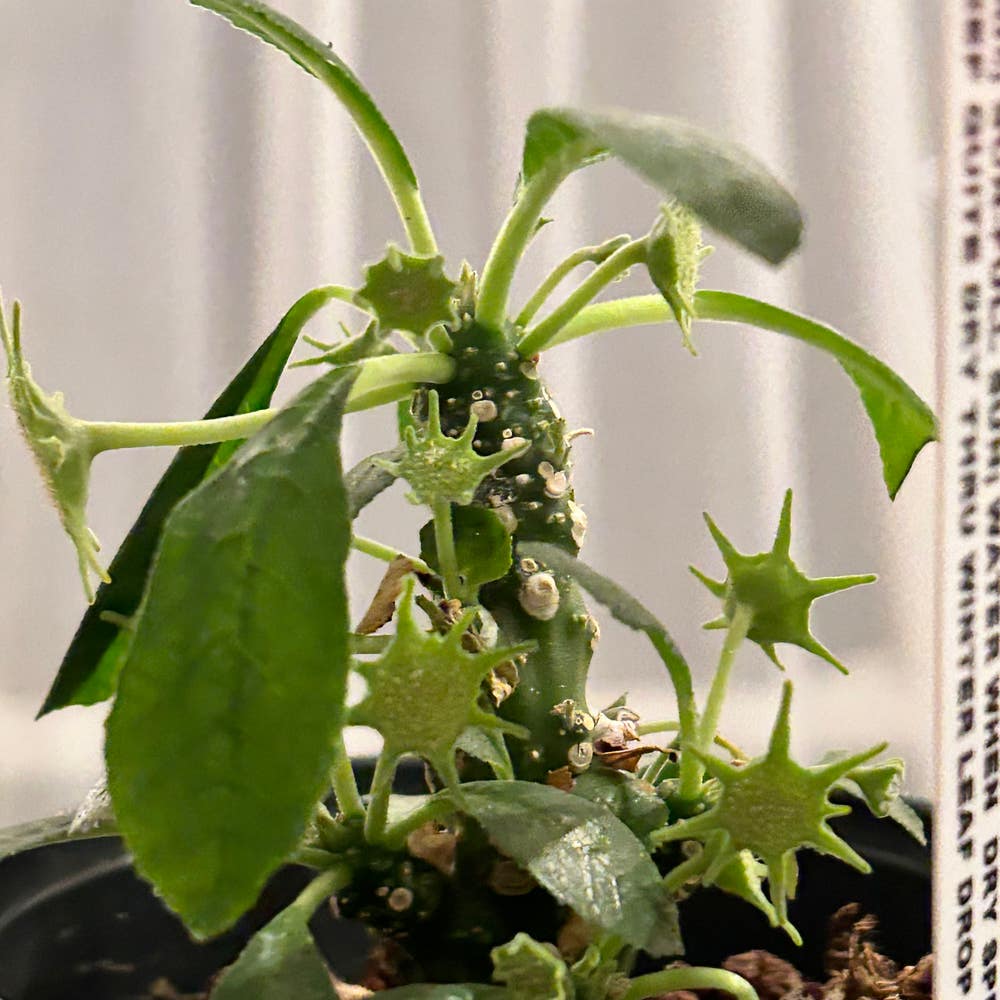
Why Are My Dorstenia gigas Leaves Droopy?
Dorstenia gigas
By the Greg Editorial Team
Mar 30, 2024•4 min read
This article was created with the help of AI so we can cover more plants for you. May contain errors. See one? Report it here.
Revitalize your wilting Dorstenia gigas 🌿 by mastering the trifecta of care: hydration, light, and soil!
- 🌱 Under/overwatering? Check for crisp or yellow leaves and adjust watering.
- 💡 Light stress? Move to bright, indirect sunlight and rotate regularly.
- 🌡️ Consistent temperature and humidity are key to preventing droopiness.
Spotting the Signs: Is Your Dorstenia gigas Thirsty or Drowning?
🏜️ Underwatering Woes
- Parched Dorstenia gigas leaves will curl and crisp, as if begging for a drop of water. The pot will feel as light as a feather, a surefire sign your plant is thirsty.
- To revive an underwatered plant, soak the soil until water runs freely from the drainage holes, ensuring deep hydration.
🚰 Overwatering Oversights
- Yellowing leaves and a heavy, wet pot are distress signals of overwatering. The soil should not cling to your fingers like a needy mud pie.
- If you've been overzealous with the watering can, halt all hydration, let the soil dry out, and consider repotting with fresh, well-draining soil to prevent root rot.
Light and Temperature: Finding the Sweet Spot
🌞 Too Much Sun or Not Enough?
Dorstenia gigas leaves drooping? Light stress could be the culprit. If your plant's leaves look more deflated than a day-old party balloon, it might be craving a break from the sun's relentless rays. Conversely, a lack of light can leave your plant's leaves limper than week-old lettuce.
Adjust the plant's location to somewhere with bright, but indirect sunlight. Think of a spot that's like a cozy reading nook, not a tanning bed. Rotate your plant regularly to prevent the botanical equivalent of a farmer's tan.
Weathering the Temperature
Temperature swings are to plants what mood swings are to teenagers – neither ends well. If your Dorstenia gigas has leaves that are more droopy than a teenager at 7 AM, it might be time to check the thermostat.
Keep your plant in a consistent temperature range, avoiding the drama of drafts and the scorch of heaters. It's not about recreating the Sahara or the Arctic; it's about finding that sweet spot where your plant can chill without actually chilling.
The Groundwork: Soil and Roots Matter
🚰 Drainage Dilemmas
Soil drainage isn't just plant parenthood jargon; it's critical for leaf health. Your Dorstenia gigas's roots need oxygen as much as they need water. If the soil's too clingy, refusing to let go of moisture, you've got a problem. Roots suffocate, leaves droop—it's a sad story.
To fix the flow, start with the basics: clear drainage holes. If they're as clogged as a teenager's pores, take action. Mix in some organic matter—compost or perlite—to make your soil less needy and more breathable. It's like upgrading your plant's living situation from a cramped studio to a spacious loft.
🕵️ Root Check: The Hidden Culprit
Roots are the unsung heroes, and sometimes they're in distress without you knowing. If your Dorstenia gigas is drooping, it's time for a root intervention. Gently remove the plant from its pot and inspect. If the roots are brown and mushy, you've hit the jackpot of yuck—root rot.
The right way to repot involves trimming the damaged roots with a clean, sharp tool. Think of it as a root haircut for better growth. Then, give your plant a fresh start with new, well-draining soil and a pot that's not a swimming pool for the roots. It's like a spa day for your plant, minus the cucumber slices.
Reviving Your Plant: Practical Recovery Steps
💧 Watering Wisdom
Watering your Dorstenia gigas isn't rocket science, but it's close. Master the art of hydration by feeling the topsoil. If it's dry to the touch, like a day-old bagel, it's time to water. But here's the kicker: only water until the soil is moist, not drenched. Think of it as giving your plant a stiff drink, not a bath.
Self-watering pots are the lazy gardener's dream, but don't let them become a soggy nightmare. They're great until they're not, so check the soil before trusting the reservoir.
🌡️ Environmental Harmony
Crafting the ideal microclimate for your Dorstenia gigas is like setting up a tiny spa. Keep the temperature consistent, as if your plant prefers a steady 75°F with no surprises. Use fans or heaters to maintain this botanical zen zone.
Humidity can be a beast. Too much, and your plant's leaves go limp like overcooked noodles. Too little, and they crisp up. Strike a balance with a humidifier or dehumidifier, depending on your home's Sahara or swamp vibes.
Remember, reviving your plant is a journey. Stay vigilant, and your plant will reward you with resilience and beauty.
⚠️ Safety First
This content is for general information and may contain errors, omissions, or outdated details. It is not medical, veterinary advice, or an endorsement of therapeutic claims.
Always consult a qualified healthcare professional before using any plant as food, medicine, or supplement.
Never eat any plant (or feed one to pets) without confirming its identity with at least two trusted sources.
If you suspect poisoning, call Poison Control (800) 222-1222, the Pet Poison Helpline (800) 213-6680, or your local emergency service immediately.
Spotted an error? Please report it here.
Ensure your Dorstenia gigas leaves stay perky and healthy 🌿 with Greg's custom watering reminders tailored to your plant's needs.