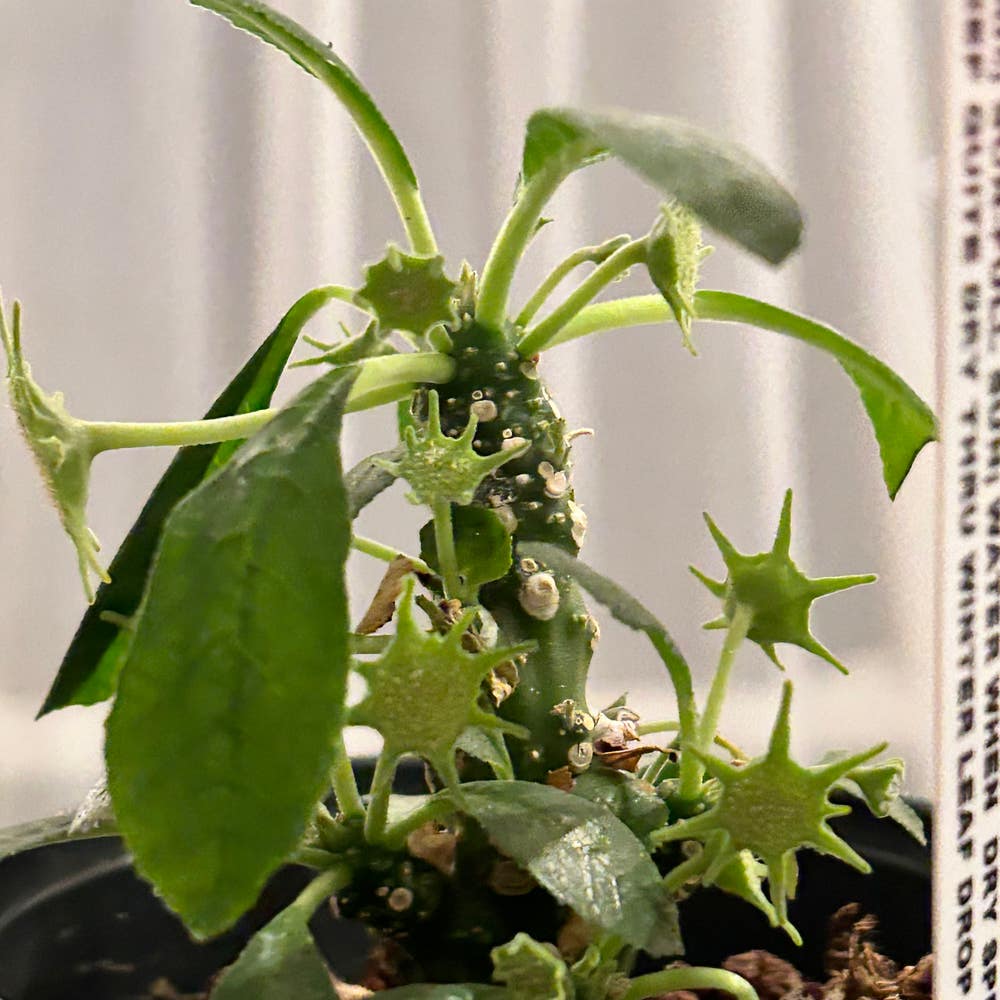
Why Are There Black Spots on My Dorstenia gigas Leaves?
Dorstenia gigas
By the Greg Editorial Team
Mar 30, 2024•3 min read
This article was created with the help of AI so we can cover more plants for you. May contain errors. See one? Report it here.
Banish black spots 🍂 on your Dorstenia gigas with these essential plant-saving strategies!
- Fungicides at first sign - read labels and rotate types to prevent resistance.
- Good hygiene and pruning - essential for preventing black spots on leaves.
- Balance humidity and light - aim for 40-60% humidity and bright, indirect light.
Plant Care 101
Choosing the Right Plant for Your Space
Watering Dos and Don'ts
Soil and Fertilizer Basics
Dealing with Pests and Diseases
Battling Black Spots: Treatment Strategies
🍄 Fungicide to the Rescue
When black spots mar your Dorstenia gigas, it's fungicide time. But don't just douse your plant; read the label. It's the difference between a targeted strike and a wild spray-and-pray. Apply at the first sign of trouble, and keep a steady schedule. Remember, more isn't always better.
Rotate your fungicides to avoid creating super-fungi. It's like keeping hackers off your trail with new passwords. Tebuconazole and triticonazole are the big guns here, but don't get trigger-happy. Use them as directed, and always with a nod to safety—suit up like you're heading into battle.
🦠 Antibacterial Actions
If bacteria are the villains behind those unsightly spots, reach for copper compounds and targeted bactericides. But treat them like a sniper's bullet—precise and sparing. Overuse could spawn antibiotic-resistant critters, and that's a whole new world of pain.
For a more gentle approach, consider horticultural oil or insecticidal soap. They're like the covert operatives of plant care—less heavy-handed but still effective. And if things escalate, antibiotics like streptomycin are your last line of defense. Use them wisely; they're the plant equivalent of a Hail Mary pass.
Prevention is Key: Keeping Black Spots at Bay
🌱 Cultural Practices
Plant hygiene is not just a buzzword; it's your first line of defense against the black spot onslaught. Routine care—like wiping down leaves and pruning dead or infected areas—can be the difference between a thriving Dorstenia gigas and a spotty mess. Use sterilized shears to prune; think of it as a surgical strike against potential infections.
🌿 Environmental Tweaks
Humidity and watering practices are the yin and yang of plant health. Too much moisture invites fungal fiestas, while too little leaves your plant gasping. Water at the base to avoid wet leaves, and let the soil dry out a bit between waterings. It's like giving your plant a thirst for life, not a drowning.
💨 Humidity and Hydration Harmony
Keep the air moving around your Dorstenia gigas with good circulation—stagnant air is a fungal playground. If your plant's environment feels like a steam room, it's time to dial down the humidity. Use a fan or open a window; think of it as giving your plant room to breathe.
💡 Let There Be (The Right Amount of) Light
Lighting is crucial. Too much and your plant burns; too little and it yearns. Aim for that sweet spot of bright, indirect light. If your indoor jungle is more cave than conservatory, consider a grow light. It's like giving your plant a bit of fake sun without the burn.
Tailoring the Environment to Protect Your Plant
💧 Humidity and Hydration Harmony
To prevent black spots, balance is crucial when it comes to humidity. Aim for a range of 40-60% humidity, which is often considered the Goldilocks zone for plants like Dorstenia gigas. Use a hygrometer to keep tabs on moisture levels. If the air is too damp, consider a dehumidifier; if too dry, a humidifier or pebble tray can help.
☀️ Let There Be (The Right Amount of) Light
Proper lighting is essential in the fight against black spots. Dorstenia gigas thrives in bright, indirect sunlight. Direct rays can stress the plant, making it more susceptible to issues. Ensure that the plant is positioned to receive the optimal amount of light without being scorched. Additionally, good air circulation is non-negotiable. Space plants apart and use a fan if necessary to simulate a gentle breeze, discouraging stagnant air that fosters fungal growth.
⚠️ Safety First
This content is for general information and may contain errors, omissions, or outdated details. It is not medical, veterinary advice, or an endorsement of therapeutic claims.
Always consult a qualified healthcare professional before using any plant as food, medicine, or supplement.
Never eat any plant (or feed one to pets) without confirming its identity with at least two trusted sources.
If you suspect poisoning, call Poison Control (800) 222-1222, the Pet Poison Helpline (800) 213-6680, or your local emergency service immediately.
Spotted an error? Please report it here.
Banish black spots with ease by letting Greg 🕵️♂️ tailor your Dorstenia gigas care, from humidity to hygiene, for pristine leaves every time.