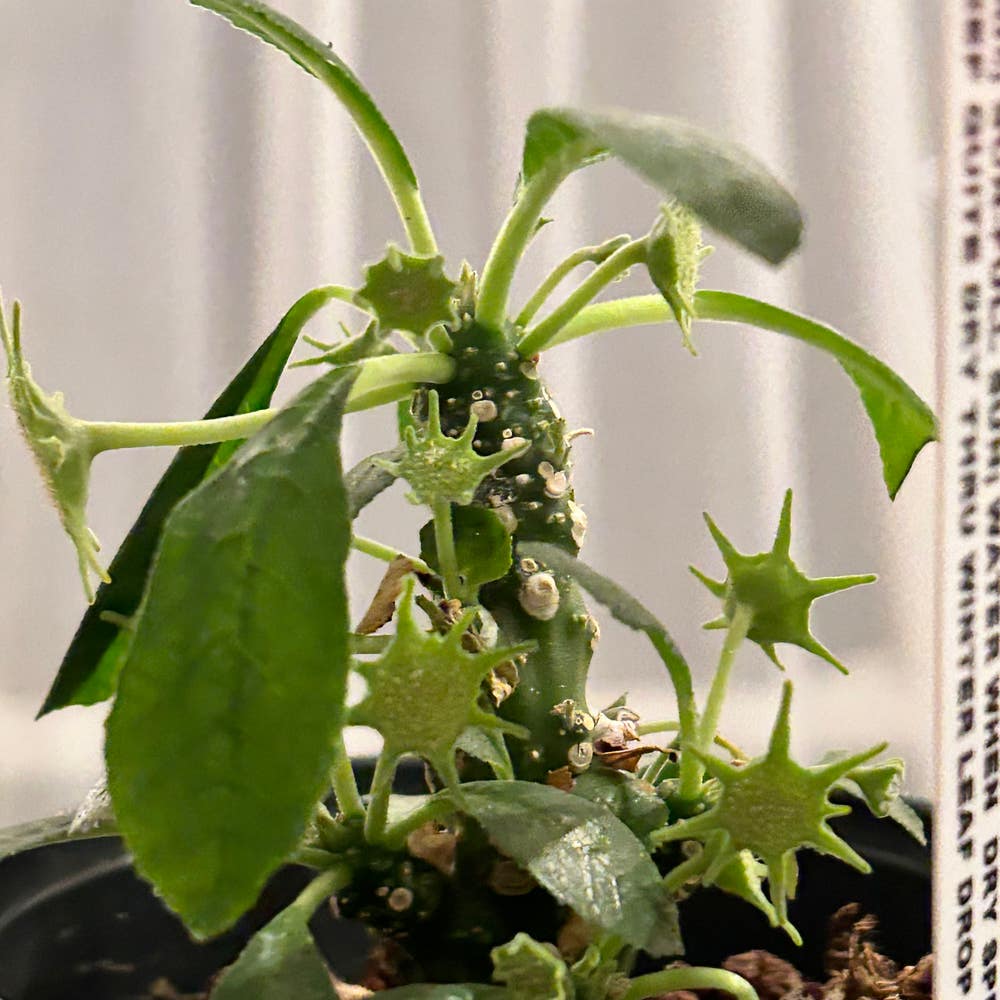
🐞 What Are The Bugs on My Dorstenia gigas?
Dorstenia gigas
By the Greg Editorial Team
Mar 30, 2024•4 min read
This article was created with the help of AI so we can cover more plants for you. May contain errors. See one? Report it here.
Safeguard your Dorstenia gigas' splendor from tiny terrors 🐛 with these proven pest-fighting strategies! 🛡️
- Spider mites and mealybugs sap your Dorstenia gigas's strength.
- Prevent pests with humidity and avoid overwatering.
- Regular inspections and cleanliness keep bugs at bay.
Spot the Invaders: Identifying Common Pests on Dorstenia gigas
🕷️ Spider Mites: The Sneaky Sap-Suckers
Tiny webs on your Dorstenia gigas? Spider mites are likely the culprits. These pests are sap-suckers, leaving behind a speckled or discolored look on the leaves.
Immediate action is crucial to prevent further damage. They thrive in dry conditions, so increasing humidity can help keep them at bay.
🦟 Scale Insects: Sticky Foes
Notice unusual bumps on stems and leaves? You're probably looking at scale insects. These pests are masters of disguise, blending in with your plant while they drain its sap.
They leave behind a sticky residue known as honeydew, which can lead to sooty mold. Regular inspections can catch these freeloaders before they cause serious harm.
🦟 Fungus Gnats: More Than Just Annoying Flies
If you see tiny flies around your plant, it's time to check the soil. Fungus gnat larvae feast on the roots, posing a serious threat to your Dorstenia gigas.
Overwatering is a common cause, so ensure your watering schedule allows the soil to dry out between sessions. This can help cut off the source of the problem.
🦠 Mealybugs: The White Waxy Menace
Find fluffy white deposits in the nooks of your plant? Mealybugs are likely hiding there. They suck the sap and weaken your Dorstenia gigas.
These pests prefer warm, moist environments. Alcohol swabs can be used for a targeted approach, while neem oil and insecticidal soap serve as broader chemical defenses.
Bug Busting: Effective Remedies for Each Pest
🕷️ Spider Mites: Turning the Tide
Neem oil and insecticidal soap are your front-line warriors against the dreaded spider mites. Spray every leaf, nook, and cranny to catch these elusive pests.
Humidity is a spider mite's worst nightmare. Increase moisture with regular misting, or place a humidifier nearby to prevent infestations.
🐞 Scale Insects: Getting Under Their Shell
For scale insects, start with a hands-on approach. Manual removal with a cotton swab dipped in alcohol can be effective for light infestations.
When scales dig in, fight back with neem oil or horticultural oil. Ensure thorough coverage for best results. Reapply as needed, but don't overdo it; these oils are potent.
🦟 Fungus Gnats: Cutting Off the Source
Soil drenching with neem oil can hit fungus gnat larvae where they live. Follow the label for mixing and application instructions.
Overwatering is like rolling out the red carpet for gnats. Balance moisture levels by letting the soil dry out between waterings to keep these pests at bay.
🐛 Mealybugs: Wiping Them Out
Alcohol swabs are your precision tool against mealybugs. Direct contact is key, so get up close and personal with these pests.
For a broader attack, neem oil and insecticidal soap are your allies. Apply consistently and watch those mealybugs disappear.
Fortify Your Plant: Preventative Tactics
🦅 Regular Inspections: Your First Line of Defense
Inspect your Dorstenia gigas like a hawk, scouting for the slightest hint of trouble. Weekly check-ups are non-negotiable. Flip those leaves, peer into the nooks, and scrutinize the stems. Spotting pests early can save you from a full-scale invasion.
🚫 Quarantine New Plants: The Isolation Protocol
Newcomers to your plant family? Don't trust them. Quarantine these potential Trojan horses for at least two weeks. This buffer period helps reveal any stowaways before they mingle with your green crew.
🧹 Cleanliness: The Pest Repellent
Keep your Dorstenia gigas' territory spick and span. Fallen leaves? Gone. Debris? Cleared. Think of it as setting up a no-bug zone. Regular cleaning is like armor against the onslaught of pests.
🕵️ Pro Tips for Plant Inspection
Be the detective your plant deserves. A magnifying glass might not be necessary, but do channel that level of attention. Check the soil, look under leaves, and examine new growth. If pests are throwing a party, you'll find evidence like sticky residue or fine webbing. Catch them before they put down roots, literally.
📚 Knowledge is Power: Stay Informed
Stay sharp on local plant quarantines and regulations. Being in the know can prevent both legal headaches and botanical heartaches. Your Dorstenia gigas depends on you to be its informed protector.
⚠️ Safety First
This content is for general information and may contain errors, omissions, or outdated details. It is not medical, veterinary advice, or an endorsement of therapeutic claims.
Always consult a qualified healthcare professional before using any plant as food, medicine, or supplement.
Never eat any plant (or feed one to pets) without confirming its identity with at least two trusted sources.
If you suspect poisoning, call Poison Control (800) 222-1222, the Pet Poison Helpline (800) 213-6680, or your local emergency service immediately.
Spotted an error? Please report it here.
Banish bugs from your Dorstenia gigas with smart care and timely checks ⏱️—Greg's reminders help you maintain the perfect moisture balance and catch pests early!