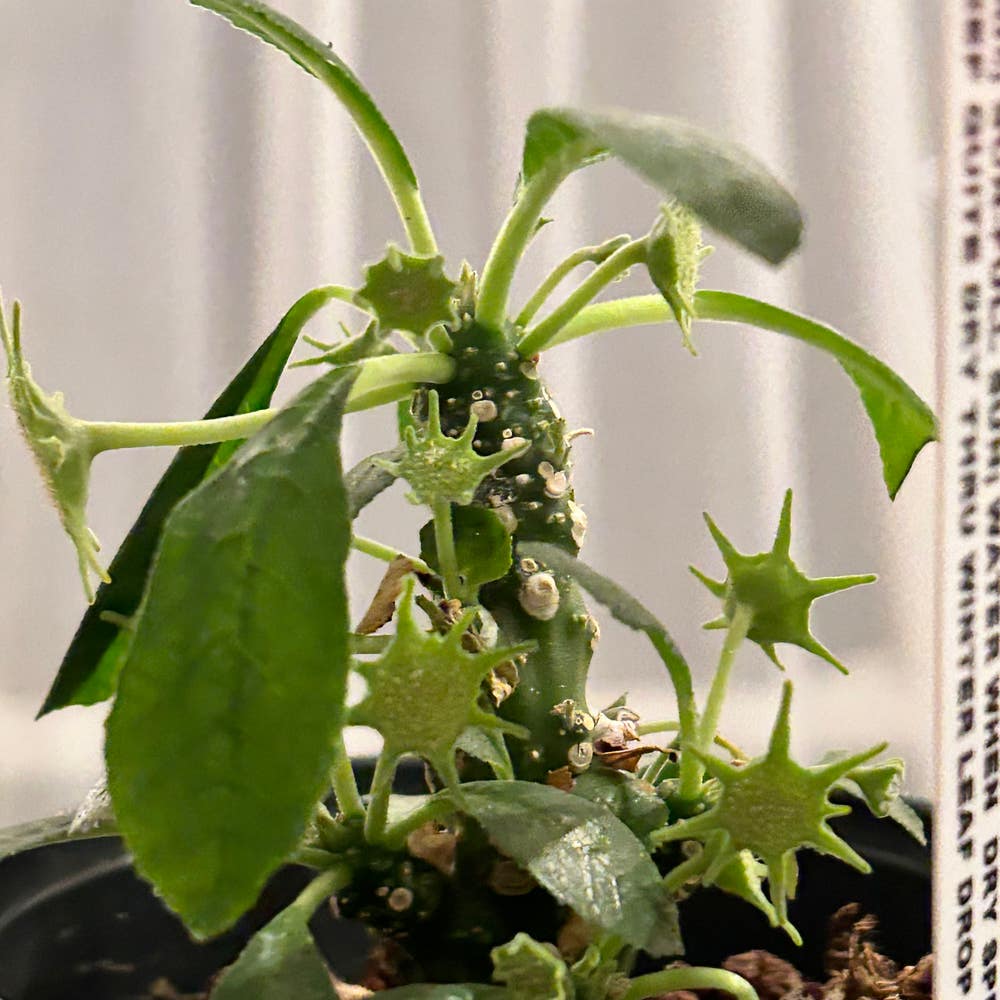
Why Are My Dorstenia gigas Leaves Dropping?
Dorstenia gigas
By the Greg Editorial Team
Mar 30, 2024•4 min read
This article was created with the help of AI so we can cover more plants for you. May contain errors. See one? Report it here.
Solve the leaf-drop mystery of Dorstenia gigas for a lush, happy plant! 🌿✨
- 65-75°F ideal for Dorstenia gigas, avoid temperature stress.
- Bright, indirect sunlight needed; watch for droopy leaves.
- Moist, well-drained soil is key; beware of over/underwatering.
Spot the Signs: When Your Dorstenia gigas Is Unhappy
🌡️ Temperature Tantrums: Too Hot or Too Cold?
Temperature stress in Dorstenia gigas isn't a silent cry for help. You'll see it loud and clear when leaves start dropping like hot potatoes. This plant has a comfort zone between 65 and 75 degrees Fahrenheit. Anything outside of that range and you're in for a leafy rebellion.
💡 Light Woes: Seeking the Perfect Glow
Inadequate light turns Dorstenia gigas into a drama queen with droopy leaves. It's a sun-seeker but despises the harsh spotlight. Bright, indirect sunlight is its jam, mimicking the dappled light of its natural habitat.
🚰 Watering Mishaps: The Balancing Act
Overwatering makes leaves go limp and soggy, while underwatering leaves them thirsty and crisp. Neither is a good look. Aim for moist but not waterlogged soil, and let the top inch dry out before the next watering session. It's a delicate dance, but your Dorstenia gigas will thank you with perky leaves.
Pests and Pathogens: Uninvited Guests
🐛 Common Culprits: Who's Eating the Leaves?
Pests can turn your Dorstenia gigas into an all-you-can-eat buffet. Aphids, spider mites, and mealybugs are the usual suspects. These tiny vampires suck the sap right out of the leaves, causing them to weaken and drop. If you spot any of these pests, it's time to take action.
🍄 Fungal Foes and Bacterial Baddies
Fungal and bacterial infections are like stealthy ninjas attacking your plant. Black or brown spots on leaves with a yellow halo are classic signs of a fungal invasion. Bacterial diseases often present as wet, slimy areas on leaves. If you see these symptoms, it's critical to address them promptly to prevent further damage.
First Aid for Fallen Leaves: Immediate Actions
🌡️ Adjusting the Environment
Quick fixes can stabilize your plant's environment. If your Dorstenia gigas is dropping leaves, it's time to assess and adjust.
🌞 Temperature and Light Adjustments
Move your plant away from areas that are too hot or cold. Find a spot with bright, indirect light; direct sunlight can be too harsh. Gradually introduce new conditions to avoid shocking your plant.
🚰 Rescuing Roots: Dealing with Water Woes
Root health is critical. Overwatering and underwatering can both lead to leaf drop, but the solutions are straightforward.
🌧️ Steps for Overwatered Plants
- Check the soil moisture; if it's soggy, cease watering immediately.
- Unpot the plant carefully and inspect the roots for rot—trim as necessary.
- Let the roots air out before repotting in fresh, well-draining soil.
🏜️ Steps for Underwatered Plants
- If the soil is dry, water your plant deeply until excess drains from the bottom.
- Wait for the top inch of soil to dry before watering again.
- Monitor your plant's response; improvement in leaf turgor indicates success.
Long-Term Care: Preventing Future Leaf Loss
🏡 Crafting the Ideal Habitat
Maintaining optimal growing conditions is the bedrock of Dorstenia gigas health. Ensure your plant has a well-drained potting mix; this species despises wet feet. They crave consistency, so keep the temperature steady—think of it as the plant's personal comfort zone. Light should be bright but not scorching, like a gentle morning sunbath. Fertilize sparingly with a focus on potash and phosphorus during the growing season to encourage robustness without overindulgence.
🩺 Regular Check-Ups: Monitoring Plant Health
Vigilance is key. Treat your Dorstenia gigas like a VIP, giving it regular once-overs. Pests? Show them the door at first sight. Something off with the leaves? Get on it like a detective on a hot lead. Adjust watering with the seasons; these plants aren't cacti, but they're not water lilies either. Keep the surrounding area debris-free to discourage disease. And yes, jot down notes on your plant's progress; it's not just for green thumbs, it's smart gardening. Remember, a little attention goes a long way in preventing leaf loss.
⚠️ Safety First
This content is for general information and may contain errors, omissions, or outdated details. It is not medical, veterinary advice, or an endorsement of therapeutic claims.
Always consult a qualified healthcare professional before using any plant as food, medicine, or supplement.
Never eat any plant (or feed one to pets) without confirming its identity with at least two trusted sources.
If you suspect poisoning, call Poison Control (800) 222-1222, the Pet Poison Helpline (800) 213-6680, or your local emergency service immediately.
Spotted an error? Please report it here.
Ensure your Dorstenia gigas thrives by letting Greg track the temperature 🌡 and light, while perfecting your plant's watering routine for leaf-drop-free health.