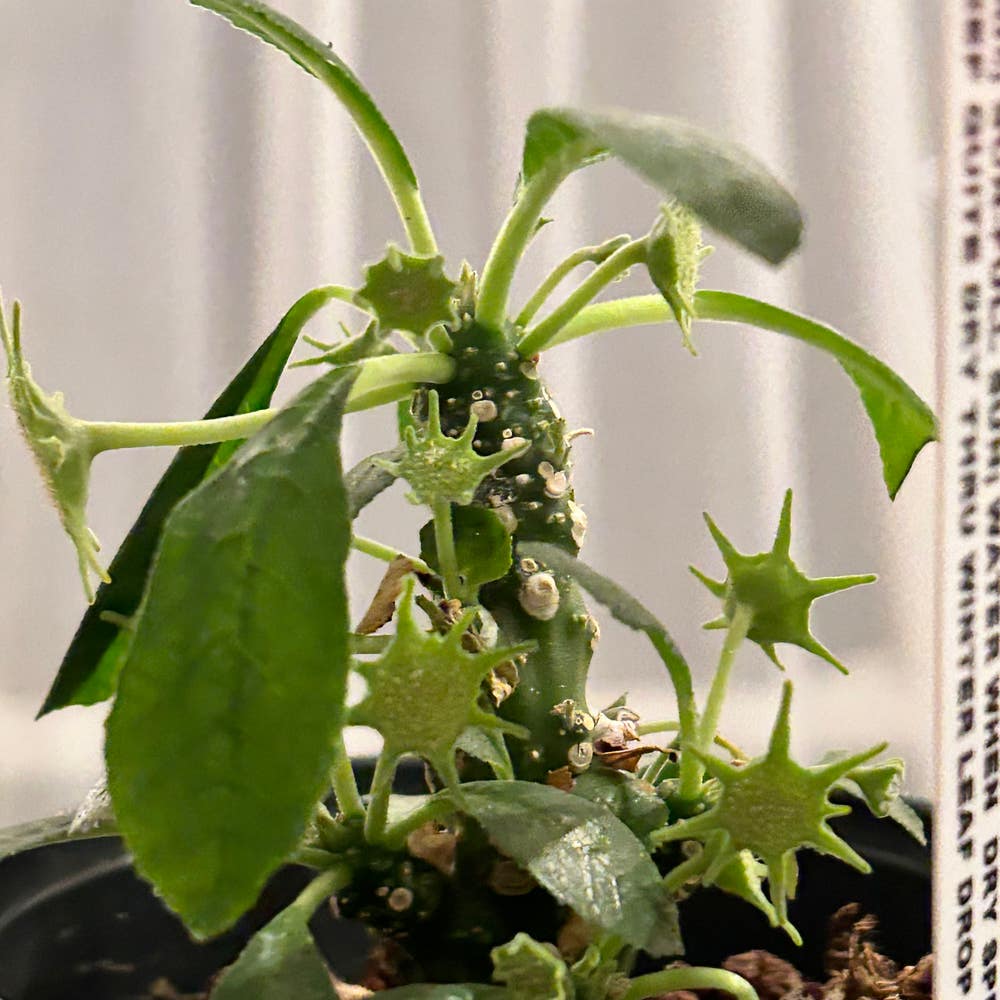
Why Are My Dorstenia gigas Leaves Curling?
Dorstenia gigas
By the Greg Editorial Team
Mar 30, 2024•4 min read
This article was created with the help of AI so we can cover more plants for you. May contain errors. See one? Report it here.
Uncover the secret to unwinding those troubling leaf curls on your Dorstenia gigas 🌿—and keep them lush and flat!
- Leaf curling signals distress, often with yellowing or dry patches.
- Environmental factors and watering are key to preventing curling.
- Regular health checks help catch pests, diseases, and stress early.
Spotting the Curl: Identifying Leaf Curl in Dorstenia Gigas
🍃 Visual Symptoms of Leaf Curling
When Dorstenia gigas leaves start resembling anything but their usual flat selves, it's a red flag. Curling, twisting, or cupping of the leaves is a distress signal. Discoloration often joins the party, with leaves trading their healthy green for a sad yellow.
🕵️ Other Signs to Look Out For
Beyond the obvious curl, be on the lookout for dry patches, spots, or texture changes. These are like the secret handshakes of plant stress, indicating issues that go deeper than just a bad leaf day.
🚨 When to Be Concerned About Leaf Curling
If the curling is more rapid than a teenager's mood swing, it's time to act fast. Gradual changes are less alarming but still warrant attention. Watch for new growth behaving badly—it's the canary in the coal mine for plant health.
Rooting Out the Causes: What's Behind the Curl?
💡 Environmental Stressors: Light, Temperature, and Humidity
Light can be a fickle friend to Dorstenia gigas. Too much, and leaves curl up like they're avoiding paparazzi. Not enough, and they stretch out, desperate for a sunbath. The sweet spot? Bright, indirect light. Think of it as the plant's preferred SPF.
Temperature swings are the drama queens of the plant world. Too hot, and your plant's leaves act like they're in a sauna. Too cold, and they curl up tighter than a rolled yoga mat. Stability is key—aim for a consistent, plant-friendly temperature range.
Humidity is the silent player, often overlooked. Get it wrong, and your plant will let you know with a curl. Think of a humidifier or pebble tray as your plant's personal spa—just enough moisture in the air to keep those leaves relaxed and flat.
🚰 Water Woes: Overwatering and Underwatering Insights
Overwatering is like that friend who doesn't know when to leave the party. The roots get overwhelmed, and the leaves start sending SOS signals with a curl. Cut back on the H2O and make sure your pot has proper drainage.
Underwatering, on the other hand, leaves your plant thirstier than a marathon runner. The leaves curl upward, reaching for any drop of moisture. Consistent watering—not too much, not too little—is the hydration balance your plant craves.
🛡️ The Unseen Culprits: Pests and Diseases
Pests are the uninvited guests that never bring a bottle of wine. They just take, leaving your plant's leaves curled and stressed. Inspect the undersides of leaves and show those bugs the door with insecticidal soap or horticultural oil.
Diseases are the silent whispers of the plant world, often going unnoticed until it's too late. Fungal issues love to crash the party, especially when the leaves are wet. Increase airflow, keep the foliage dry, and be ready to prune like a ninja if necessary.
Unraveling the Curls: Effective Treatment Strategies
💧 Adjusting Your Watering Routine
Consistency is key in watering your Dorstenia gigas. Check the top inch of soil; if dry, it's time to water. Use the soak and dry method, but be vigilant to avoid waterlogging. Quality of water counts—consider using filtered water if your tap water is high in chemicals.
🌞 Balancing Light and Shade
Dorstenia gigas thrives in bright, indirect sunlight. If leaves reach upwards, they're likely craving more light. Conversely, if they're reaching out flat or downwards, they might be getting too much. Adjust their position to find that sweet spot where the light is just right.
🐜 Dealing with Pests and Diseases
Regular checks for pests are crucial—think of it as scrolling through a social feed for your plant's health. At the first sign of trouble, isolate the plant. Treat pests with insecticidal soap or neem oil, and use a suitable fungicide for diseases. Prune affected areas to prevent spread.
Keeping the Leaves Flat: Prevention Tips
💡 Monitoring and Adjusting Environmental Factors
Consistency is your plant's best friend. Keep an eye on temperature, light, and watering schedules. Think of your plant like a creature of habit—it thrives on routine.
🏥 Regular Health Checks for Early Detection
Make plant check-ups a part of your routine. Like brushing your teeth, it's about prevention. Spot a funky leaf? Don't wait—investigate. Early action can save your plant from a world of hurt.
🌱 The Importance of Proper Soil and Drainage
Soil is the unsung hero in the quest for flat leaves. Aim for a mix that's just right, like a bespoke suit—well-draining but moisture-retentive. If water sits tight like a bad houseguest, it's time to rethink your soil strategy.
⚠️ Safety First
This content is for general information and may contain errors, omissions, or outdated details. It is not medical, veterinary advice, or an endorsement of therapeutic claims.
Always consult a qualified healthcare professional before using any plant as food, medicine, or supplement.
Never eat any plant (or feed one to pets) without confirming its identity with at least two trusted sources.
If you suspect poisoning, call Poison Control (800) 222-1222, the Pet Poison Helpline (800) 213-6680, or your local emergency service immediately.
Spotted an error? Please report it here.
Prevent your Dorstenia gigas leaves from curling by letting Greg track 🌡️ and adjust your plant's care routine for a stress-free, lush life!