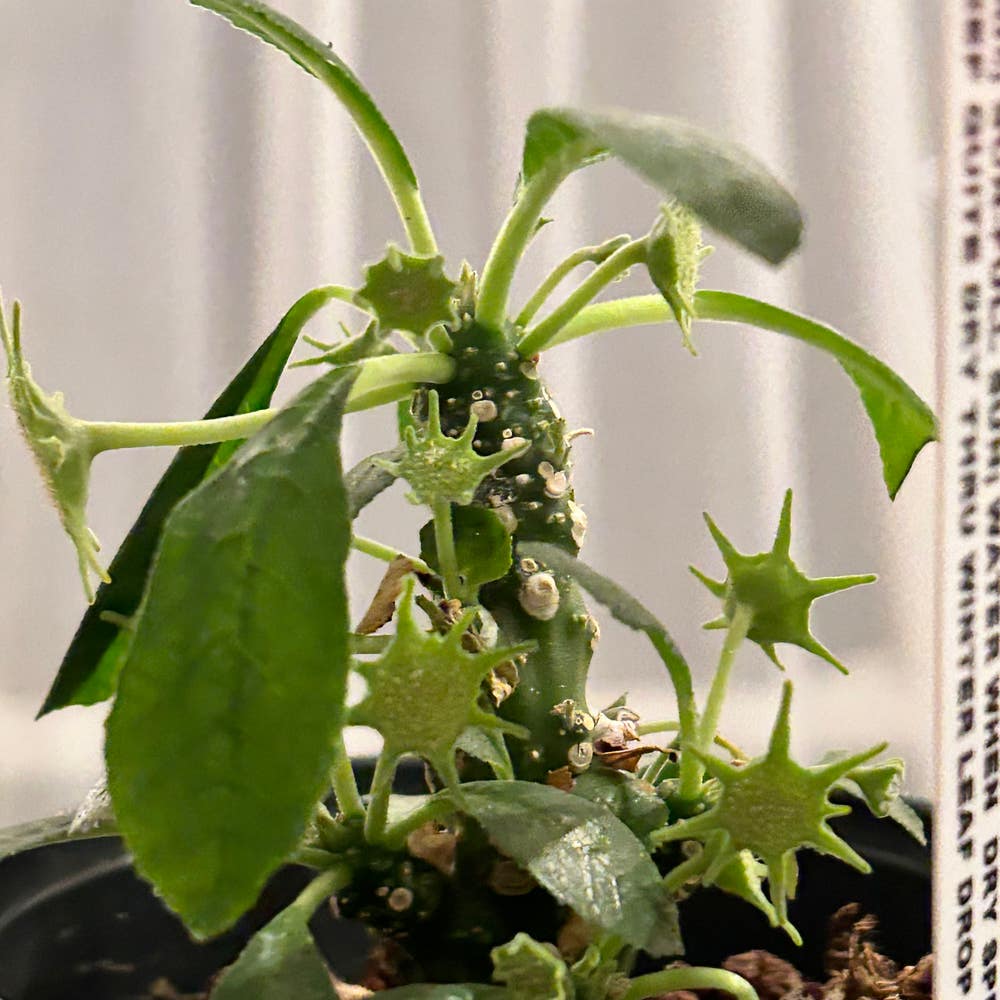
💧 Why Are My Dorstenia gigas Leaves Mushy?
Dorstenia gigas
By the Greg Editorial Team
Mar 30, 2024•3 min read
This article was created with the help of AI so we can cover more plants for you. May contain errors. See one? Report it here.
Rescue your Dorstenia gigas from squishy leaf peril 🍂 by swiftly tackling overwatering woes!
- Overwatering? Yellow leaves and heavy pot are telltale signs.
- Root rot alert: Squishy roots and musty smell mean immediate action needed.
- Recovery tip: Adjust watering, use well-draining soil, and ensure indirect sunlight.
Spotting the Trouble: Signs Your Dorstenia gigas Leaves Are Unhappy
💧 Overwatering Symptoms
Yellow leaves and a pot heavier than your conscience after skipping the gym—classic signs your Dorstenia gigas is drowning in love, literally. If the soil's as wet as a rainforest floor, it's time to dial back on the H2O.
🦠 Root Rot Recognition
When the roots of your Dorstenia gigas feel like a squishy horror movie prop, it's root rot. A musty smell is your plant's version of an S.O.S. flag. If the roots are darker than your morning coffee and mushier than a romance novel's ending, you've got trouble brewing below the surface.
🐜 Other Possible Culprits
Not all mushy leaves are a cry for less water. Sometimes pests or diseases sneak in like uninvited party crashers. Check for bugs that treat your plant like an all-you-can-eat buffet, or signs of disease that could turn your green oasis into a wilted wasteland.
First Aid for Mushy Leaves
🌱 Immediate Steps to Take
When you spot mushiness in your Dorstenia gigas leaves, it's time to act. Cease watering immediately; your plant is not on a hydration marathon. Gently remove the plant from its pot and shake off excess soil, like shaking off a bad dream. Inspect the roots closely—if they resemble overcooked spaghetti, it's time for some tough love. With sterilized scissors, cut away the rotten parts. It's like performing surgery: precision is key, and cleanliness is non-negotiable.
🚑 Salvaging the Plant
After the amputation, give your plant a chance to dry out. Think of it as a plant ICU, where rest and a dry environment are crucial. If you suspect a fungal rave is happening at your plant's expense, introduce a fungicide, but don't get heavy-handed. Follow the label directions as if they're the secret code to plant salvation. Keep a watchful eye for signs of recovery or decline, and be prepared to pivot your care strategy. Remember, your plant's life hangs in the balance of your actions.
Turning the Tide: Correcting Your Care Routine
💧 Fine-Tuning Your Watering Schedule
Check the soil before you water. The top inch should be dry, not damp. Adjust your watering habits with the changing seasons; your Dorstenia gigas's thirst will vary. In winter, water less; in summer, a bit more. Consistency is crucial, but be adaptable to your plant's needs.
🌿 The Right Environment
Light is non-negotiable. Your plant requires bright, indirect sunlight to thrive. Too much direct sun can scorch the leaves, while too little can weaken the plant. Temperature should be stable; avoid placing your plant in drafty areas or near heat sources. A gentle breeze, perhaps from a fan, can prevent stagnant air and promote a healthy environment.
Future-Proofing Your Dorstenia gigas
💧 Watering Wisdom
To master the art of watering your Dorstenia gigas, think of it as a delicate dance with nature. Check the soil before watering—dryness at the top inch is your green light. Overwatering is a common misstep, so let the plant's thirst, not the calendar, guide you. In winter, your plant sips water like a fine whiskey—slowly and less frequently—adjust accordingly.
🌱 The Perfect Potting Mix
Choosing the right soil is like picking the perfect mattress for a good night's sleep—it's crucial. For Dorstenia gigas, a well-draining mix that shuns water like a cat avoids a bath is essential. Mix in ingredients like perlite, coarse sand, or pumice to ensure quick drainage. Avoid water retention like you'd avoid a spoiler to your favorite show. Remember, a pot with drainage holes is as necessary as a roof over your head.
⚠️ Safety First
This content is for general information and may contain errors, omissions, or outdated details. It is not medical, veterinary advice, or an endorsement of therapeutic claims.
Always consult a qualified healthcare professional before using any plant as food, medicine, or supplement.
Never eat any plant (or feed one to pets) without confirming its identity with at least two trusted sources.
If you suspect poisoning, call Poison Control (800) 222-1222, the Pet Poison Helpline (800) 213-6680, or your local emergency service immediately.
Spotted an error? Please report it here.
Revive your Dorstenia gigas 🌱 from mushy despair by adjusting your watering with Greg's personalized reminders, ensuring a thriving comeback.