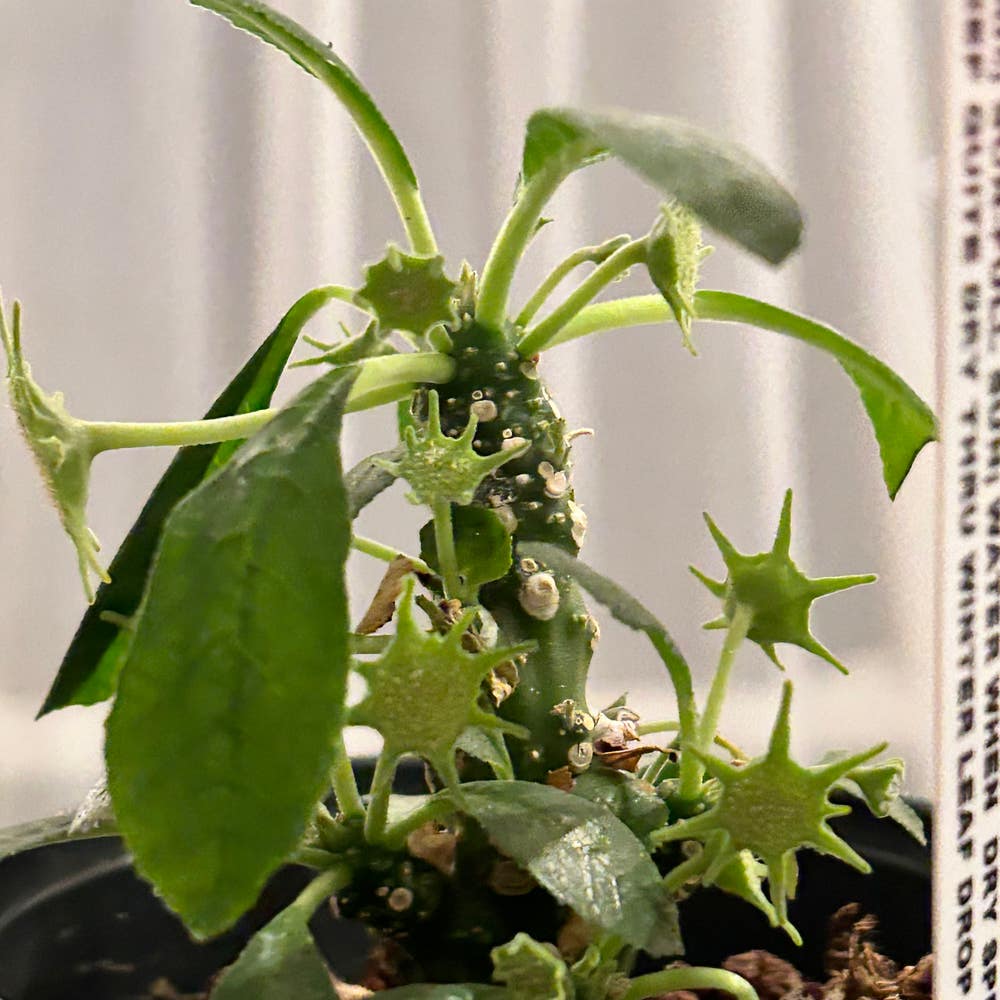
🌡 What Temperature Does My Dorstenia gigas Need?
Dorstenia gigas
By the Greg Editorial Team
Mar 30, 2024•3 min read
This article was created with the help of AI so we can cover more plants for you. May contain errors. See one? Report it here.
Nurture your Dorstenia gigas to bloom 🌸 by mastering its ideal temperature range!
- Day 70°F-80°F, Night 60°F-70°F - Ideal for Dorstenia gigas.
- 🌡️ Avoid temperature stress - shield from extreme heat and cold drafts.
- Consistent warmth promotes blooming; cold halts it.
The Sweet Spot: Dorstenia gigas' Preferred Temperature Range
⛅️ Daytime Delight: Ideal Temperatures for Sun Hours
Dorstenia gigas basks in the warmth of daytime temperatures. Aim for a cozy 70°F to 80°F (21°C to 27°C) to keep it thriving without breaking a sweat. Extreme temperatures? Not on your watch. Shield your plant from the scorch of direct sunlight and the shock of cold drafts to prevent a botanical meltdown.
🌜 Nighttime Nurturing: Keeping It Comfy After Dark
When the sun clocks out, Dorstenia gigas prefers a slight chill. A dip to 60°F to 70°F (15°C to 21°C) at night is just the ticket for this succulent's restorative beauty sleep. Remember, stable temperatures are key, so avoid letting your home turn into a plant-chilling fridge or a sweltering sauna after dark.
When It's Too Hot or Too Cold: Recognizing Temperature Stress
🌡️ Telltale Signs Your Plant Is Feeling the Heat (or Chill)
Wilting leaves on your Dorstenia gigas? That's the plant's white flag, signaling surrender to excessive heat. Discoloration, such as brown or black tips, is the plant's version of an urgent distress call, indicating it's either too hot or too cold. Stunted growth isn't just a minor setback; it's a red alert that the temperature is messing with your plant's mojo.
🚑 Quick Fixes for Temperature Tantrums
Caught your plant in a temperature tantrum? Act fast. Move it to a cooler or warmer spot, depending on the crisis. If it's too hot, think shade and airflow. Too cold? Find a cozy corner away from drafts. Prune any damaged areas to prevent decay, and tweak your watering routine to cater to your plant's stressed state. Remember, keeping a vigilant eye on the thermometer can save you from a world of trouble.
Common Culprits: What's Messing with Your Plant's Comfort Zone?
🌬️ Drafts and Fluctuations: The Sneaky Stressors
Drafts are like unseen pests; they slip in and disturb your Dorstenia gigas without a sound. Your plant might not scream, but it feels the sting of those chilly gusts or sudden warmth. Stability is the name of the game.
Keep your green friend away from windows or doors that are frequently opened. Thermal curtains or draft stoppers are your new best friends here. Remember, your plant's comfort zone is a no-draft zone.
🍂 Seasonal Shifts: Prepping Your Plant for Changes
As seasons change, so should your care strategy for Dorstenia gigas. Consistency is critical, but with the right moves, you can keep your plant's temperature steady.
When summer heat waves hit, shield your plant from the scorch. Come winter, protect it from the icy grip of cold drafts. Monitor the temperature closely; a simple thermometer can be your plant's lifesaver. Keep the climate consistent, and your Dorstenia gigas will thank you.
Flower Power: Temperature's Role in Dorstenia gigas Blooms
🌡️ When Temperatures Align, Flowers Shine
For Dorstenia gigas, the right temperature is like the perfect pitch in music—essential for a full bloom performance. Maintaining warm temperatures during the day encourages the plant to produce vibrant flowers. It's a delicate balance; too hot, and the plant might stress, compromising bloom quality. Aim for a cozy, consistent warmth that mimics its native habitat.
❄️ The Cold Hard Truth: When Temperatures Drop, Flowers Stop
Cold temperatures are the nemesis of Dorstenia gigas blooms. When the mercury dips, the plant's flowering cycle can come to a screeching halt. It's not just about avoiding frost—prolonged exposure to cool conditions can prevent blooming altogether. Keep your plant away from drafts and ensure nighttime temperatures don't drop too low, or you might as well say goodbye to those floral aspirations.
⚠️ Safety First
This content is for general information and may contain errors, omissions, or outdated details. It is not medical, veterinary advice, or an endorsement of therapeutic claims.
Always consult a qualified healthcare professional before using any plant as food, medicine, or supplement.
Never eat any plant (or feed one to pets) without confirming its identity with at least two trusted sources.
If you suspect poisoning, call Poison Control (800) 222-1222, the Pet Poison Helpline (800) 213-6680, or your local emergency service immediately.
Spotted an error? Please report it here.
Ensure your Dorstenia gigas blooms beautifully 🌡 by relying on Greg to remind you when to tweak your home's temps, keeping those temperature tantrums at bay.