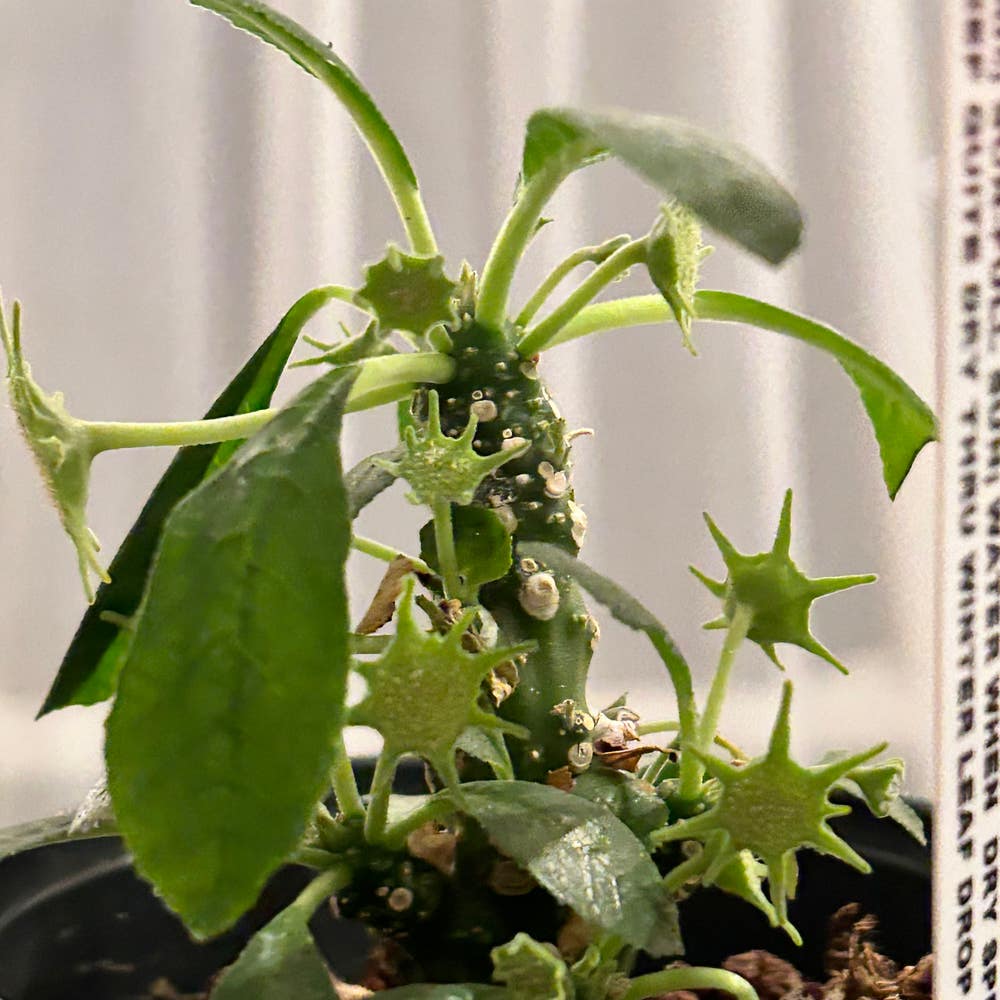
Why Does My Dorstenia gigas Have Yellow Leaves? 🍂
Dorstenia gigas
By the Greg Editorial Team
Mar 30, 2024•5 min read
This article was created with the help of AI so we can cover more plants for you. May contain errors. See one? Report it here.
Revive your Dorstenia gigas from yellow to green 🌿—learn the secrets to keeping its leaves vibrant and healthy!
- 🌿 Yellow leaves signal issues, not just natural aging—check new growth.
- 💡 Bright, indirect sunlight needed; use grow lights if necessary.
- 💧 Balance watering, enhance soil—prevent over/underwatering and root rot.
Spotting the Signs: Yellow Leaves on Your Dorstenia gigas
🍋 Identifying Yellow Leaves: What to Look For
Yellowing leaves can be the first hint that your Dorstenia gigas is not quite at ease. Vibrant green giving way to a lackluster yellow is a visual cue that shouldn't be ignored. Check whether the yellowing is uniform or if it's accompanied by spots, which could suggest different issues.
🚨 When Yellow Means Caution: Differentiating between natural aging and health issues
It's natural for older leaves to yellow and fall off, making room for fresh growth. However, if you spot this discoloration in newer leaves or across the plant, it's time for action. Additional symptoms like wilting, limpness, or stunted growth often accompany problematic yellowing. Regularly inspect your plant for such signs, as they can indicate more serious issues like pests or disease.
The Root of the Problem: Common Causes for Yellow Leaves
🌞 Light Struggles: Finding the Sweet Spot for Sunlight
The Goldilocks Principle for Light Exposure
Dorstenia gigas demands just the right amount of light. Too much sun and you're baking your plant; too little, and it's living in the shadows. Aim for bright, indirect sunlight to avoid the extremes.
🏜️ Adjusting Your Plant's Location and Considering Artificial Light
If your green friend is looking a bit jaundiced, it might be time to move it. No sunny window? No problem. Artificial grow lights can be a game-changer, mimicking the sun's rays without the burn.
💧 Water Woes: Balancing the Scales
Signs of Overwatering and Underwatering
Yellow leaves can signal water stress. Leaves dropping like flies? That's overwatering. Crispy and curled? Underwatering's the culprit. It's all about balance.
🚰 How to Tweak Your Watering Routine for Dorstenia gigas
Check the soil before you water—think of it as a moisture meter. Top inch dry? Time for a drink. Soggy? Hold off on the watering can.
🌱 Soil and Roots: The Foundation of Health
The Impact of Soil Quality and Drainage
Roots need room to breathe, and that's where well-draining soil comes in. Compacted soil is a no-go; it's like forcing your plant to wear tight shoes.
🍽️ Mixing the Perfect Soil Blend for Your Plant
Get your hands dirty and mix up a soil blend that's nutrient-rich and loose. It's like a comfy bed for your plant's roots, complete with a built-in snack bar.
🌡️ Climate Control: Keeping Temperatures in Check
Understanding the Temperature Preferences of Dorstenia gigas
Dorstenia gigas doesn't do well with dramatic temperature shifts. It prefers a steady climate, like a predictable friend who doesn't enjoy surprises.
Seasonal Adjustments to Keep Your Plant Happy
As seasons change, so should your care routine. Keep an eye on the thermostat and remember that your plant doesn't need a winter coat or a summer bikini; it just needs consistency.
Turning Over a New Leaf: Solutions and Adjustments
💡 Let There Be Light: Optimizing Light Conditions
Dorstenia gigas thrives in the spotlight but shuns the scorch. If your indoor jungle lacks luster, consider grow lights—a sun substitute that won't leave your plant sunburnt. Keep them at a cozy distance, like a campfire you can enjoy without the singe.
🚰 The Watering Can Tango: Finding Rhythm in Hydration
Watering is less waltz, more tango—it's all about the timing. Let the topsoil dry like a day-old baguette before dousing again. Room-temp water is the drink of choice, and always aim at the base—leaves aren't here to sip.
🌱 Soil Revival: Enhancing Your Plant's Earthy Home
Think of soil as the plant's mattress—it needs to be just right. A mix of peat, perlite, and sand offers a bed that breathes and drains, avoiding the dreaded root rot. If your plant's underperforming, it might be time for a soil spa day.
🌡️ Keeping Cool (or Warm): Managing Ambient Temperatures
Dorstenia gigas doesn't fancy weather whiplash. Aim for a steady climate—a temperate haven where it's always spring. Seasonal swings? Adjust your care, not just the thermostat. Less hydration in the chill, a bit more when it's warm.
Staying Green: Preventive Tips to Keep Yellow at Bay
📅 Crafting a Care Schedule: Consistency is Key
Consistency is the secret ingredient in the recipe for a healthy Dorstenia gigas. Like setting your favorite show to record, establish a care schedule that's non-negotiable. Watering should be as regular as your morning coffee, and lighting as reliable as your daily commute. Adjust for the seasons—less water in the winter, more shade in the summer. Think of it as your plant's personal calendar, keeping it in the loop of what's to come.
👀 Vigilant Observation: Staying Ahead of Environmental Shifts
Monitoring your plant is like checking the weather before heading out—it's essential. Keep an eye out for the first signs of yellowing or drooping. If you spot a pest, consider it persona non grata and show it the door with eco-friendly measures. Remember, your plant's not just for decoration; it's a living being that relies on you. So, keep your eyes peeled and your care dialed in, and your Dorstenia gigas will stay as green as an envious rival.
⚠️ Safety First
This content is for general information and may contain errors, omissions, or outdated details. It is not medical, veterinary advice, or an endorsement of therapeutic claims.
Always consult a qualified healthcare professional before using any plant as food, medicine, or supplement.
Never eat any plant (or feed one to pets) without confirming its identity with at least two trusted sources.
If you suspect poisoning, call Poison Control (800) 222-1222, the Pet Poison Helpline (800) 213-6680, or your local emergency service immediately.
Spotted an error? Please report it here.
Keep your Dorstenia gigas's leaves from yellowing 🍂 with Greg's personalized care reminders, ensuring a thriving and vibrant plant all year round!