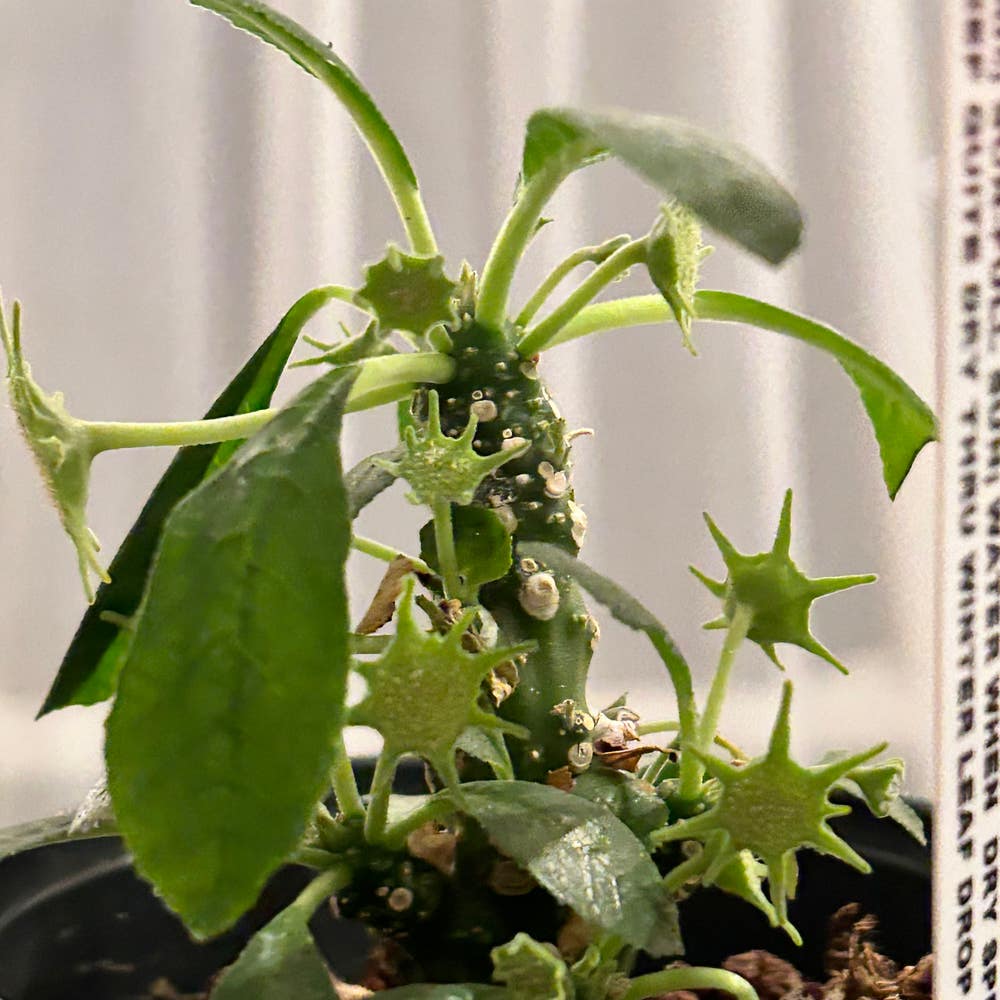
5 Essential Indoor Dorstenia Care Routines 💧
Dorstenia gigas
By the Greg Editorial Team
Sep 30, 2024•5 min read
This article was created with the help of AI so we can cover more plants for you. May contain errors. See one? Report it here.
Unlock the secret to a thriving Dorstenia with essential care tips for light, water, and humidity! 🌱
- 🌞 Dorstenia needs 10-12 hours of bright, indirect sunlight for optimal growth.
- 💧 Water every 1-2 weeks, ensuring the top inch of soil is dry first.
- 🌿 Maintain humidity between 50-70% and adjust care seasonally for best results.
Light Requirements
Ideal Indoor Light Levels 🌞
For your indoor Dorstenia, the optimal light conditions are bright, indirect sunlight. Aim for a daily light duration of 10-12 hours to keep your plant thriving.
If your Dorstenia isn’t getting enough light, you might notice stretched stems and pale leaves. These signs indicate it’s time to reassess its lighting situation.
Role of Grow Lights 💡
Grow lights play a crucial role in maintaining the health of indoor Dorstenia. They are especially beneficial for supplementing natural light in low-light conditions.
When selecting grow lights, consider LED and fluorescent options. Both types can effectively boost your plant's growth when natural light is lacking.
Choosing the Best Grow Light 🛠️
When choosing the best grow light, focus on the light spectrum, wattage, and coverage area. These factors will ensure your Dorstenia receives the right amount of light.
For small to medium plants, a wattage of 20-40 watts is recommended. Position your grow lights 12-18 inches above the plant for optimal results.
With the right light conditions, your Dorstenia will flourish, setting the stage for the next essential care routine: watering needs.
Watering Needs
Frequency and Amount of Water 🌊
Watering your indoor Dorstenia is crucial for its health. Aim to water every 1-2 weeks, adjusting based on your home's humidity and temperature.
Ensure the soil is moist but not soggy. A good rule of thumb is to check the top inch of soil; if it feels dry, it’s time to water.
Signs of Overwatering and Underwatering 🚨
Recognizing the signs of overwatering is essential. Look for yellowing leaves, mushy stems, or even root rot as indicators that you might be giving your plant too much water.
On the flip side, underwatering can lead to wilting leaves, dry soil, and leaf drop. Keep an eye on your plant's condition to maintain its vibrant health.
By mastering your watering routine, you’ll set your Dorstenia up for success. Next, let’s explore how humidity and temperature play a role in its growth.
Humidity and Temperature
Ideal Humidity Levels 🌬️
Maintaining the right humidity is crucial for your indoor Dorstenia. Aim for a humidity level between 50-70% to promote optimal growth.
Signs that your plant is suffering from low humidity include leaf drop and crispy edges. If you notice these symptoms, it’s time to take action.
Temperature Preferences 🌡️
Dorstenia thrives in a comfortable temperature range of 18°C to 27°C (65°F to 80°F). Keeping your plant within this range will help it flourish.
Be mindful of temperature extremes. Protect your plant from drafts and sudden changes to ensure it remains healthy.
Humidity Control Methods 💧
To boost humidity, consider using humidifiers, pebble trays, or grouping your plants together. These methods can create a more favorable environment for your Dorstenia.
Monitoring humidity levels is essential. A hygrometer can provide accurate readings, helping you maintain the ideal conditions for your plant's growth.
With the right humidity and temperature, your Dorstenia will thrive, setting the stage for the next essential care routine: soil and fertilization.
Soil and Fertilization
Best Soil Type 🌱
For your indoor Dorstenia, a well-draining potting mix is essential. Look for one that includes added perlite or sand to enhance drainage.
The ideal soil pH should be slightly acidic to neutral, ranging from 6.0 to 7.0. This balance helps your plant thrive and absorb nutrients effectively.
Fertilization Schedule and Types 🌿
Fertilizing your Dorstenia is crucial for its growth. Aim to fertilize every 4-6 weeks during the growing season to keep it healthy and vibrant.
When choosing fertilizers, consider a balanced liquid option, like NPK 10-10-10, or go for organic alternatives. Both types can provide the nutrients your plant craves.
With the right soil and fertilization routine, your Dorstenia will flourish beautifully. Next, let’s dive into common issues and maintenance tips to keep your plant in top shape.
Common Issues and Maintenance
🐛 Common Pests and Solutions
Indoor Dorstenia can attract a few pesky pests. The most common culprits are mealybugs, spider mites, and aphids.
Look for signs of infestation such as sticky residue, webbing, or distorted leaves. Regular inspections can help catch these issues early.
To prevent pests, consider using natural deterrents like neem oil or insecticidal soap. Keeping your plant clean and healthy is your best defense.
🛠️ Troubleshooting Common Problems
Leaf drop can be a common concern for Dorstenia owners. This issue often stems from humidity problems or overwatering.
If you notice discoloration in the leaves, it may indicate nutrient deficiencies or inadequate light. Adjusting your care routine can often resolve these issues.
🌱 Placement and Maintenance Tips
For optimal growth, place your Dorstenia near east or west-facing windows. Just be sure to avoid direct sunlight, which can scorch the leaves.
To maintain its appearance, regular pruning and cleaning of the leaves are essential. Seasonal care adjustments will also keep your plant thriving throughout the year.
With these tips, you can ensure your indoor Dorstenia remains healthy and vibrant. Next, we’ll dive into the best soil and fertilization practices to further enhance its growth.
⚠️ Safety First
This content is for general information and may contain errors, omissions, or outdated details. It is not medical, veterinary advice, or an endorsement of therapeutic claims.
Always consult a qualified healthcare professional before using any plant as food, medicine, or supplement.
Never eat any plant (or feed one to pets) without confirming its identity with at least two trusted sources.
If you suspect poisoning, call Poison Control (800) 222-1222, the Pet Poison Helpline (800) 213-6680, or your local emergency service immediately.
Spotted an error? Please report it here.
Transform your indoor Dorstenia into a showstopper 🌟 with Greg's tailored care reminders and expert tips that ensure it thrives in the perfect balance of light, water, and humidity!