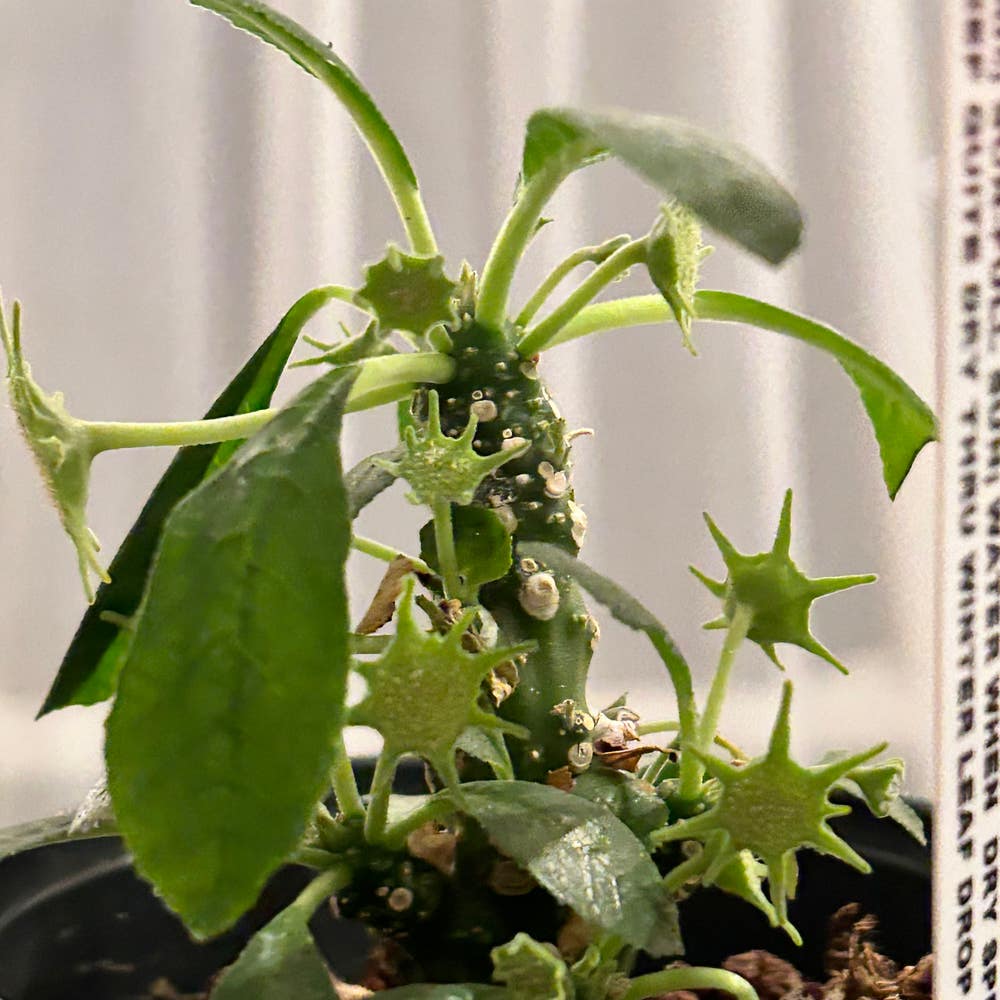
Why Is My Dorstenia gigas Not Doing Well?
Dorstenia gigas
By the Greg Editorial Team
Mar 30, 2024•5 min read
This article was created with the help of AI so we can cover more plants for you. May contain errors. See one? Report it here.
Save your Dorstenia gigas from common pitfalls 🌱 and ensure its thriving growth with these essential care tips.
- 💧 Over-watering and under-watering harm your plant; balance is key.
- 🌞 Proper light and temperature are essential for Dorstenia gigas health.
- 🐛🍄 Pests and diseases like root rot need quick action to save your plant.
Water Woes: Too Much or Too Little
🌊 Over-watering Hazards
Yellowing leaves and mushy stems are your Dorstenia gigas's way of saying, "Ease up on the H2O!" When the soil feels more like a wet sponge than dirt, it's a clear sign of over-watering.
Spotting the Signs
- Yellow leaves: Think caution sign, not sunbeam.
- Soggy soil: If it clings to your fingers, it's too wet.
- Foul smell: A stinky pot is a no-go.
💧 Drying Out: Rescue Steps
- Cease watering: Let the soil dry to the touch.
- Root check: Snip off any soft, brown roots.
- Replant: Use well-draining soil to prevent a repeat.
🏜️ Under-watering Symptoms
When your plant's leaves look more deflated than a balloon days after a party, it's begging for a drink. Dry soil that pulls away from the pot's edge is another cry for help.
Recognizing Thirst
- Shriveled leaves: They're not just being dramatic.
- Dry soil: If the top inch is bone-dry, it's time to water.
💦 Quenching Correctly: Hydration Tips
- Water deeply: Ensure it reaches the roots, not just the surface.
- Observe: Leaves perking up post-watering mean you've nailed it.
- Consistent schedule: Regularity is key, but don't drown the poor thing.
Light and Temperature Tango
🌞 Light Levels: Finding the Sweet Spot
Dorstenia gigas, like a plant diva, demands its spotlight to be just right. Too much light and its leaves will crisp up like they've had a day too long at the beach. On the flip side, too little light and you'll find the leaves reaching out like they're trying to grab the nearest lamp.
Reading the Leaves
If your plant's leaves look like they've been in a tanning bed, with brown, scorched patches, it's time to dial down the sunlight. Conversely, leaves that are pale and elongated are silently begging for more rays.
Adjusting the Rays
To hit that Goldilocks zone, shuffle your plant to a spot with bright, indirect sunlight. It's like giving your plant VIP access to the perfect lighting. Rotate it regularly to prevent a lopsided growth performance.
🌡️ Temperature Consistency
Your Dorstenia gigas isn't looking for a climate-themed roller coaster ride. It craves a steady temperature that doesn't dive or spike like the stock market.
Weathering the Extremes
If your plant is drooping or shedding leaves like it's trying to go incognito, it might be reacting to a temperature it's not cool with. Keep it away from drafts and vents, the notorious villains of plant comfort.
Keeping it Comfy
Aim for a day temperature between 65°F and 75°F, and a bit cooler when the sun clocks out. Think of it as setting the thermostat for a room full of napping kittens—consistent and cozy. Avoid placing your green buddy near windows that turn into iceboxes or heaters on a mission.
The Unseen Enemies: Pests and Diseases
🐛 Battling Bugs
Identifying Common Pests
Your Dorstenia gigas might be hosting a pest party without your invitation. Aphids are the clingy guests leaving a sticky mess. Spider mites are the silent types, spinning webs of destruction. Mealybugs and scale insects are the ones with a sweet tooth, sucking sap and excreting honeydew.
🐜 Pest Control: Natural and Chemical Remedies
Caught early, a blast of water or insecticidal soap can evict these pests. For stubborn squatters, neem oil is like a polite eviction notice. In dire cases, chemical pesticides are the SWAT team—use sparingly and with caution. Always treat the entire plant, especially under the leaves.
🍄 Fungal Foes
Spotting and Treating Fungal Issues
Fungi throw a silent disco on your plant's leaves, with spotted leaves and a musty odor as the rave signs. Overwatering and poor airflow are their favorite dance floors.
Prevention: Best Practices to Keep Fungi at Bay
To stop the fungal funk, crank up the airflow and keep those leaves dry. If things get out of hand, consider a fungicide—but think eco-friendly, to avoid a botanical hangover. Remember, prevention is the lock on your door, keeping the bad stuff out.
Root of the Problem: Root Rot
🕵️ Detecting Decay
Root rot can be a silent killer in the plant world, striking from the shadows of the soil. To catch this stealthy adversary, you'll need to become a bit of a plant detective.
🕵️ Unearth the Evidence
When your Dorstenia gigas starts looking less like a vibrant specimen and more like it's auditioning for a role in a plant zombie movie, it's time to investigate. Yellowing leaves and a general look of despair can be your first clues. But the real evidence lies beneath the surface.
🕵️ The Sniff Test
Trust your nose—if the soil smells like a forgotten gym locker, that's the stench of decay. It's a clear signal that root rot might be lurking below.
🕵️ Root Inspection
Gently remove your plant from its pot and shake off the excess soil. Healthy roots should look like they're ready for a photoshoot—firm and white. If they resemble overcooked spaghetti, it's time to take action.
💉 Surgery and Recovery
Root rot requires immediate surgery—no medical degree necessary, just some sterilized shears and a steady hand.
💉 Snip the Rot
Cut away the mushy, brown roots with the precision of a seasoned surgeon. It's a tough love approach, but necessary.
💉 Post-op Care
After the operation, give your plant a fresh start in sterile soil and a clean pot with proper drainage. Keep a vigilant eye on your watering habits—overwatering is often the root of all evil here.
💉 Keep the Soil Aerated
Ensure the soil is well-aerated and not compacted. This helps the remaining healthy roots breathe and recover.
💉 Adjust Your Care
Post-surgery, your plant is vulnerable. Adjust your care routine to prevent a relapse. Less water might be more until your plant regains its strength.
Remember, catching root rot early can mean the difference between plant resuscitation and a sad trip to the compost bin. Stay observant and act swiftly at the first signs of trouble.
⚠️ Safety First
This content is for general information and may contain errors, omissions, or outdated details. It is not medical, veterinary advice, or an endorsement of therapeutic claims.
Always consult a qualified healthcare professional before using any plant as food, medicine, or supplement.
Never eat any plant (or feed one to pets) without confirming its identity with at least two trusted sources.
If you suspect poisoning, call Poison Control (800) 222-1222, the Pet Poison Helpline (800) 213-6680, or your local emergency service immediately.
Spotted an error? Please report it here.
Nurture your Dorstenia gigas back to health with Greg's personalized care reminders 🌱, preventing over-watering and pest woes with timely, tailored advice.