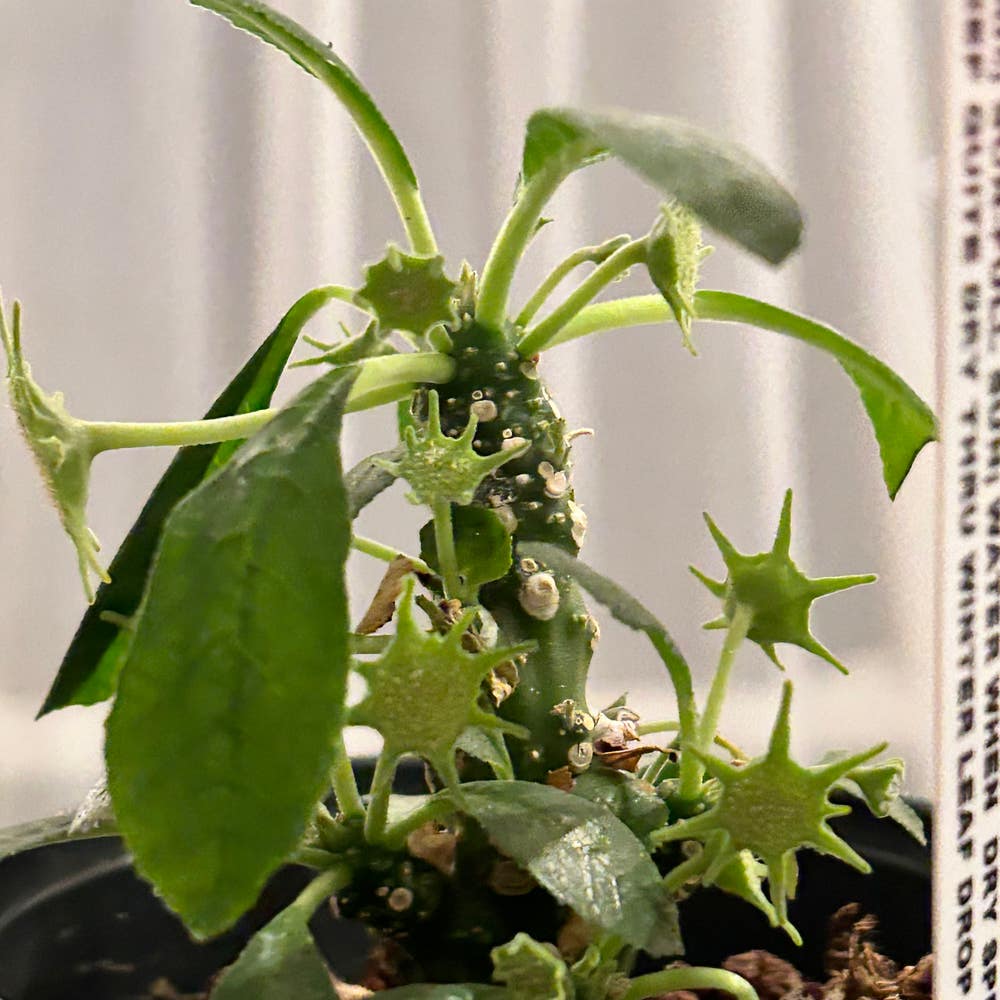
My Dorstenia gigas's Light Requirements
Dorstenia gigas
By the Greg Editorial Team
Mar 30, 2024•3 min read
This article was created with the help of AI so we can cover more plants for you. May contain errors. See one? Report it here.
Nurture your Dorstenia gigas to full bloom 🌸 with the secret to perfect lighting—indoors and out!
- Bright, indirect sunlight is ideal for Dorstenia gigas growth and flowering.
- Use sheer curtains or grow lights to manage light intensity and duration.
- Acclimate and adjust seasonally for outdoor growth and blooming success.
Lighting Up Dorstenia gigas Indoors
🌞 Finding the Perfect Spot
Bright, indirect sunlight is the sweet spot for your Dorstenia gigas. Place it near a window that bathes it in gentle morning light or soft afternoon rays. North or east-facing windows are prime real estate for these plants.
🛡️ Shielding from Too Much Sun
Sheer curtains are your plant's best friend against the midday sun. Watch for signs like scorched leaves or faded color, which scream 'help, too much sun!' Adjust your plant's position or shading to prevent sunburn.
💡 Grow Lights: A Bright Idea?
When sunlight is as scarce as a good avocado at the supermarket, grow lights come to the rescue. Full-spectrum bulbs mimic the sun's rays, giving your Dorstenia gigas the light it craves. Consistent schedules with timers keep your plant's light diet regular, promoting healthy growth.
Cultivating Dorstenia gigas Outdoors
🌿 Mimicking the Native Habitat
Dorstenia gigas flourishes under bright, indirect sunlight similar to its natural, dappled light habitat. To replicate these conditions, position your plant where it will receive filtered sunlight, perhaps under a tree or pergola.
🌞 The Balance Between Light and Shade
Striking the right balance is crucial for your Dorstenia gigas. Too much shade, and it languishes; too much sun, and its leaves may scorch. Aim for a spot that mimics the light patterns of its native environment.
🌱 Transitioning to the Great Outdoors
Acclimation is your plant's best friend when moving outdoors. Start in a shaded area, gradually introducing more light over several weeks. This prevents shock, allowing your plant to adjust to its new conditions with grace.
🌼 Seasonal Considerations for Outdoor Light Management
As seasons change, so does the light. Monitor the intensity and duration of sunlight your Dorstenia gigas receives. In summer, protect it during peak sun hours; in winter, ensure it gets enough light to prevent dormancy. Rotate the plant occasionally for even growth.
Let There Be Blooms: Light's Role in Flowering
🌼 Timing and Intensity
Timing is crucial when it comes to flowering in Dorstenia gigas. The plant's internal clock responds to the duration of light, triggering the development of buds. To encourage blooming, mimic the natural increase in daylight hours as the growing season approaches.
Intensity also plays a key role. While Dorstenia gigas appreciates bright light, too much direct sunlight can be detrimental. Aim for a location that offers bright, indirect light. If you're using grow lights, adjust the intensity to avoid leaf burn while still providing enough light to promote flowering.
🌟 Adjusting Light Conditions
To coax your Dorstenia gigas into blooming, consider the quality of light. Full spectrum bulbs are ideal, offering a balance that signals to the plant it's time to showcase its flowers.
Use timers on grow lights to replicate natural day and night cycles, especially in spaces that lack sufficient natural light. This ensures your plant gets the right amount of light and darkness, essential for its flowering rhythm. If blooms are scarce, increase light duration slightly. If the plant shows signs of stress, like discolored leaves, dial it back. It's all about observing and responding to your plant's needs.
⚠️ Safety First
This content is for general information and may contain errors, omissions, or outdated details. It is not medical, veterinary advice, or an endorsement of therapeutic claims.
Always consult a qualified healthcare professional before using any plant as food, medicine, or supplement.
Never eat any plant (or feed one to pets) without confirming its identity with at least two trusted sources.
If you suspect poisoning, call Poison Control (800) 222-1222, the Pet Poison Helpline (800) 213-6680, or your local emergency service immediately.
Spotted an error? Please report it here.
Ensure your Dorstenia gigas flourishes in just the right light conditions 🌞 with Greg's tailored reminders and tracking features.