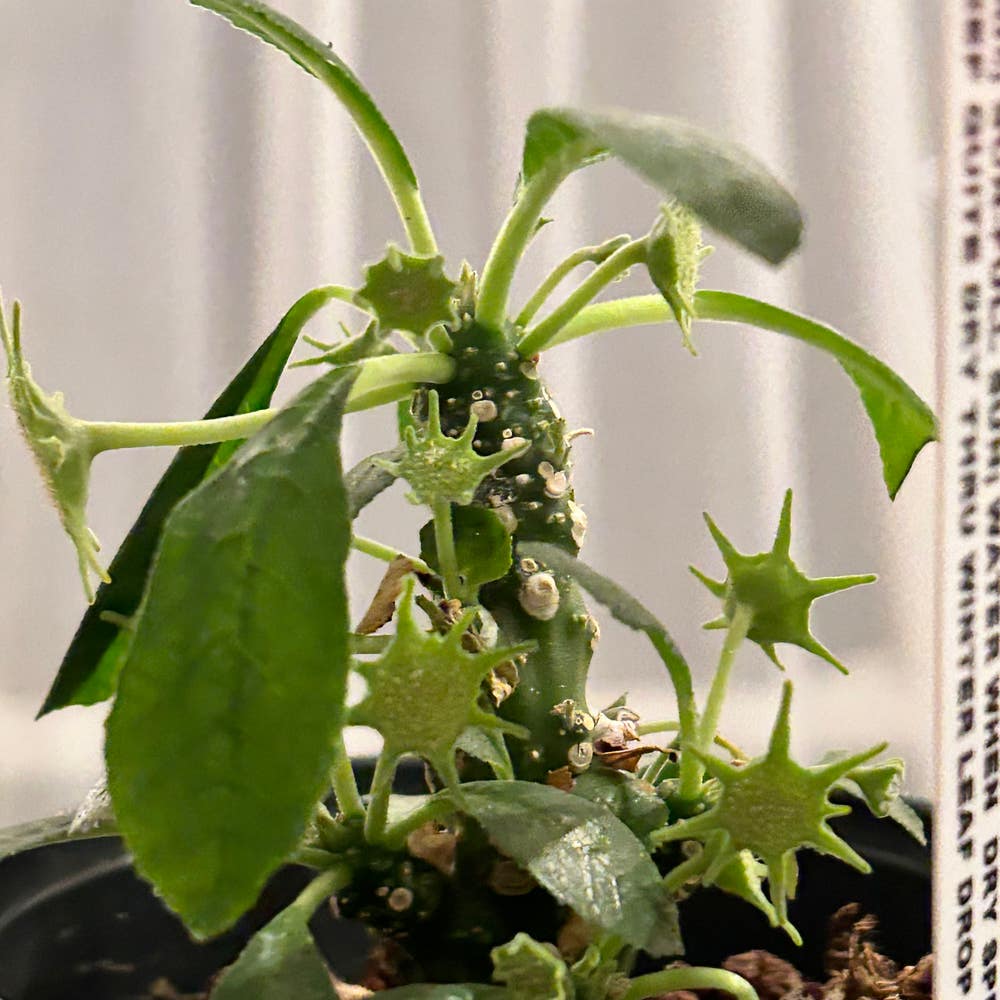
Why Are There Brown Spots on My Dorstenia gigas Leaves?
Dorstenia gigas
By the Greg Editorial Team
Mar 30, 2024•6 min read
This article was created with the help of AI so we can cover more plants for you. May contain errors. See one? Report it here.
Banish brown spots 🍂 on your Dorstenia gigas and restore lush, vibrant leaves with these essential care tips!
- Brown spots can signal infections or environmental stress in Dorstenia gigas.
- Immediate action and treatment are crucial upon spotting brown blemishes.
- Prevent spots with proper care, including light, water, and air circulation.
Spotting the Trouble: Identifying Brown Spots on Leaves
🍂 Visual Cues: Spotting Brown Spots
Brown spots on Dorstenia gigas leaves are your plant's SOS signal. They can show up as dry, crispy patches or damp lesions, often encircled by a telling yellow halo. These spots could be anywhere—leaf edges, tips, or smack in the center—and they're not just a cosmetic issue.
🤔 Common Misconceptions: Brown Spots vs. Other Leaf Discolorations
Not all leaf discolorations should set off your plant-parent alarm. Natural markings are usually uniform and symmetrical, part of your plant's charm. But when you spot those random, unsystematic blemishes, it's time to play detective. Don't shrug off spreading spots as mere sunburn; they could be a sign of something more sinister.
The Usual Suspects: Common Causes of Brown Spots
🍄 Fungal and Bacterial Culprits
Brown spots on your Dorstenia gigas can often be a red flag for fungal or bacterial infections. These spots may show up with a side of yellow halos or water-soaked edges. Fungi like to throw a party in conditions that are high in humidity with poor air circulation. Bacteria, on the other hand, are more like the gatecrashers that spread through water droplets or contaminated hands.
🕵️ Quick Tips for Differentiation
To tell if you're dealing with a fungus or bacteria, look for patterns. Fungal spots tend to be more irregular with a ring or halo effect, while bacterial spots might appear as water-soaked lesions.
🌿 Environmental Stress Factors
Your Dorstenia gigas could be signaling distress due to environmental stress. Overzealous watering, a scorching sun, or a chill can all lead to those dreaded brown spots. It's like walking a tightrope; too much or too little of anything can send your plant into a tizzy.
🌞 Light, Water, and Temperature
Light: Too much direct sunlight can give your plant a nasty sunburn. Water: Both drought and drench can cause issues, so aim for a happy medium. Temperature: Fluctuations can stress out your plant, leading to brown spots. Keep things consistent to avoid leafy drama.
First Aid for Foliage: Treating Brown Spots
🦠 Combating Infections
Immediate action is non-negotiable when you spot brown patches on your Dorstenia gigas. Begin your plant's triage by removing affected leaves. This isn't just pruning; it's a surgical strike against the spread of disease. Sterilize your shears with alcohol or bleach solution after each cut—think of it as washing your hands in a pandemic.
For fungal foes, copper-based fungicides or neem oil are your allies. Apply with the precision of a tattoo artist, covering every leaf inch. Follow the label's instructions as if they're a secret recipe, and maintain a consistent treatment schedule.
If bacteria have gatecrashed, dry conditions are your plant's best friend. Water the soil directly, avoiding the leaves, and do it in the morning to allow drying time. Bactericides are a last resort, but if you must, use them with the care of handling fine china.
Adjusting Care Practices
💧 Watering and lighting need your attention next. Adjust your watering schedule like you're fine-tuning a vintage watch—meticulously. Ensure the soil isn't waterlogged; proper drainage is as essential as a roof during a rainstorm.
Lighting is another piece of the puzzle. Your Dorstenia gigas should bask in the sun like a cat in a window, but not so much that it gets a sunburn. Find that sweet spot.
💨 Air circulation can't be overlooked. It's the plant equivalent of social distancing—keeping leaves dry and diseases at bay. If your plant's environment feels stuffier than a crowded elevator, it's time to make some changes.
Remember, if the brown spots persist like a bad habit, call in a professional. It's like admitting you can't fix your car's engine with just duct tape and hope. Sometimes, you need the expert.
Keeping the Spots at Bay: Prevention Strategies
🌱 Proactive Plant Care
Consistency is key in preventing brown spots on your Dorstenia gigas. Stick to a care routine that's as regular as your morning coffee. Water only when the soil feels dry to the touch—think of overwatering as an open invitation to fungal fiestas.
👀 Monitoring and Maintenance
Regular inspections are your plant's best defense. Catch problems early and you'll save your green buddy from a world of brown spots. Quarantine new plants like they're potential carriers of the botanical flu, ensuring they don't spread any unwanted surprises to your existing plant family.
🌡️ Environmental Control
Create a comfort zone for your Dorstenia gigas by maintaining stable temperature and humidity levels. Use well-draining soil and pots with drainage holes to avoid soggy feet. Remember, plants hate surprises, so keep their environment as predictable as your favorite sitcom rerun.
🧹 Cleanliness is Next to Plantliness
Keep your gardening tools as spotless as your intentions. Dispose of any infected leaves immediately—think of them as biohazards rather than compost material. And when it comes to fallen debris, consider it enemy number one; a clean plant space is a happy plant space.
💨 Air Circulation
Ensure your plant has room to breathe. Cramped conditions are a playground for diseases. Good air circulation is like a breath of fresh air for your Dorstenia gigas, keeping those pesky pathogens at bay.
🌱 Soil and Nutrition
Feed your plant with the precision of a gourmet chef. Overfeeding is the fast track to brown spot boulevard. Use the right soil mix, and you'll be paving the way for a robust, spot-resistant plant.
🐞 Integrated Pest Management
Keep pests in check by cleaning up any plant debris promptly. Think of dead leaves as a buffet sign for bugs. If you spot a pest, show them the door with insecticidal soap or neem oil before they invite their friends over.
🌞 Lighting
Find the lighting sweet spot. Too much sun and you're asking for leaf burn, too little and your plant will sulk. Aim for bright, indirect light where your Dorstenia gigas can thrive without the threat of brown spots.
🛡️ Commitment to Prevention
Remember, prevention isn't a one-off task—it's an ongoing commitment. Stay vigilant, and your Dorstenia gigas will reward you with its spot-free, lush foliage. Keep up these strategies, and you'll be the proud plant parent of a resilient, spot-resistant champion.
⚠️ Safety First
This content is for general information and may contain errors, omissions, or outdated details. It is not medical, veterinary advice, or an endorsement of therapeutic claims.
Always consult a qualified healthcare professional before using any plant as food, medicine, or supplement.
Never eat any plant (or feed one to pets) without confirming its identity with at least two trusted sources.
If you suspect poisoning, call Poison Control (800) 222-1222, the Pet Poison Helpline (800) 213-6680, or your local emergency service immediately.
Spotted an error? Please report it here.
Keep your Dorstenia gigas spot-free 🌿 with Greg's tailored care reminders and environmental tracking to nip those brown spots in the bud!