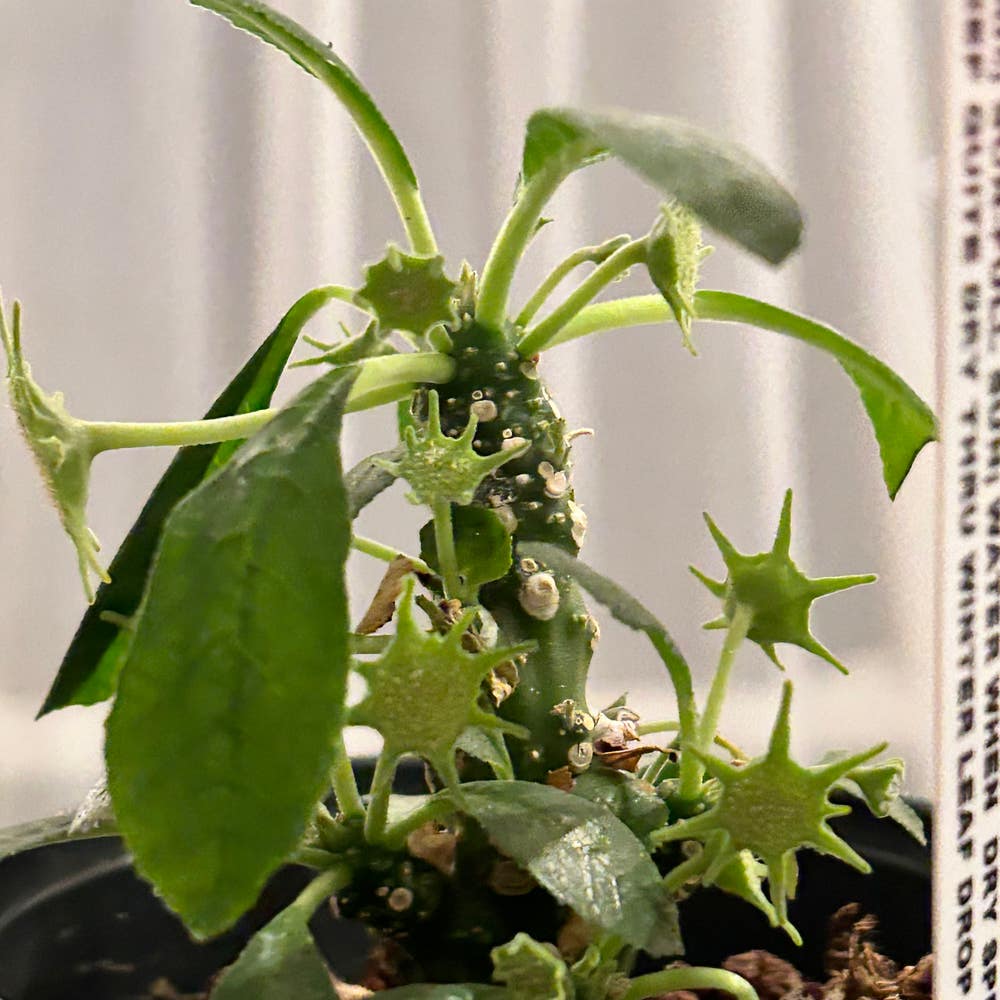
Dorstenia gigas Fertilizer: How and When to Use It
Dorstenia gigas
By the Greg Editorial Team
Mar 30, 2024•4 min read
This article was created with the help of AI so we can cover more plants for you. May contain errors. See one? Report it here.
Nurture a stunning Dorstenia gigas bloom-fest 🌼 with timely fertilizer tips that promise petal perfection!
- 🌱 Liquid fertilizers are fast-acting; apply with care to avoid leaf splash.
- Granular fertilizers offer steady nutrients, minimizing over-fertilization risks.
- Fertilize during growth phases and adjust for seasons to optimize blooming.
Picking the Right Food for Your Dorstenia Gigas
💧 Liquid Gold: Using Liquid Fertilizers
Liquid fertilizers are the fast food of the plant world, offering a quick nutrient hit. They're especially effective for Dorstenia gigas, which craves a nutrient boost to support its flowering prowess. Mixing the fertilizer with water as directed ensures the roots absorb these nutrients efficiently. Apply with a watering can, targeting the soil to avoid leaf splash, which can lead to nutrient burn.
⏳ Time-Released Nutrition: Granular and Slow-Release Options
Granular and slow-release fertilizers are the crockpots of the gardening realm, providing a steady stream of nutrients. This method is less labor-intensive and reduces the risk of over-fertilization. To apply, sprinkle the granules around the plant's base, steering clear of the stem to prevent damage. Water thoroughly post-application to help the nutrients penetrate the soil, offering your Dorstenia gigas a sustained feast for its roots.
Timing is Everything: When to Fertilize for Optimal Blooms
🌱 Syncing with the Growth Cycle
Dorstenia gigas thrives when fertilization aligns with its growth and dormant phases. During the active growth period, typically spring and summer, the plant is all about pushing out new growth and prepping for those showy blooms. This is your green light to bring on the nutrients.
Conversely, when the plant enters its dormant phase, usually in the cooler months, it's time to ease up on the feeding. Think of it as letting your plant hit the snooze button; it's not looking for a full breakfast.
🌼 Seasonal Fertilizing Do's and Don'ts
Adjusting your fertilizing schedule with the seasons is like dressing appropriately for the weather. Spring is a time of awakening, so start your fertilizing regimen a couple of months before the anticipated bloom-fest. Summer demands consistency—keep the nutrient supply steady to support the plant's active lifestyle.
As autumn rolls in, taper off the fertilizing as the plant begins to wind down. And in winter, it's mostly hands-off; your Dorstenia gigas is probably chilling and not in the mood for a feast.
Remember, over-fertilization is the fast track to a plant's bad day. Stick to the recommended ratios to avoid the drama of nutrient burn. Keep an eye on the weather, too. Extreme heat or drought? That's your cue to hold off on the fertilizer, unless you're going for that crispy leaf aesthetic.
Fertilizing Like a Pro: Techniques for Dorstenia Gigas
💧 The Right Amount
Calculating the perfect dose for vibrant flowers is more science than guesswork. For Dorstenia gigas, less is often more. Over-fertilization can lead to a host of issues, including poor blooming. Stick to a balanced, water-soluble fertilizer, and consider a half-strength dilution to start. Adjust based on the plant's response.
🌱 Application Mastery
When applying fertilizer, precision is key. Root zone application ensures nutrients are delivered where they're needed most. Mix your liquid fertilizer with water and pour it directly onto the soil, avoiding the leaves to prevent potential burn. For granular types, sprinkle around the base and water thoroughly. This method helps prevent root damage and maximizes nutrient uptake.
Oh No, Too Much!: Dealing with Over-Fertilization
🚨 Spotting Trouble: Recognizing Over-Fertilization Signs
Yellowing leaves or brown tips on your Dorstenia gigas might not just be a cry for water—they could be screaming over-fertilization. A white crust of salt on the soil's surface is another dead giveaway. These are your plant's distress signals; ignore them at your flora's peril.
🛠 Quick Fixes: Restoring Balance
Caught in the act of over-fertilizing? Stop all fertilization immediately. If you see a fertilizer buildup, remove it. Flush the soil with water to dilute the nutrient overload—think of it as hitting the reset button on your plant's root environment. Repeat every few days, and keep an eye out for recovery signs. Remember, over-fertilization can look a lot like over-watering, so don't misdiagnose your plant's plea for help.
⚠️ Safety First
This content is for general information and may contain errors, omissions, or outdated details. It is not medical, veterinary advice, or an endorsement of therapeutic claims.
Always consult a qualified healthcare professional before using any plant as food, medicine, or supplement.
Never eat any plant (or feed one to pets) without confirming its identity with at least two trusted sources.
If you suspect poisoning, call Poison Control (800) 222-1222, the Pet Poison Helpline (800) 213-6680, or your local emergency service immediately.
Spotted an error? Please report it here.
Achieve blooming success by fertilizing your Dorstenia gigas with seasonal savvy 📅, and rely on Greg to remind you when it's time to feed your green friend just right.