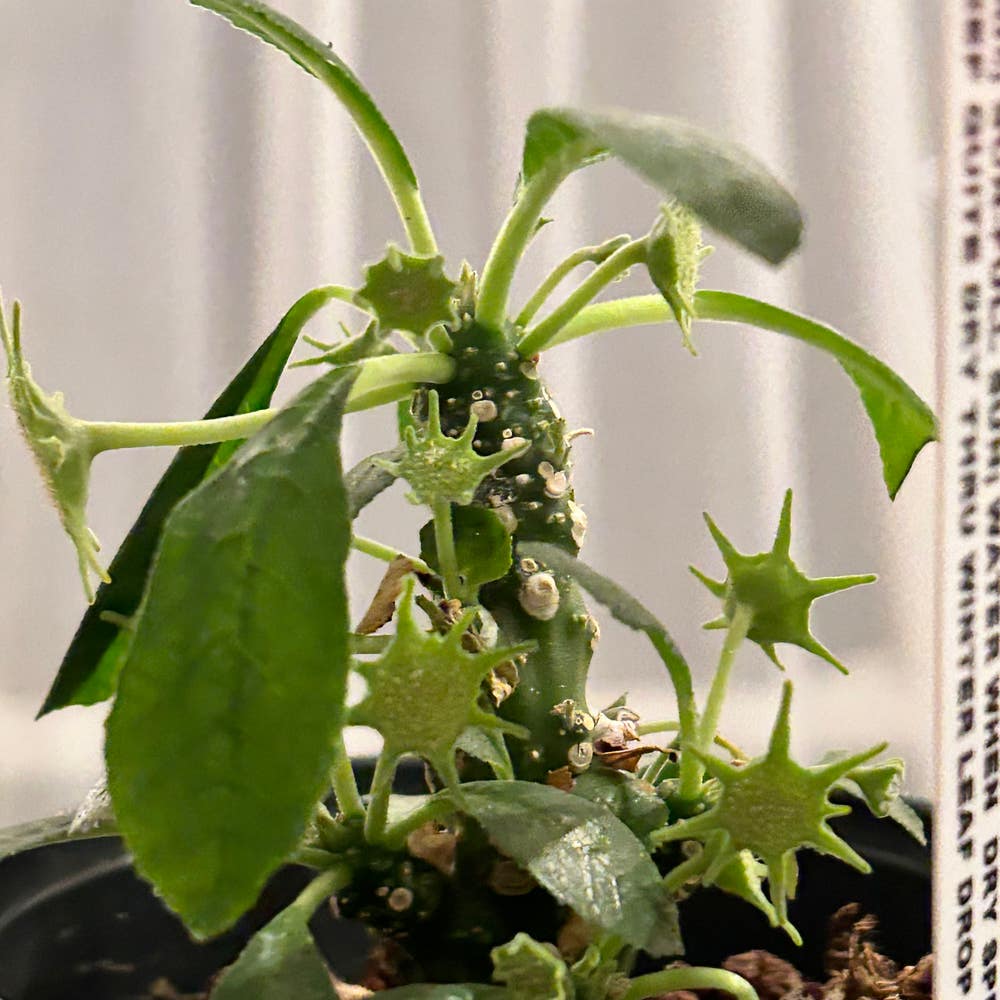
4 Outdoor Care Hacks for Dorstenia 🌧️
Dorstenia gigas
By the Greg Editorial Team
Sep 30, 2024•6 min read
This article was created with the help of AI so we can cover more plants for you. May contain errors. See one? Report it here.
Transform your Dorstenia into a vibrant centerpiece with essential sunlight and watering tips! 🌞🌱
- ☀️ Dorstenia thrives in 6-8 hours of sunlight; adjust exposure for optimal growth.
- 💧 Water every 1-2 weeks; deep watering promotes strong root development.
- ❄️ Protect from frost with mulch and cloth; adjust care for seasonal changes.
Sunlight and Watering Needs
Ideal Sunlight Conditions 🌞
Dorstenia thrives best in full sun to partial shade. Aim for 6-8 hours of sunlight daily to keep your plants healthy and vibrant.
Inadequate sunlight can lead to stunted growth and a leggy appearance. Ensure your plants get the right amount of light for optimal development.
Watering Frequency and Techniques 🚰
Consistent moisture is crucial for Dorstenia, but avoid waterlogging. Water every 1-2 weeks, adjusting based on weather conditions.
To ensure effective watering, start by checking soil moisture before you water. Deep watering encourages robust root growth, so aim to saturate the soil thoroughly.
For efficiency, consider using drip irrigation or soaker hoses. These methods provide consistent moisture while minimizing water waste.
With the right sunlight and watering techniques, your Dorstenia will flourish. Next, let’s explore the best soil and fertilization preferences to support their growth.
Soil and Fertilization Preferences
Best Soil Types 🌱
Dorstenia thrives best in well-draining sandy or loamy soils. This type of soil not only supports healthy root development but also maintains the right moisture balance.
The ideal soil pH for Dorstenia ranges from slightly acidic to neutral, specifically between 6.0 and 7.0. Proper drainage is crucial; it prevents root rot and promotes vigorous growth.
Fertilization Schedule and Types 🗓️
To keep your Dorstenia flourishing, fertilize every 4-6 weeks during the growing season. A balanced NPK fertilizer, such as 10-10-10, or slow-release options work wonders for nutrient supply.
When applying fertilizer, you can either mix it into the soil at planting or top-dress around established plants. Both methods ensure your plants get the nutrients they need to thrive.
With the right soil and fertilization practices, your Dorstenia will be well-equipped to flourish. Next, let’s explore the various planting options, including the benefits and drawbacks of container versus ground planting.
Planting Options: Container vs. Ground
Benefits and Drawbacks of Container Planting 🌱
Container planting offers remarkable mobility. You can easily shift your Dorstenia to capture optimal sunlight or provide protection from harsh weather.
Another advantage is the control over soil quality and drainage. You can customize the mix to suit your plant's needs. However, limited root space can restrict growth, making it essential to choose the right size container.
Additionally, containers tend to dry out faster, leading to an increased watering frequency. This means you’ll need to keep a close eye on moisture levels to ensure your plant thrives.
Benefits and Drawbacks of Ground Planting 🌍
Ground planting provides more space for root expansion. This can lead to healthier, more robust plants as they have room to grow.
Moreover, the soil in the ground typically offers better moisture retention. This can reduce the frequency of watering, especially during hot spells.
However, you lose some control over soil quality and drainage. This can lead to challenges like poor growth if the soil isn’t ideal.
Lastly, ground plants may face potential exposure to outdoor pests and diseases. Regular monitoring is crucial to catch any issues early.
Understanding these options allows you to make an informed choice that best suits your gardening style and your Dorstenia's needs. Next, let’s explore how to protect your plants from weather extremes and pests.
Protection from Weather and Pests
🌧️ Strategies for Weather Protection
Weather can be a fickle friend to your Dorstenia. To shield your plants from frost, consider these effective techniques:
- Covering with frost cloth or burlap: This simple method traps heat and protects delicate leaves.
- Mulching to insulate roots: A layer of mulch not only retains moisture but also keeps roots cozy during chilly nights.
When the sun blazes, your Dorstenia needs a break. Here’s how to provide shade during extreme heat:
- Using shade cloth: This allows filtered light while reducing heat stress.
- Planting near taller plants for natural shade: Strategically placing your Dorstenia can create a microclimate that keeps it cooler.
🐞 Common Outdoor Pests and Management
Outdoor pests can be a real nuisance for your Dorstenia. Keep an eye out for common culprits like aphids, mealybugs, and spider mites.
To manage these pests effectively, adopt these strategies:
- Regular inspection and monitoring: Catching infestations early makes a world of difference.
- Natural predators like ladybugs and lacewings: These beneficial insects can help keep pest populations in check.
- Organic insecticides such as neem oil or insecticidal soap: These options are gentle on your plants but tough on pests.
🦠 Diseases and Prevention Methods
Your Dorstenia can also fall victim to diseases like root rot and powdery mildew. Prevention is key to keeping your plants healthy.
To minimize disease risks, follow these strategies:
- Ensuring proper drainage: Good drainage prevents water from pooling and causing root rot.
- Avoiding overhead watering: Watering at the base helps keep foliage dry and less susceptible to mildew.
- Using disease-resistant varieties: Choosing the right plants can save you a lot of headaches down the line.
With these protective measures in place, your Dorstenia will thrive despite the elements. Next, let’s explore how seasonal changes impact your care routine.
Seasonal Care and Climate Considerations
Seasonal Changes and Their Impact 🌦️
Seasonal changes significantly influence the growth patterns of Dorstenia. As temperatures fluctuate, so should your care routines, particularly in terms of watering and light exposure.
In warmer months, increase watering frequency to maintain consistent moisture. Conversely, during cooler seasons, reduce watering to prevent root rot, as the plant's growth slows down.
Special Considerations for Different Climate Zones 🌍
Understanding your climate zone is crucial for optimal Dorstenia care. Tropical climates allow for year-round growth, while temperate zones may require more attention to seasonal changes.
For tropical areas, choose varieties that thrive in humidity and warmth. In temperate regions, consider hardier varieties that can withstand cooler temperatures and occasional frost.
Tips for Winter Care and Protection ❄️
Preparing for winter is essential to keep your Dorstenia healthy. Start by reducing watering frequency, as the plant's needs decrease during dormancy.
Additionally, provide extra insulation, such as mulch, to protect roots from freezing temperatures. If you live in a colder climate, consider transitioning your plant indoors to ensure it remains safe and healthy throughout the winter months.
With these seasonal care tips, your Dorstenia will thrive, no matter the climate. Next, let’s explore effective strategies for protecting your plants from weather extremes and pests.
⚠️ Safety First
This content is for general information and may contain errors, omissions, or outdated details. It is not medical, veterinary advice, or an endorsement of therapeutic claims.
Always consult a qualified healthcare professional before using any plant as food, medicine, or supplement.
Never eat any plant (or feed one to pets) without confirming its identity with at least two trusted sources.
If you suspect poisoning, call Poison Control (800) 222-1222, the Pet Poison Helpline (800) 213-6680, or your local emergency service immediately.
Spotted an error? Please report it here.
Keep your Dorstenia thriving year-round 🌱 with Greg's tailored watering alerts and expert care tips that make outdoor gardening a breeze!