🧛 5 Tips for How to Plant Your Garlic
Allium sativum
By the Greg Editorial Team
Jul 22, 2024•5 min read
This article was created with the help of AI so we can cover more plants for you. May contain errors. See one? Report it here.
Maximize your garlic yield 🌱 by mastering the best planting method tailored to your garden's needs.
- 🌱 Plant from cloves or transplant - each method suits different gardeners' needs.
- 🍂 Fall planting yields larger bulbs, but consider your climate and resources.
- 🌿 Soil, spacing, and care are key for garlic to thrive post-planting.
Choosing Your Planting Method
Planting garlic in your garden begins with choosing between starting from cloves or transplanting established plants. Here's what you need to consider for each method.
Benefits of Planting Garlic from Cloves
- Simplicity: Planting garlic from cloves is straightforward and suitable for beginners.
- Cost-Effective: Cloves are often less expensive than established plants.
- Variety Selection: You can select specific varieties that are well-suited to your local climate.
- Size Matters: Larger cloves typically yield larger bulbs.
🌱 Considerations for Transplanting Established Garlic Plants
- Timing: Transplanting should align with the plant's growth cycle for best results.
- Root Health: Care must be taken to preserve the root structure during transplant.
- Space: Established plants require adequate space to thrive post-transplant.
Making an Informed Decision for Your Garden
- Assess your climate and choose a variety that thrives in your area.
- Consider the resources you have—space, time, and budget.
- Think about your gardening goals, whether it's maximizing yield or experimenting with different varieties.
- Reflect on your level of experience; novices may find starting from cloves easier, while more experienced gardeners might enjoy the challenge of transplanting.
Planting Garlic Cloves
🌱 Optimal Planting Time
Garlic thrives when its growth cycle and climate preferences align.
- Plant in the fall, ideally 4-6 weeks before the ground freezes, to allow for root development.
- In warmer climates without harsh winters, planting can occur in late winter or early spring.
🌍 Soil and Container Selection
The right soil mix and container are crucial for garlic's success.
- Use well-draining soil rich in organic matter; a pH of 6.5 to 7 is ideal.
- For container planting, ensure adequate depth and drainage holes to accommodate growth.
🌿 Planting Technique
Proper planting technique sets the stage for a healthy garlic crop.
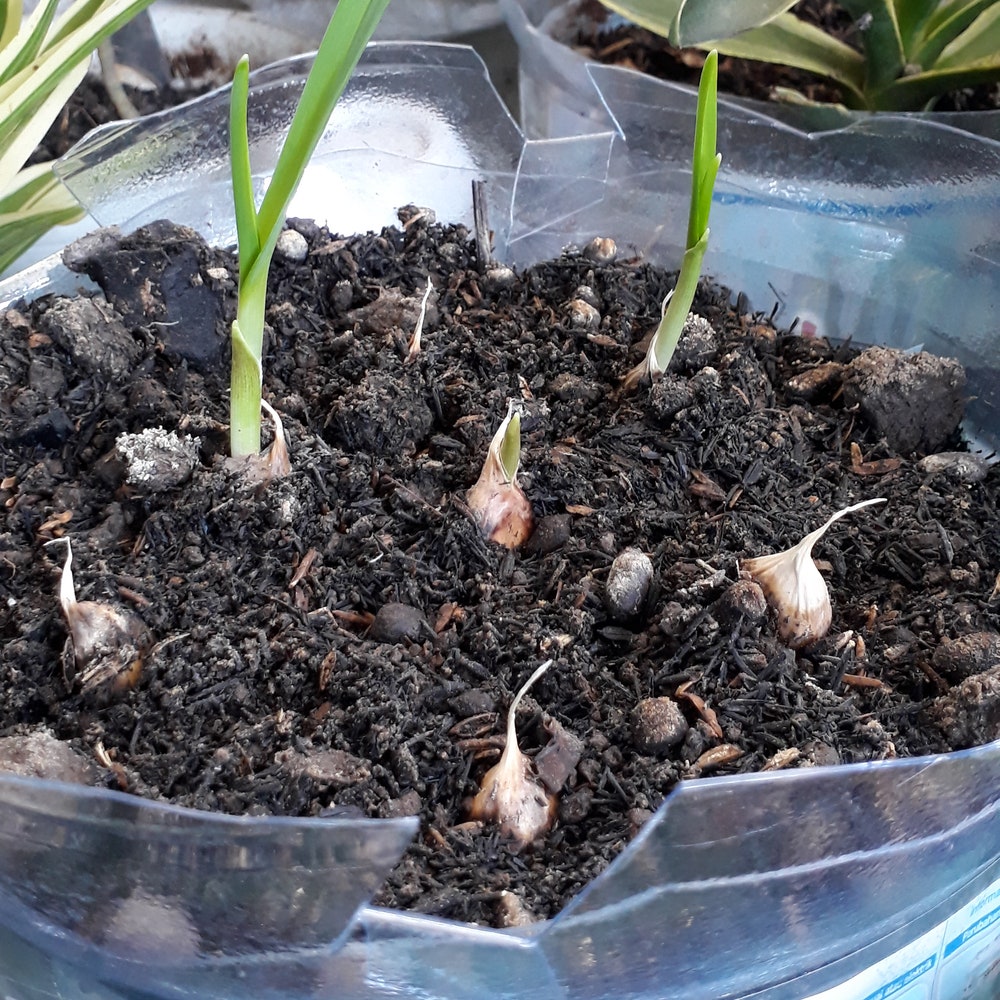
- Plant cloves pointy end up, 1-2 inches deep in warm climates, 3-4 inches in colder regions.
- Space cloves 4-6 inches apart in rows spaced 18-24 inches apart.
🌻 Germination Requirements
Garlic has specific needs for successful sprouting.
- Ensure consistent moisture but avoid waterlogging.
- Mulch after planting to stabilize soil temperature and retain moisture.
🌱 Seedling Care
Young garlic plants require attentive care.
- Monitor for soil heaving and cover exposed cloves with soil or compost.
- Keep the soil's nutrient and pH levels balanced for robust growth.
🌞 Hardening Off Seedlings
Transitioning garlic to outdoor conditions is a delicate process.
- Begin hardening off seedlings 7-10 days before the final transplant.
- Gradually increase their exposure to outdoor temperatures and sunlight.
Transplanting Garlic Plants
🌱 Best Time to Transplant
Garlic thrives when its growth cycle and the seasons are in harmony. The best time to transplant garlic is either in the fall, aligning with its natural planting cycle, or early spring, just before the growth season begins. This timing ensures the roots are not too developed, making the transition smoother.
🌿 Transplanting Steps
Transplanting garlic requires a gentle touch and attention to detail. Here's how to do it right:
- Choose a cool, cloudy day or an early morning/evening time for transplanting to reduce stress on the plants.
- Water the garlic plants well before starting the transplant to ensure the roots are hydrated.
- Gently dig around the plant, preserving as much of the surrounding soil and root structure as possible.
- If transplanting in spring, aim for a root ball at least the size of a softball to protect the delicate roots.
- Trim the top 4-6 inches of the leaf structure if the plant is well-established, to help it re-establish in its new location.
- Place the plant in a pre-prepared hole that accommodates the root ball comfortably, and backfill with soil.
- Water the newly transplanted garlic immediately to settle the soil and eliminate air pockets.
🌾 Post-Transplant Care
Post-transplant care is crucial for garlic to thrive:
- Water the garlic just enough to keep the soil moist, avoiding over-saturation.
- Apply a layer of mulch to conserve moisture, regulate soil temperature, and suppress weeds.
- Monitor the plants for signs of transplant shock, which may include wilting or yellowing leaves, and be patient as they recover.
- Refrain from fertilizing immediately after transplanting to avoid burning the roots; wait a few weeks before applying a gentle, balanced fertilizer.
Troubleshooting Planting Issues
Germination Challenges
🌱 Garlic cloves sometimes refuse to sprout, leaving gardeners puzzled. Here's how to coax them into growth:
- Ensure the cloves have their papery wrappers intact, which protect them during growth.
- Plant at the right depth in well-draining soil to prevent rot.
- Provide sufficient warmth, as cold soil can inhibit germination.
- If you suspect soil contamination, such as herbicide residue, test the soil before planting or choose a different location.
Transplanting Setbacks
🌿 Transplanting garlic requires care to avoid shock to the plants. Follow these steps for a smooth transition:
- Water the garlic thoroughly before and after transplanting to ease the stress.
- Avoid transplanting during extreme weather; mild, overcast days are best.
- Gently loosen the root ball when removing from pots to encourage root expansion in the new location.
Pest and Disease Management
🐛 Garlic is robust but not immune to pests and diseases. Keep your plants healthy with these strategies:
- Rotate your garlic crop annually to prevent disease buildup.
- Plant disease-free cloves and remove any that look suspect.
- Use organic controls like neem oil for pests, and practice good hygiene by removing plant debris.
- Watch for bulb mites and fungal issues, and act quickly if they appear.
⚠️ Safety First
This content is for general information and may contain errors, omissions, or outdated details. It is not medical, veterinary advice, or an endorsement of therapeutic claims.
Always consult a qualified healthcare professional before using any plant as food, medicine, or supplement.
Never eat any plant (or feed one to pets) without confirming its identity with at least two trusted sources.
If you suspect poisoning, call Poison Control (800) 222-1222, the Pet Poison Helpline (800) 213-6680, or your local emergency service immediately.
Spotted an error? Please report it here.
Plant your garlic cloves with precision and ease 🧄 using Greg's tailored reminders for the perfect planting time and expert care tips!