🧄 10 Outdoor Care Tips for Allium sativum
Allium sativum
By the Greg Editorial Team
Jul 22, 2024•7 min read
This article was created with the help of AI so we can cover more plants for you. May contain errors. See one? Report it here.
Grow garlic like a pro 🌱 with essential tips for every season's challenge! 🌦️
- 🌞 Full sun is key: Garlic needs 6-8 hours of sunlight for growth.
- 💧 Water wisely: Balance soil moisture, avoid waterlogging, and adapt to weather.
- 🌱 Soil and season matter: Use sandy loam, pH 6-7, and adjust for seasons.
Sunlight and Shade
Garlic thrives under full sun, requiring 6-8 hours of direct sunlight daily to produce robust bulbs. The right amount of sun exposure ensures vigorous growth and optimal photosynthesis, which is crucial for garlic's development.
- Full sun is essential during spring and summer for maximum growth.
- Leaves engage more effectively in photosynthesis with ample sunlight, leading to healthier plants.
Seasonal shifts can affect the amount of available sunlight, so adjustments may be necessary to maintain garlic health.
- Use row covers or shade cloth to protect garlic from intense sun or frost.
- Monitor daylight hours and move plants as needed to ensure consistent sun exposure.
- In winter, maximize weaker sunlight; in summer, provide some shade to prevent overheating.
Garlic's flexibility allows it to grow in varying light conditions, but for a bountiful harvest, prioritize sunny spots in your garden.
Watering and Drainage
Garlic thrives in soil that's moist but never waterlogged. Striking the right balance is key to healthy bulbs. Here's how to keep your garlic happy:
- Water deeply but infrequently, allowing the soil to dry slightly between waterings.
- During dry spells, maintain moisture in the top 30 cm of soil, but cease watering three weeks before harvest to prevent rot and skin discoloration.
Adapting to weather conditions is equally important:
- In areas prone to heavy rainfall, improve soil drainage with organic matter or raised beds to prevent waterlogging.
- During drought, consider drip irrigation to deliver water directly to the roots, minimizing evaporation and waste.
- Mulching with organic materials can conserve moisture, suppress weeds, and regulate soil temperature.
Soil and Nutrition
Ideal Soil Composition:
- Aim for a sandy loam or loam soil with a depth of at least 50 cm.
- Maintain a soil pH between 6 and 7 for optimal growth.
- Incorporate plenty of compost to improve soil structure and nutrient content.
Adjusting Soil for Climate Zones:
- In cooler, wet climates, till and amend the soil as close to planting time as possible.
- For warmer regions, ensure the soil has good moisture retention by adding organic matter.
- In areas with heavy clay, consider raised beds or adding sand to improve drainage.
Organic Fertilizers and Timing:
- Use a balanced organic fertilizer before planting, such as a blend of vegetable- and animal-sourced minerals.
- In spring, side-dress with a nitrogen-rich organic fertilizer to support leaf growth.
- Avoid over-fertilizing with nitrogen, as this can lead to large leaves but small bulbs.
- Remember, garlic is a heavy feeder, so regular fertilization is key to large, healthy bulbs.
Planting Choices
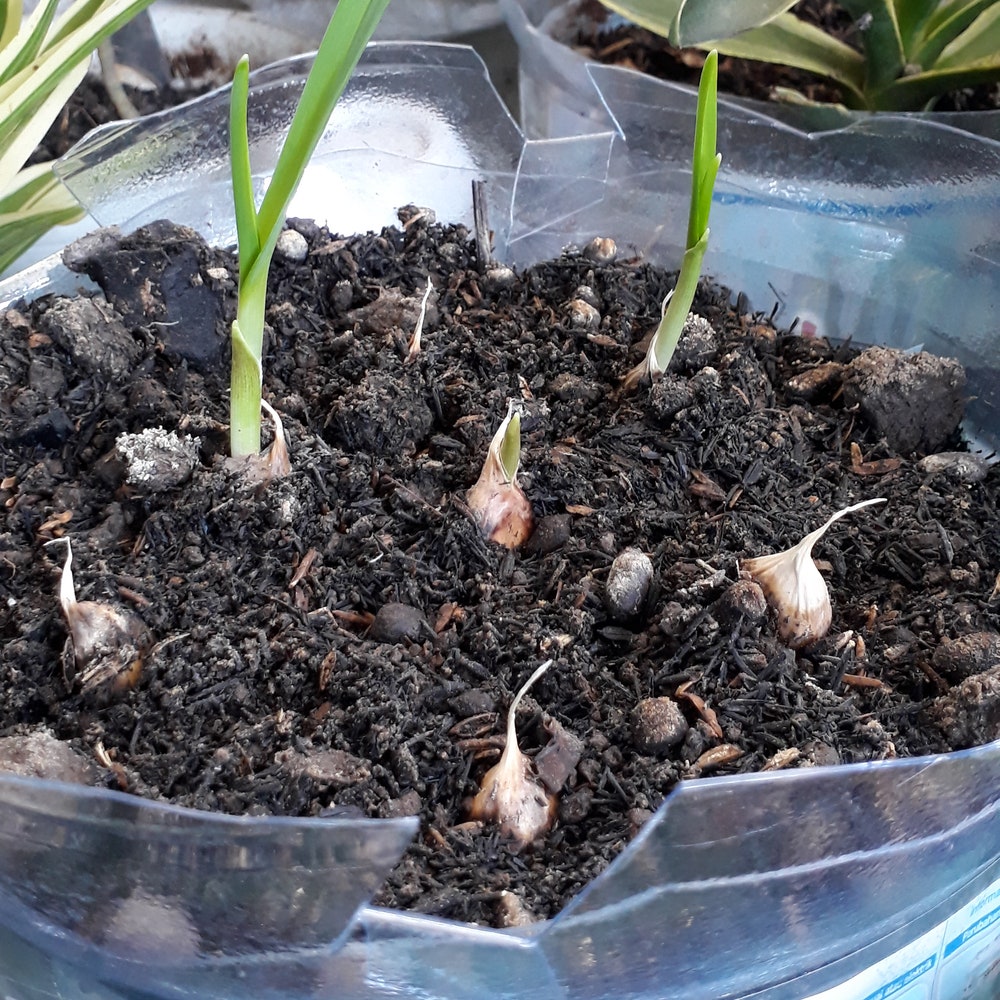
When deciding where to plant your Allium sativum, you're looking at two great options: container planting or going straight into the ground. Each method has its unique set of benefits that cater to different gardening styles and constraints.
Benefits of Container Planting
- Flexibility: Containers make it easy to move your garlic plants around. This is perfect if you're renting, have limited space, or just like to rearrange your garden for aesthetic or practical reasons.
- Soil Control: With containers, you have complete control over the soil environment. This is crucial for managing drainage and nutrients, ensuring your garlic gets exactly what it needs.
- Weather Protection: Containers can be moved to sheltered areas during harsh weather, giving your garlic an extra layer of protection from the elements.
🌱 Advantages of In-Ground Planting
- Root Expansion: Planting directly in the ground gives garlic ample room for root growth, which can lead to larger, healthier bulbs.
- Natural Ecosystem: In-ground planting allows garlic to benefit from the natural soil ecosystem, including beneficial microbes and worms that improve soil health and structure.
- Less Maintenance: Once established, in-ground plants generally require less frequent watering than those in containers, as the earth retains moisture more effectively.
Whether you choose the portability and control of containers or the natural advantages of in-ground planting, your Allium sativum can thrive with the right care and attention.
Weather and Garlic
Garlic thrives across many climates, but extreme weather can test its limits. Here's how to keep your garlic happy, come rain or shine.
🌡️ Protecting garlic from frost and heat
- Mulch: A thick layer of mulch is garlic's best friend for insulation against cold snaps and scorching heat. It stabilizes soil temperature and retains moisture.
- Row Covers: When frost threatens, drape row covers over your garlic beds. These act like a security blanket, offering a few degrees of warmth to prevent damage.
- Container Flexibility: Planting garlic in containers? You've got mobility on your side. Move pots to sheltered areas when the forecast spells trouble.
🌪 Mitigation strategies for extreme weather
- Stay Informed: Keep an eye on local weather reports. Forewarned is forearmed, allowing you to take action before extreme conditions hit.
- Water Wisely: During heatwaves, water early in the morning to reduce evaporation. In wet conditions, ease off to prevent waterlogging.
- Adapt and Overcome: If your region faces consistent extreme weather, consider garlic varieties known for their resilience. Local growers can be a goldmine of information on what works best in your area.
Pest Prevention
Garlic, while robust, isn't immune to the occasional pest. Vigilance is key; regular checks can catch invaders early.
- Aphids, thrips, and nematodes are common culprits.
- Look for telltale signs like distorted leaves or stunted growth.
🌿 Natural Pest Control Methods
Embrace nature's defenses to keep pests at bay without harsh chemicals.
- Introduce beneficial insects like ladybugs and lacewings.
- Apply neem oil or insecticidal soap as organic deterrents.
- Consider companion planting with strong-scented herbs to repel pests.
- Use physical barriers, such as row covers, to protect young plants.
Regular maintenance, such as weeding and removing debris, can also discourage pests from settling in. Remember, a healthy garlic plant is less likely to succumb to pest pressures.
Disease Control
Recognizing the early signs of disease in Allium sativum is crucial for maintaining a healthy garden. Vigilance is your first line of defense; look out for symptoms like black spots, yellowing, or unusual leaf dieback.
- Start with disease-free cloves from trusted sources to prevent introducing pathogens.
- Space your garlic adequately to reduce moisture retention and disease spread.
- Remove plant debris and avoid composting infected material to keep your garden clean.
- Sanitize tools regularly to prevent cross-contamination.
For organic treatment options, consider the following:
- Biological fungicides like PlantShield HC can protect against soil-borne pathogens without the use of harmful chemicals.
- Water at the base of plants in the early morning to allow the sun to dry the leaves, reducing the damp conditions that fungi thrive in.
- Encourage beneficial insects like ladybugs and lacewings to naturally control pests.
- Crop rotation and cover crops such as mustard can help cleanse the soil of pathogens.
- Organic products like neem oil, thyme oil, and garlic extract can be used as preventive measures against fungal diseases.
Remember, prevention is often more effective than cure. By keeping your Allium sativum healthy with proper nutrition and environmental conditions, you'll enhance its resilience against diseases.
Seasonal Adjustments
Spring heralds a time of renewal in the garden, and for Allium sativum, it's the kickoff for growth and development.
- Begin by preparing the soil, ensuring it's well-drained and rich in organic matter.
- Plant garlic cloves at the correct depth and spacing to give them a strong start.
As summer arrives, garlic demands consistent attention to thrive under the sun's intense gaze.
- Water regularly to keep the soil moist but not waterlogged, especially during dry spells.
- Mulch to conserve moisture and keep weeds at bay.
Fall is the season of preparation, setting the stage for both current and future harvests.
- Plant garlic cloves before the first frost for a jumpstart on next year's growth.
- Apply a layer of mulch to protect the bulbs from the cold.
Winter care is all about protection and patience as garlic endures the chill.
- Ensure the mulch is intact to shield the cloves from freezing temperatures.
- Reduce watering since the plant's growth slows down, but monitor the soil to prevent it from drying out completely.
⚠️ Safety First
This content is for general information and may contain errors, omissions, or outdated details. It is not medical, veterinary advice, or an endorsement of therapeutic claims.
Always consult a qualified healthcare professional before using any plant as food, medicine, or supplement.
Never eat any plant (or feed one to pets) without confirming its identity with at least two trusted sources.
If you suspect poisoning, call Poison Control (800) 222-1222, the Pet Poison Helpline (800) 213-6680, or your local emergency service immediately.
Spotted an error? Please report it here.
Ensure your garlic thrives 🧄 with Greg's custom sunlight and watering plans, adapting to each season's changes from our top outdoor care tips!