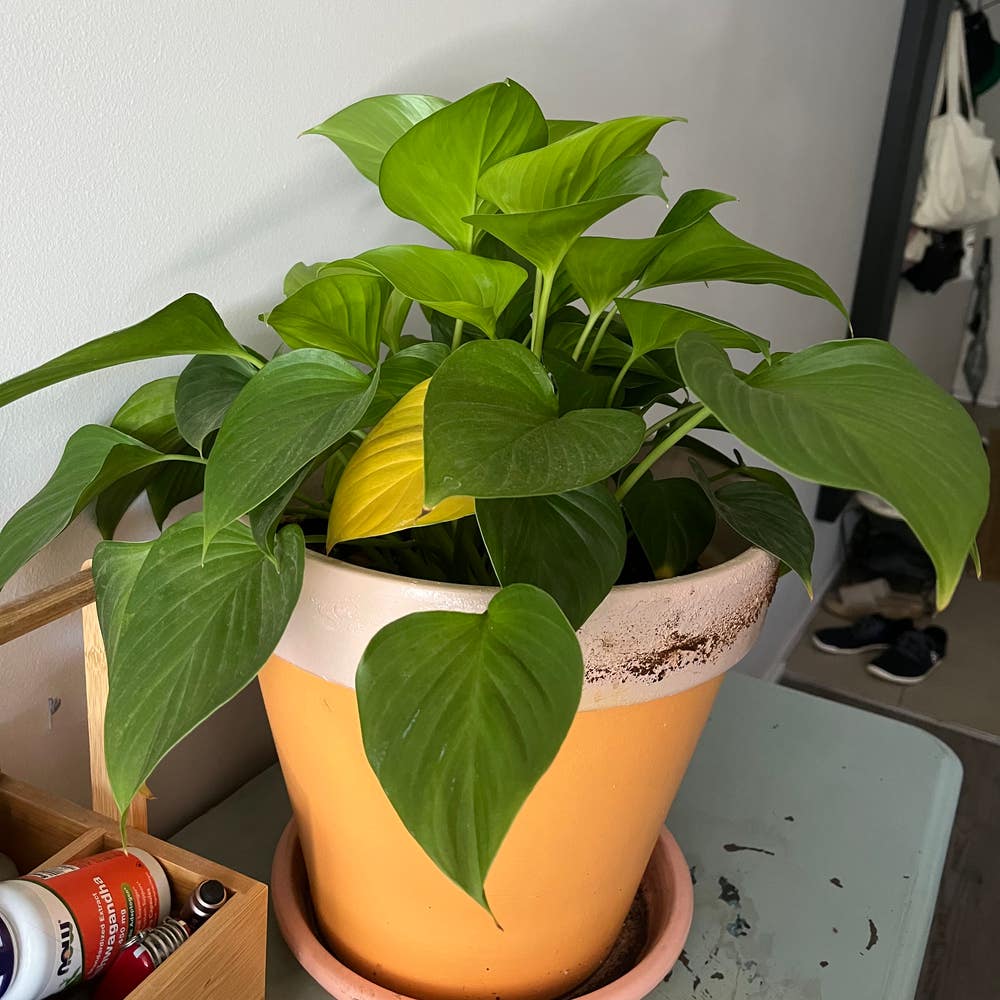
Why Does My Homalomena Maggy Have Yellow Leaves?
Homalomena rubescens ‘Maggy’
By the Greg Editorial Team
Jun 18, 2024•4 min read
This article was created with the help of AI so we can cover more plants for you. May contain errors. See one? Report it here.
- Yellow leaves signal health issues, like water imbalance or nutrient deficiencies.
- 🌞💧 Balance light and water; avoid over/underwatering and harsh sun.
- Fertilize and monitor regularly to maintain Homalomena Maggy's vibrant green leaves.
Spotting the Trouble: Identifying Yellow Leaves
🚨 Signs of Distress in Homalomena Maggy
Yellow leaves on your Homalomena Maggy can be a red flag for plant health. Look for leaves that are more autumn than evergreen, indicating something's amiss.
🕵️ Common Culprits Behind the Yellowing
Several factors can turn your Homalomena Maggy's leaves yellow:
- Overwatering: Leaves may feel mushy and look more like a sad salad than a vibrant plant.
- Underwatering: Expect leaves to appear as thirsty as a cactus in the desert.
- Nutrient Deficiencies: Yellow leaves might be crying out for a well-balanced meal.
- Light Exposure: Leaves with yellow patches could be sunburnt from too much love from the sun.
Remember, your Homalomena Maggy isn't trying to celebrate fall year-round; it's showing signs it needs your help.

Getting to the Root: Causes and Fixes for Yellow Leaves
💧 Water Woes: Too Much or Too Little
Yellow leaves on your Homalomena Maggy can be a tell-tale sign of water issues. Overwatering leads to suffocated, rotten roots, while underwatering leaves them parched. Check the soil: if it's soggy or bone dry, you've found your culprit. Aim for consistently moist soil, like a well-wrung sponge.
🍽️ Feeding Your Plant: Nutrient Needs
Nitrogen deficiency often starts the yellowing process at the lower leaves. Potassium issues show up as yellow edges, and magnesium problems begin with yellowing between the veins. Iron deficiency? Look at the younger leaves first. A balanced, water-soluble fertilizer can address these needs without the guesswork.
🌞 Let There Be Light: Finding the Sweet Spot
Too much shade can turn leaves yellow, while too much sun can bleach or crisp them. Your Homalomena Maggy needs that Goldilocks zone of light. Not too bright, not too dark. Adjust its spot to find that sweet spot where the leaves can bask in gentle, indirect sunlight.

Turning Over a New Leaf: Recovery Steps
💧 Adjusting Your Watering Technique
Watering your Homalomena Maggy should be more rhythm than random. Check the top inch of soil; if it's dry, it's time to water. Drench the soil until water escapes from the drainage holes, then hold off. Let the soil partially dry before the next session to prevent root rot.
🌱 The Right Feed: Fertilizing Fundamentals
Fertilizer is your plant's protein shake, but moderation is key. Use a balanced, water-soluble fertilizer with an even NPK ratio. Apply it as the growing season kicks off, ensuring the soil is moist to avoid root burn. A soil test isn't overkill—it's smart plant parenting.
☀️ Light It Right: Ensuring Optimal Lighting Conditions
Your Homalomena Maggy craves that bright, indirect light sweet spot. Rotate the plant for even exposure, but dodge the harsh midday sun. If your space is more cave than conservatory, consider grow lights. Transition to new lighting gradually to avoid shocking your green buddy.

Keeping the Green: Preventive Tips
💧 Crafting a Care Schedule
Consistency is the backbone of plant care. Establish a regular watering routine for your Homalomena Maggy, checking the soil moisture before each watering. Overwatering is a common misstep, so wait until the top inch of soil is dry. During growth periods, spring and summer, fertilize every 6-8 weeks with a balanced liquid fertilizer. Come fall and winter, ease up as growth slows. Pruning isn't just aesthetic; it's a health check. Remove yellow or damaged leaves to allow your plant to focus on new, healthy growth.
👀 Vigilant Monitoring
Your Homalomena Maggy will communicate with you, albeit not with words. Watch for subtle changes in leaf color or growth - these are your cues. A moisture meter can be a trusty sidekick, or go classic with the finger-test. Keep a log; it's not overkill, it's smart. Spot pests? Act fast with a treatment that shows no mercy. And remember, the right light is might—bright, indirect light is your plant's happy place. Too much sun, and you're on a one-way trip to Scorchtown. Too little, and you'll witness a slow descent into the yellow abyss. Keep it comfortable, keep it green.
⚠️ Safety First
This content is for general information and may contain errors, omissions, or outdated details. It is not medical, veterinary advice, or an endorsement of therapeutic claims.
Always consult a qualified healthcare professional before using any plant as food, medicine, or supplement.
Never eat any plant (or feed one to pets) without confirming its identity with at least two trusted sources.
If you suspect poisoning, call Poison Control (800) 222-1222, the Pet Poison Helpline (800) 213-6680, or your local emergency service immediately.
Spotted an error? Please report it here.
Turn your Homalomena Maggy's frown upside down by letting Greg remind you 🛎 when to water and fertilize, ensuring those yellow leaves are a thing of the past.