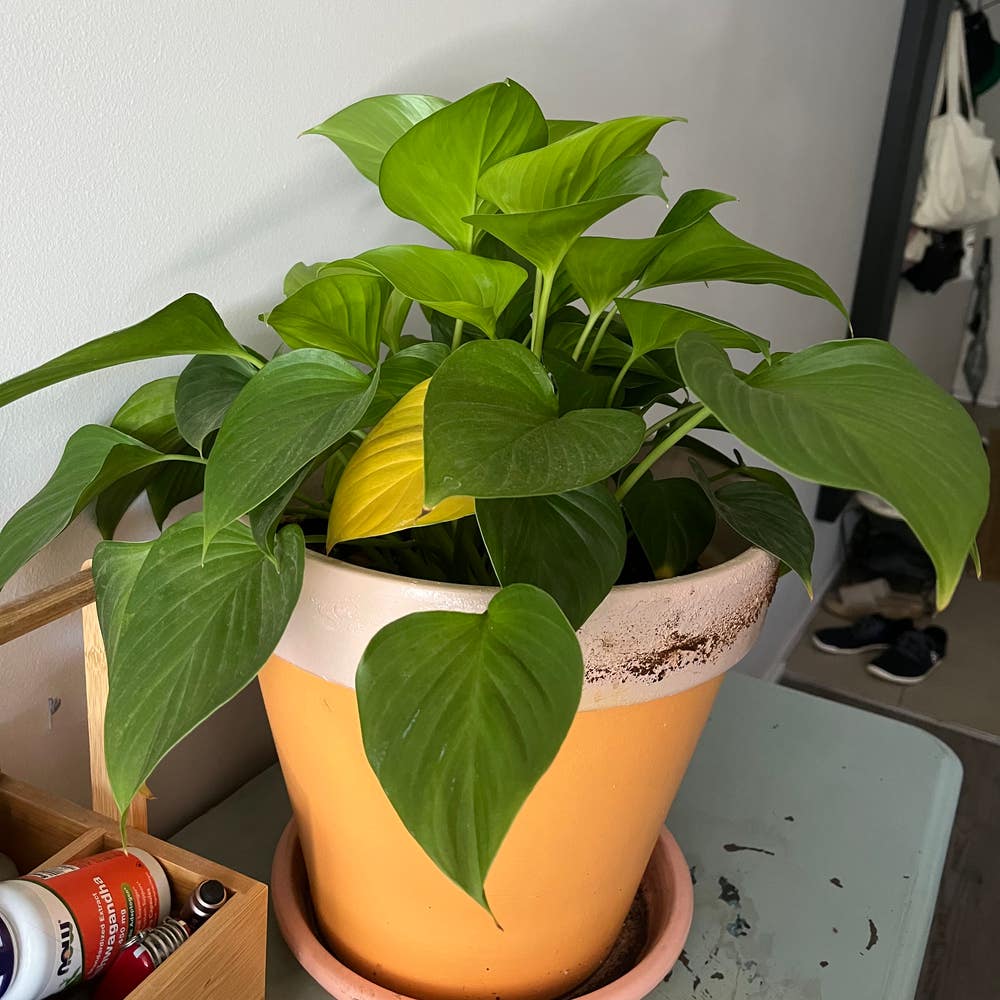
How to Get a Homalomena Maggy to Bloom
Homalomena rubescens ‘Maggy’
By the Greg Editorial Team
Jun 18, 2024•4 min read
This article was created with the help of AI so we can cover more plants for you. May contain errors. See one? Report it here.
- Bright, indirect light is key for Homalomena Maggy to bloom.
- Consistent warm, humid conditions promote flowering; aim for 65-75°F and 60% humidity.
- Prune and fertilize strategically to direct energy to blooms and ensure plant health.
Light: The Bloom Igniter
🌞 The Right Rays
Bright, indirect light is your Homalomena Maggy's best friend when it comes to blooming. Too much sun? Think leaf sunburn. Not enough? It's like a bloom boycott. Aim for that sweet spot where the light is just right, mimicking a dappled forest floor.
💡 Mimicking the Wild
To get your indoor Maggy blooming, think of your lighting setup as a sun substitute. LED grow lights can play the role of the sun, minus the harmful UV rays. Position them to recreate the natural ebb and flow of daylight, steering clear of that intense midday vibe. Keep it consistent, and you might just trick your plant into a flowering fiesta.

Temperature and Humidity: The Comfort Zone
🌡️ Warmth and Moisture for Blooms
To coax a Homalomena Maggy into blooming, temperature and humidity must be just right. Aim for a steady 65 to 75°F and maintain a humidity level around 60%. These conditions mimic the plant's natural tropical habitat, setting the stage for those elusive flowers.
🌿 Keeping Conditions Consistent
Consistency is your new mantra when it comes to Homalomena Maggy's environment. Use a thermostat to avoid temperature swings that stress the plant. For humidity, deploy tools like humidifiers, misting, or pebble trays. A hygrometer is your secret weapon, letting you monitor humidity levels without breaking a sweat. Remember, a stable environment means a happy, blooming plant.

Feeding for Flowers
💐 Nutritional Needs for Blooming
To get Homalomena Maggy to strut its stuff with blooms, nutrients are non-negotiable. Phosphorus and potassium are the dynamic duo for flowering, while nitrogen is the leafy green's best friend. Remember, it's a balancing act—too much nitrogen and you'll be the proud owner of a lush, bloomless bush.
🌱 Fertilizer Timing and Dosage
Timing is as crucial as the nutrients themselves. Spring is your cue to switch gears, lowering nitrogen and upping phosphorus and potassium as daylight stretches. Stick to the script—use the recommended dosage on your fertilizer package to avoid the dreaded nutrient burn. Think of it as a diet plan for your plant; overindulgence is just as bad as neglect.

Pruning: Energy Directing
✂️ Strategic Snips for Flowering
Pruning your Homalomena Maggy isn't just about keeping it from turning into a jungle in your living room. Strategic snipping can make the difference between a lush, leafy plant and one that's ready to put on a floral show. To encourage blooms, prune in the late winter or early spring, just before the growth season kicks in. This tells your plant to wake up and get ready to impress.
- Trim dead or yellowing leaves to keep your Maggy looking sharp and to prevent energy waste.
- Cut back excess foliage to ensure light reaches the inner parts of the plant, which is crucial for bloom development.
- Always prune above a leaf node; this is where new growth will sprout, potentially with flowers in tow.
🌿 Plant Health Equals Bloom Wealth
Healthy Homalomena Maggy plants are more likely to bloom, so think of pruning as a health check-up. By removing dead or damaged material, you're preventing potential disease and pest infestations. It's like you're clearing the way for the plant's energy to flow towards those elusive blooms.
- Ensure air circulation is optimal by not allowing the plant to become too dense.
- Deadheading, or the removal of spent flowers, can coax your Maggy into producing more blooms instead of wasting resources on seed production.
- Post-pruning, consider a light fertilizer boost to support the plant's redirected energy towards blooming. But remember, it's a light touch – overfeeding can lead to more leaves at the expense of flowers.
When Blooms Don't Show
🌼 Common Flowering Faux Pas
Overwatering and underwatering can both lead to a bloomless Homalomena Maggy. It's a delicate balance; too much water and the roots might rot, too little and the plant can't muster the strength to flower. Aim for consistently moist soil.
Lighting missteps are another culprit. Homalomena Maggy needs bright, indirect light. Too much sun burns, too little stunts. Find that sweet spot to encourage blooming.
Nutrient imbalance can also be a party pooper. Excessive nitrogen leads to lush leaves but no flowers. Ensure you're using a balanced fertilizer, and don't overdo it.
🚀 Bloom Blockers
Temperature fluctuations can throw your Homalomena Maggy for a loop. Keep the environment stable to avoid shocking the plant out of its bloom cycle.
Pests and diseases are like uninvited guests at a party. They can sap the plant's energy, diverting it from flowering. Regular checks and prompt action are key.
Pruning errors can also hinder blooming. Strategic snips are necessary, but overdoing it can remove potential bloom sites.
Lastly, patience is crucial. Sometimes, despite doing everything right, the plant just isn't ready to show off. Give it time, and with proper care, those elusive blooms should eventually make an appearance.
⚠️ Safety First
This content is for general information and may contain errors, omissions, or outdated details. It is not medical, veterinary advice, or an endorsement of therapeutic claims.
Always consult a qualified healthcare professional before using any plant as food, medicine, or supplement.
Never eat any plant (or feed one to pets) without confirming its identity with at least two trusted sources.
If you suspect poisoning, call Poison Control (800) 222-1222, the Pet Poison Helpline (800) 213-6680, or your local emergency service immediately.
Spotted an error? Please report it here.
Ensure your Homalomena Maggy flourishes 🌟 with Greg's personalized care reminders for the right light, temperature, and nutrients, making blooming a breeze.