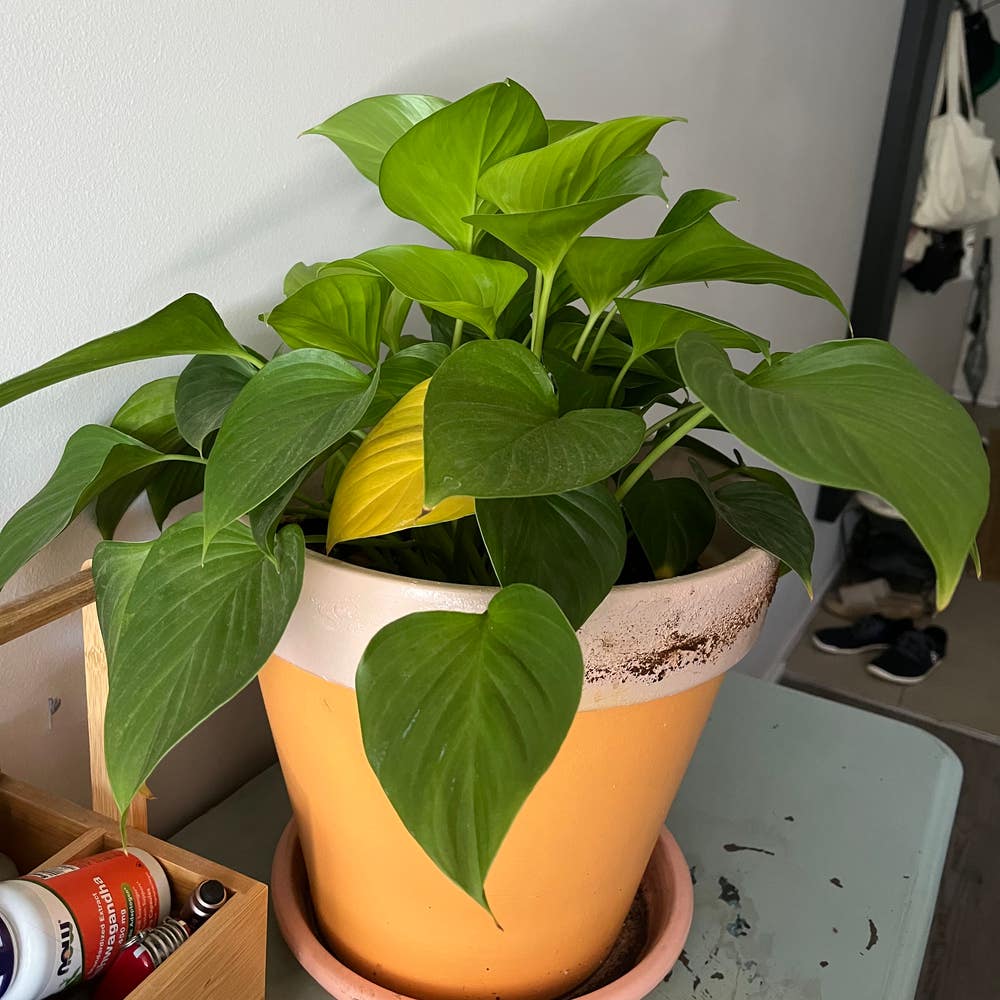
🌞 Is Direct Sunlight Good for My Homalomena Maggy?
Homalomena rubescens ‘Maggy’
By the Greg Editorial Team
Jun 18, 2024•4 min read
This article was created with the help of AI so we can cover more plants for you. May contain errors. See one? Report it here.
- 🌿 Medium indirect light is ideal for Homalomena Maggy's health.
- 🌞 Direct sunlight causes leaf scorching; use sheer curtains as sunblock.
- Adjust plant's location with seasons and window directions for optimal light.
Homalomena Maggy and Its Relationship with the Sun
🌿 Does Homalomena Maggy love the limelight?
Hailing from the rainforest floor, Homalomena Maggy is accustomed to dappled sunlight rather than the harsh rays of direct sun. It thrives in medium indirect light, which mimics the natural light filtering through the canopy of its native habitat.
Direct sunlight, on the other hand, is a no-go. Scorching and fading of the large, heart-shaped leaves can occur if Homalomena Maggy is exposed to too much direct sunlight. The plant's preference is clear: bright but indirect light is the way to keep it lush and happy.
🚨 Spotting the signs: When Homalomena Maggy gets too much sun
Crispy, faded leaves are the plant's SOS signal for too much sun. If you notice these symptoms, it's time to relocate your Homalomena Maggy to a shadier spot posthaste.
For a quick fix, sheer curtains can be your plant's best friend, diffusing the light and protecting it from the harshness of direct rays. Remember, it's not just about survival; it's about providing the right environment for your Homalomena Maggy to thrive.

Making Sense of Sunlight Through Your Windows
🌞 Window wisdom: Picking the perfect pane for your plant
Your Homalomena Maggy's sun needs are like a delicate dance—not too hot, not too cold. East-facing windows are your friend here, offering a gentle morning light that won't overwhelm your green companion. West-facing windows, however, might serve up a stronger afternoon brew of sunlight, which could be a bit much for Maggy's taste.
Remember, south-facing windows in the Northern Hemisphere (and north-facing in the Southern Hemisphere) are the sun's VIP lounges—great for cacti but a potential scorch zone for your Homalomena. Keep Maggy at a safe distance from these sun traps, or use sheer curtains to filter their intensity.
🌱 Adjusting for the seasons: Sunlight changes and how to adapt
As the earth struts its seasonal runway, the sunlight sashaying through your windows changes its angle and intensity. In winter, your Homalomena Maggy might appreciate a closer spot to the window to bask in the weaker rays, while summer might call for a strategic retreat to prevent a leafy sunburn.
🌍 Hemisphere happenings: How your location on the globe tweaks the sunlight
The sun's trajectory is a globe-trotter, and your location dictates its path across your sky. In the Northern Hemisphere, a south-facing window is a sun magnet, while the opposite holds true down south. This means you'll need to flip the script on window advice depending on your address on this big blue marble.
Rotate or relocate your Homalomena Maggy with the changing seasons to keep it in that Goldilocks zone—just the right amount of light. Keep an eye on your leafy friend; it's not shy about showing you when it's had too much sun.

Sunlight Strategies for Homalomena Maggy Care
🌞 Creating a cozy sunspot: Ideal placement and conditions
Finding the sweet spot for your Homalomena Maggy isn't just about avoiding the scorch. These tropical natives are like Goldilocks—they want their light just right. Bright, indirect sunlight is their jam. Think near a north-facing window or a few feet away from a sunnier one.
When to use sunblock: If you've got a sun-drenched room, sheer curtains are your friend. They're like sunglasses for your plant, diffusing that harsh direct light into a soft glow. A sheer curtain can prevent your Homalomena Maggy from getting a sunburn without leaving it in the dark.
🌞 Sun schedule: Timing Homalomena Maggy's light exposure
How much sun is just right? Aim for consistent, indirect light throughout the day. If you're dealing with lower light conditions, don't sweat it—Homalomena Maggy can handle it like a champ, though it might grow more slowly.
Crafting a daily sunlight schedule isn't about being a control freak; it's about mimicking the natural rhythms of the sun. No need for a strict timetable, but try to ensure it gets its light fix during the day and can rest at night. If natural light is scarce, consider a grow light, but keep it at a cozy distance—no tanning beds needed here.

⚠️ Safety First
This content is for general information and may contain errors, omissions, or outdated details. It is not medical, veterinary advice, or an endorsement of therapeutic claims.
Always consult a qualified healthcare professional before using any plant as food, medicine, or supplement.
Never eat any plant (or feed one to pets) without confirming its identity with at least two trusted sources.
If you suspect poisoning, call Poison Control (800) 222-1222, the Pet Poison Helpline (800) 213-6680, or your local emergency service immediately.
Spotted an error? Please report it here.
Ensure your Homalomena Maggy flourishes in the perfect light by using Greg's PlantVision 🌤 to pinpoint the ideal spot that mimics its native rainforest glow.