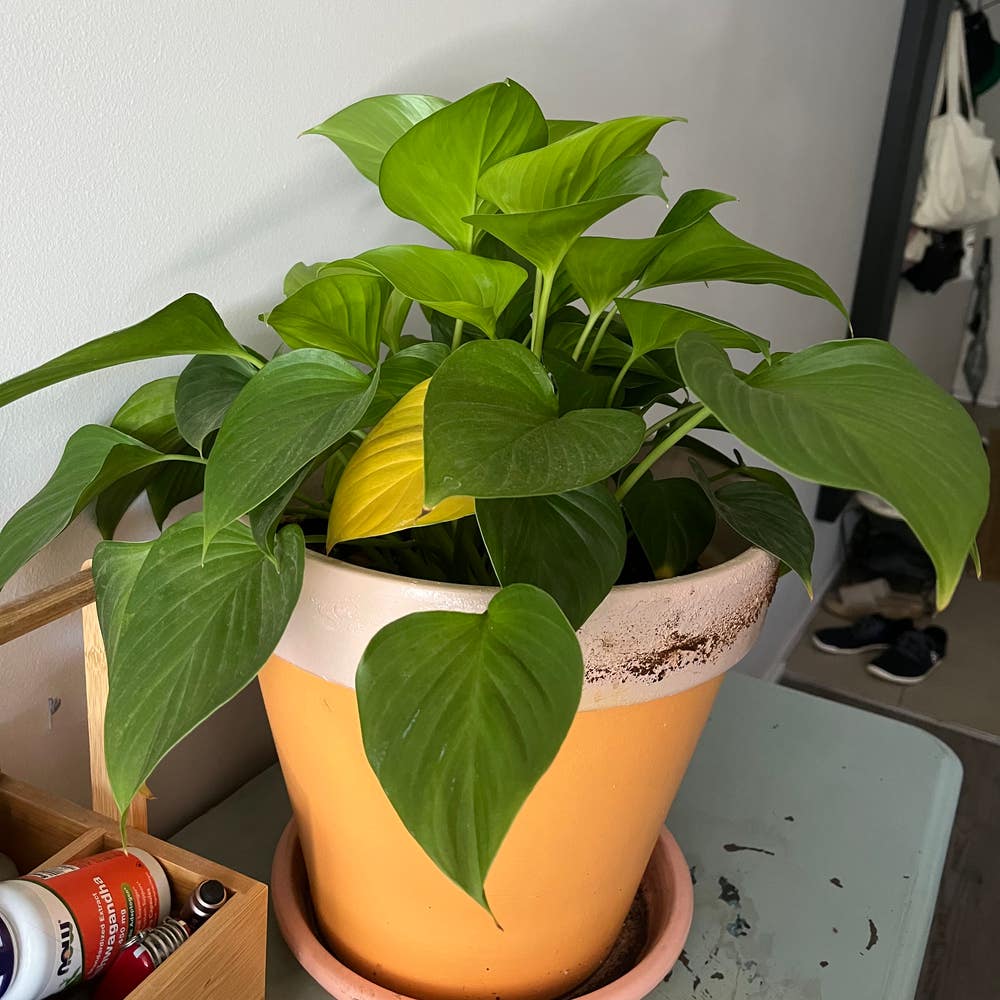
Why Are My Homalomena Maggy Leaves Dropping?
Homalomena rubescens ‘Maggy’
By the Greg Editorial Team
Jun 18, 2024•4 min read
This article was created with the help of AI so we can cover more plants for you. May contain errors. See one? Report it here.
- Overwatering? Look for yellow leaves and mushy stems, then let soil dry.
- 🌞 Bright, indirect light and consistent watering keep Homalomena Maggy happy.
- Stable temps and humidity with tools like humidifiers enhance leaf health.
When Too Much Love Drowns Your Plant: Overwatering Woes
💧 Signs Your Homalomena Maggy is Getting Waterlogged
Yellowing leaves and a mushy stem base are red flags; they're your Homalomena Maggy's cry for help. Soggy soil is a telltale sign of overindulgence in water. If the leaves feel like a wet rag rather than a vibrant part of the plant, it's time to reassess your watering routine.
🌊 The Root of the Problem: How Overwatering Leads to Leaf Drop
Roots need to breathe, not swim. Overwatering leads to root rot, which is as bad for your plant as a flooded basement is for a house. When roots are drowning instead of sipping, leaves drop like flies. It's a classic case of too much love killing the beloved.
🚱 Fine-Tuning Your Watering Technique to Keep Roots Happy
First, halt all watering to stop the flood. Check if the soil feels more like a swamp than a nurturing ground. If it's soggy, consider repotting with fresh, well-draining soil. A terracotta pot can be your unsung hero, wicking away excess moisture. Ensure the top inch of soil is dry before watering again, and always use room temperature water to avoid shocking your Homalomena Maggy's roots.

Thirsty Roots: The Underwatering Equation
🚰 Spotting the SOS signals of underwatering
Dry, crispy leaf edges and inward curling leaves are distress flares from your Homalomena Maggy. It's screaming for a drink. Don't wait for your plant to start looking like a piece of forgotten lettuce at the back of your fridge.
🌱 Balancing soil moisture for optimal health
The soil should feel like a moist sponge—damp but not dripping. Overdo it, and you're setting the stage for a root rot horror show. Underdo it, and you're in a drought documentary. Aim for that sweet spot, like a perfectly brewed espresso shot.
📆 Setting up a fail-proof watering schedule
Consistency is king. Check the soil's top inch; if it's dry, it's time to water. Think of it as a steady sip for your plant. If your life is too chaotic for a watering schedule, get a moisture meter to take the guesswork out of the equation. It's like a hydration wingman for your green buddy.

Let There Be Light (But Not Too Much): Finding the Sweet Spot
💡 Identifying the Signs of Light Stress on Leaves
Your Homalomena Maggy's leaves can tell tales of light stress. If they're looking more like crispy critters than lush foliage, that's direct sunlight doing its worst. Conversely, leaves stretching out like they're trying to escape the pot? That's them pleading for more light.
💡 The Goldilocks Zone: Ideal Light Conditions for Homalomena Maggy
Bright, indirect sunlight is Homalomena Maggy's jam. It's the sweet spot where this tropical beauty thrives without the threat of sunburn or the sulk of shade. Think dappled light, the kind that filters through curtains or bounces off walls.
💡 Making Adjustments: Tips for Perfect Plant Placement
Keep an eye on your plant like it's the star of a reality show. Rotate it for even light distribution and shift its position with the changing seasons. If your place is more dungeon than sunroom, consider grow lights, but keep them at a safe distance—no tanning beds for plants, please. Remember, your Homalomena Maggy isn't just another pretty leaf; it's a living barometer for the right light.

Riding the Temperature and Humidity Rollercoaster
Temperature and humidity are like the dynamic duo of plant care, especially for the sensitive Homalomena Maggy. Too much fluctuation in these elements can cause your plant to shed leaves faster than a dog sheds fur in summer.
🌡️ The Impact of Temperature Extremes
High heat can turn your Homalomena Maggy into a crispy critter, while cold drafts might as well be an icy kiss of death. Aim for a steady range: 73.4-77°F in summer and not dropping below 60.8°F in the winter.
💧 Humidity: The Invisible Thirst
Homalomena Maggy hails from the tropics, so it craves that moist air. If your home's drier than a stand-up comedian's wit, consider investing in a humidifier. Keep that humidity consistent, around the 40-60% sweet spot, to avoid turning your green oasis into a brown wasteland.
🌍 Creating a Stable Environment
To avoid turning your Homalomena Maggy's world into a climate catastrophe, stability is key. Use a thermometer and hygrometer to monitor conditions. These gadgets are your backstage passes to maintaining the perfect environment.
🛠 Tools and Tricks for Climate Control
Humidifiers and dehumidifiers are your best friends for managing moisture levels. If you're dealing with dry air, a pebble tray can be a quick fix. Remember, good air circulation is crucial; it's the unsung hero that keeps the climate stable and your plant thriving.
⚠️ Safety First
This content is for general information and may contain errors, omissions, or outdated details. It is not medical, veterinary advice, or an endorsement of therapeutic claims.
Always consult a qualified healthcare professional before using any plant as food, medicine, or supplement.
Never eat any plant (or feed one to pets) without confirming its identity with at least two trusted sources.
If you suspect poisoning, call Poison Control (800) 222-1222, the Pet Poison Helpline (800) 213-6680, or your local emergency service immediately.
Spotted an error? Please report it here.
Avoid the dreaded leaf-drop 🍃 in your Homalomena Maggy by letting Greg's reminders keep your watering and humidity levels on point for a thriving, happy plant.