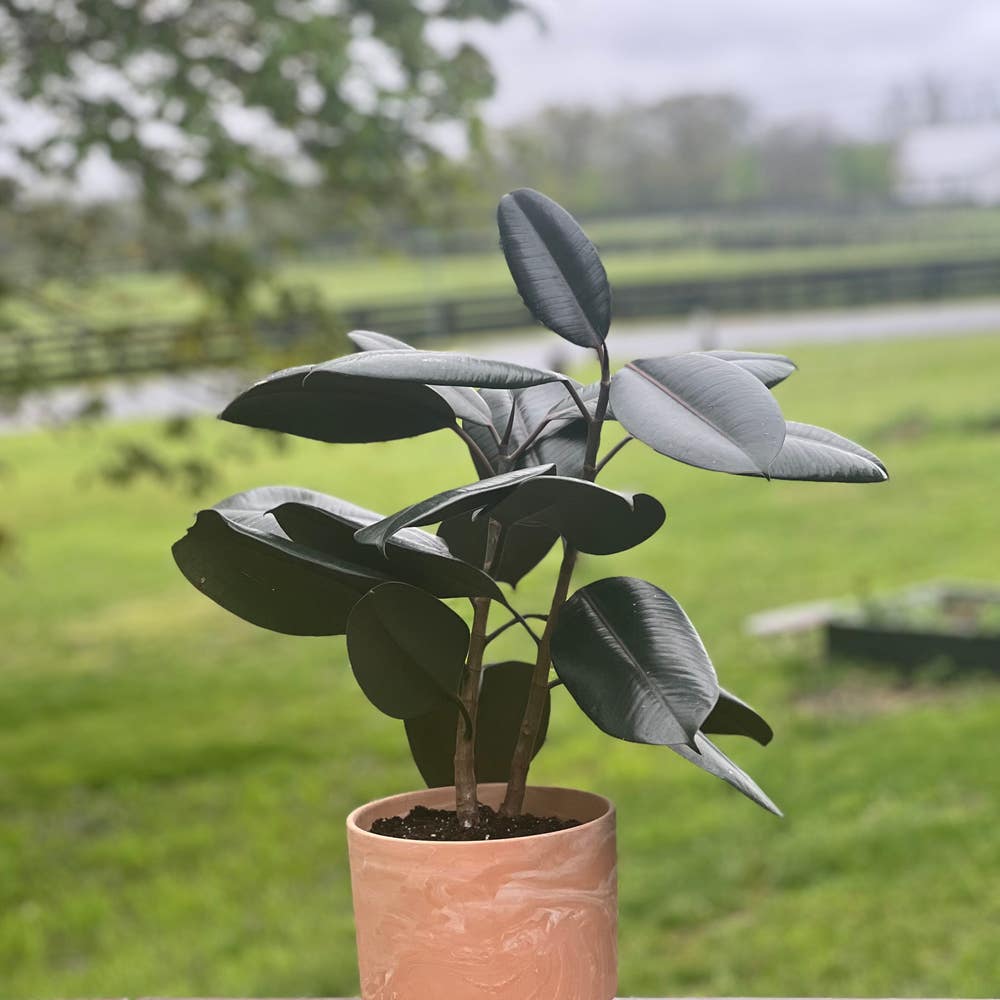
How to Get a Burgundy Rubber Tree to Bloom
Ficus elastica 'Burgundy'
By the Greg Editorial Team
Jun 18, 2024•5 min read
This article was created with the help of AI so we can cover more plants for you. May contain errors. See one? Report it here.
Experience the thrill of your Burgundy Rubber Tree's elusive bloom with this tailored bloom-boosting guide! 🌺🌿
- 🌞 Bright, indirect light and stable temperatures encourage blooms.
- 🌱 Patience and plant maturity are crucial; it can take 5-15 years.
- ✂️ Prune and feed strategically for bloom readiness and health.
Creating the Perfect Bloom-Encouraging Environment
💡 Light: The Bloom Igniter
Bright, indirect light is the secret handshake to the blooming club. Your Burgundy Rubber Tree needs to think it's in its natural habitat, where the light is like a gentle pat on the back, not a slap in the face. Avoid direct sunlight; it's a no-go zone that can lead to leaf burn and a bloomless existence.
Remember, it's not just about flipping a switch; mimic natural light patterns. As seasons change, so should your plant's position. It's like adjusting your sunglasses as the sun dips—do it right, and you'll be rewarded with potential blooms.
🌡️ Temperature and Humidity: The Balancing Act
Temperature is the unsung hero in the bloom-making saga. Aim for a cozy 65° to 80°F (18° - 27°C) during the day. At night, let the temperature drop a bit, like a gentle nudge, to say, "Hey, it's time to get those blooms going."
Humidity is the sidekick, not too muggy, not too dry. Think of it as setting the mood—too much and your plant's sweating it out, too little and it's gasping for a drink. Keep it moderate, like your plant's favorite Goldilocks zone.
Seasonal shifts matter. They're like nature's cues for your plant to start putting on a show. So when the days get shorter and the nights cooler, it's your cue to start paying attention. Keep the conditions stable; plants are like us, they hate sudden change. It's like expecting to enjoy an ice cream in a sauna—just doesn't work.

The Plant's Journey to Maturity and Bloom Readiness
🌸 Age Matters: Patience Pays Off
Just like a fine wine, a Burgundy Rubber Tree won't rush to bloom. It's a game of patience, with a timeline stretching years. These plants typically hit their flowering stride when they've matured, which could mean a wait from 5 to 15 years. It's a long haul, but the potential payoff is a rare and stunning display.
🌱 Growth Check: Ensuring Vigor for Potential Blooms
Health is non-negotiable. Regularly measure your plant's growth; it's the clearest indicator of its well-being. Look for consistent new leaves and a robust stature. Any signs of distress, like leaf drop or stunted growth, could mean your Rubber Tree is more focused on survival than reproduction. Address these issues promptly to keep your plant on the blooming path.

Nurturing Blooms with Pruning and Feeding
🌱 Pruning: Shaping for Success
Pruning is crucial for directing your Burgundy Rubber Tree's energy towards blooming. Trim excess foliage to encourage growth where it counts. Think of it as a strategic game where you're the coach, and your plant is the athlete aiming for gold.
- Use sharp, sterilized scissors for clean cuts.
- Focus on new growth, the prime spot for potential blooms.
- Moderation is key; over-pruning can be as detrimental as neglect.
💧 Feeding for Flowers: Nutrient Needs
Feeding your plant is less about dumping fertilizer and more about precision nutrition. A balanced diet high in potassium can coax out those elusive flowers.
- Use a "blooming" mix fertilizer, rich in phosphorus, to encourage flowering.
- Apply during the growing season; your plant's appetite changes with the seasons.
- Follow the recommended dosage to avoid overfeeding, which can be as harmful as starvation.
Remember, a well-fed plant is more likely to reward you with blooms.

Overcoming Bloom Blockers: Troubleshooting Tips
🐞 Identifying and Fixing Flower Fails
In the quest for blooms, vigilance is key. Pests like mealybugs or fungal diseases can be the party poopers of your plant's blooming bash. Inspect your Burgundy Rubber Tree regularly and show no mercy—treat with insecticidal soap or fungicide at the first sign of infestation.
Pruning can be a game-changer. It's not just about snipping willy-nilly; it's about strategic cuts that redirect energy towards flowering. Remember, it's snip-snip for success.
Nutrient balance is like walking a tightrope. Too much fertilizer and your plant's roots might just give up. Aim for a balanced diet—feed sparingly, but regularly.
Overwatering is a no-no. Your plant doesn't enjoy soggy feet any more than you do. Let the soil dry out between waterings to prevent root rot, the silent killer of blooms.
🌿 Environmental Tweaks for Troubled Trees
Light is the bloom igniter, so make sure your plant gets its daily dose of sunshine. Rotate your plant to ensure even light exposure, avoiding the gloomy outcome of uneven growth.
Temperature swings are like bad dance music for plants—they just can't get into the groove. Maintain a consistent temperature to avoid throwing your plant off its blooming rhythm.
If your tap water is more mineral than an 80s power ballad, switch to filtered or rainwater to prevent leaf browning. And while you're at it, ensure your soil is the perfect mix of well-draining and moisture-retaining.
Lastly, if your plant is still throwing a fit, flush out excess fertilizer salts by running water through the soil for a few minutes. It's like a spa day for your plant's roots, washing away the stress of overfeeding.
⚠️ Safety First
This content is for general information and may contain errors, omissions, or outdated details. It is not medical, veterinary advice, or an endorsement of therapeutic claims.
Always consult a qualified healthcare professional before using any plant as food, medicine, or supplement.
Never eat any plant (or feed one to pets) without confirming its identity with at least two trusted sources.
If you suspect poisoning, call Poison Control (800) 222-1222, the Pet Poison Helpline (800) 213-6680, or your local emergency service immediately.
Spotted an error? Please report it here.
Experience the pride of a blooming 🌺 Burgundy Rubber Tree with Greg's tailored care reminders, ensuring your patience pays off with spectacular flowers!