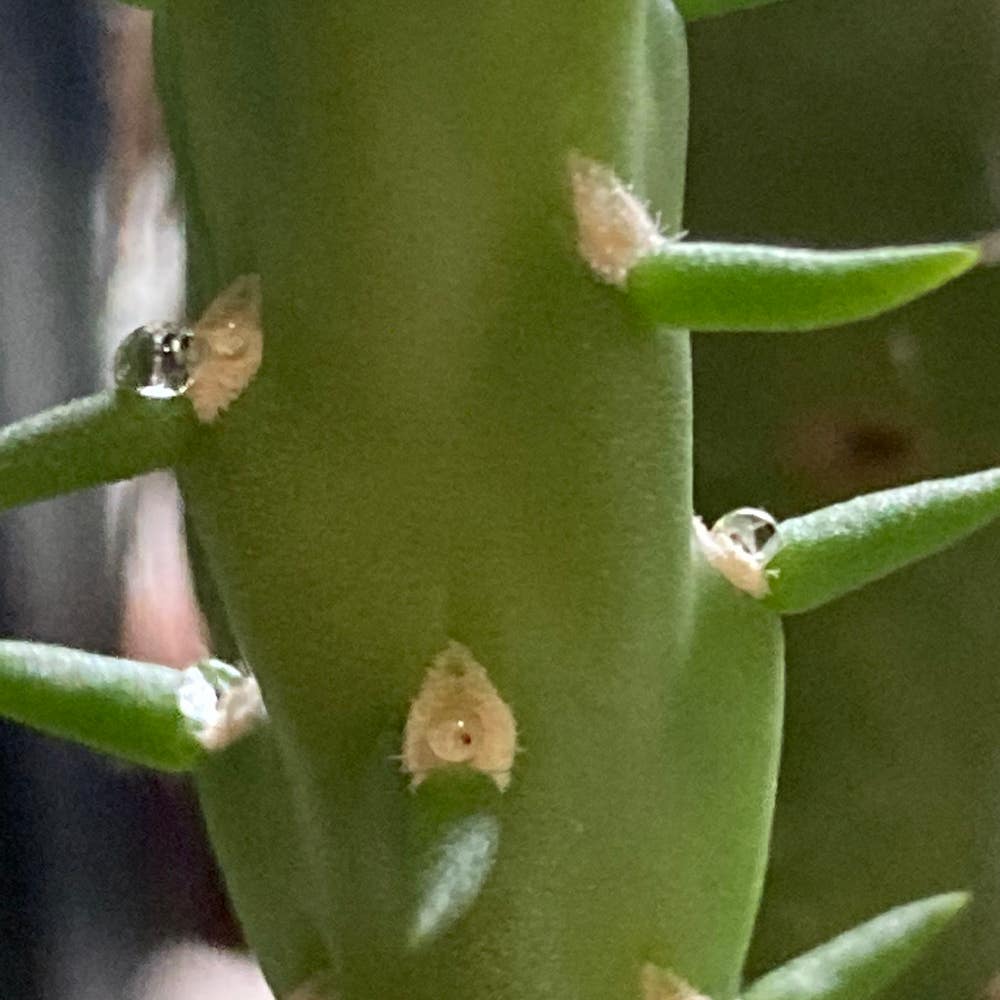
🌵 Why Are There Black Spots on My Teddy Bear Cholla Leaves?
Cylindropuntia bigelovii
By the Greg Editorial Team
Mar 31, 2024•5 min read
This article was created with the help of AI so we can cover more plants for you. May contain errors. See one? Report it here.
Uncover the urgent plea behind your Cholla's black spots and save your spiky friend! 🌵🔍
- Black spots indicate trouble; inspect leaves and address texture changes quickly.
- Fungi and bacteria are common culprits; use appropriate fungicides or antibacterials.
- Prevent with proper care: ensure correct watering, drainage, and air circulation.
Spotting the Trouble: Recognizing Black Spots on Your Cholla
👀 Visual Cues: The Look of Trouble
Black spots on Teddy Bear Cholla leaves are like red flags in a sea of green. They start as tiny specks, no bigger than a pinhead, and can balloon into unsightly splotches. These spots aren't just a blow to your plant's good looks; they're a distress signal. Watch for spots that are not quite black—some may have a brownish hue or a peculiar halo, hinting at a deeper issue.
🕵️ Common Areas: Where to Play Detective
Underneath the leaves is where the black spot saga often begins. But don't be fooled; these blemishes are brazen enough to climb to the topside, soaking up the sun. No leaf is safe, be it new growth or old guard. Make inspecting these areas a part of your routine, like brushing your teeth or checking your phone first thing in the morning.
🚨 Early Detection: Your Plant's Best Friend
Inspect your Cholla regularly—think of it as a health check-up. If you spot any texture changes or yellow halos around these dark invaders, it's time to spring into action. And remember, size matters. A solitary spot might be a fluke, but a constellation of them signals a call to arms. Keep your eyes peeled and your detective hat on; your Cholla's life might just depend on it.
Uncovering the Culprits: Causes of Black Spots
🍄 Fungal Foes
Fungi are the usual suspects when it comes to black spots on Teddy Bear Cholla. Cercospora and Phoma are the Bonnie and Clyde of this world, notorious for their black marks. These fungi love moisture and find the wet conditions of your Cholla's leaves irresistible.
🌿 Environmental conditions that favor fungal growth
High humidity and poor air circulation are fungi's best friends. Overwatering creates a waterlogged soil, a paradise for these unwelcome guests. Ensuring your Cholla isn't living in a fungal fiesta is key to keeping black spots at bay.
🦠 Bacterial Bullies
Bacterial leaf spot can be stealthy, often mistaken for fungal issues. The spots might look water-soaked and can quickly turn a healthy leaf into a spotty mess. Overwatering and stagnant air are the bacteria's best pals.
🔄 How bacteria spread and affect your Cholla
Bacteria can spread by touching affected leaves and then other plants. Unclean gardening tools are the double agents here, potentially spreading bacteria without you even noticing.
🚨 Environmental Stress Signals
Black spots can also be a distress signal from your Cholla, indicating environmental stress. Overexposure to sunlight, poor watering habits, or temperature extremes can cause these spots. They often appear as uneven patches, a cry for help against the conditions they're enduring.
First Aid for Foliage: Treating Black Spots
🍄 Battling Fungal Infections
Fungicides are the first line of defense against fungal invaders. Select a fungicide that targets the specific fungus afflicting your Teddy Bear Cholla. Labels are your roadmap—follow them to a T. Apply the fungicide to every inch of the leaf, top and bottom. Consistency wins the race, so adhere to the treatment schedule religiously.
💊 Combating Bacterial Infections
For bacterial blemishes, antibacterial solutions are the go-to. But first, play surgeon with sterilized shears and remove infected parts. Sanitize your tools before and after to stop bacteria in their tracks. Water at the base to keep leaves dry, and if you must water the leaves, do it with the morning sun as your ally.
🌿 Correcting Environmental Conditions
Sometimes, it's all about the environment. If you're overwatering, it's time to dial it back. Aim for the soil, not the foliage. Consider a fan for better air circulation; it's like your plant's personal cooling system. Adjust your care routine with the precision of a chess master, always thinking a few moves ahead.
Fortifying Your Cholla: Preventing Future Black Spots
💪 Cultural Practices to Embrace
Watering wisdom: It's a delicate balance. Too much, and you're throwing a pool party for fungi; too little, and your Cholla throws in the towel. Check the soil before you water—only proceed if it's dry.
Soil and air flow: Think of your Cholla's pot as its personal space—it needs room to breathe. Ensure the soil is well-draining and the plant isn't suffocating in stagnant air. A good mix with perlite can be a game-changer.
🧼 Cleanliness and Care
Pruning protocol: Snip off the sad bits. Dead or infected areas are like a downer at a party—they need to go. Remember, sterilize your tools before giving your Cholla a trim to avoid spreading any funk.
Sanitation strategies: Keep it clean, folks. Clear away debris and fallen leaves like you're tidying up after a shindig. This isn't just about looks—it's about health.
👀 Monitoring and Maintenance
Regular check-ups: Be the nosy neighbor. Keep a close eye on your Cholla for any signs of distress. Catching issues early is like dodging a bullet.
Adjusting care with the seasons: Your Cholla's needs change with the weather. Be ready to switch up your care routine faster than a chameleon changes colors. More sun in summer, less water in winter—it's all part of the dance.
⚠️ Safety First
This content is for general information and may contain errors, omissions, or outdated details. It is not medical, veterinary advice, or an endorsement of therapeutic claims.
Always consult a qualified healthcare professional before using any plant as food, medicine, or supplement.
Never eat any plant (or feed one to pets) without confirming its identity with at least two trusted sources.
If you suspect poisoning, call Poison Control (800) 222-1222, the Pet Poison Helpline (800) 213-6680, or your local emergency service immediately.
Spotted an error? Please report it here.
Eradicate black spots 🛑 on your Teddy Bear Cholla with Greg's custom care alerts and community insights for early detection and prevention.