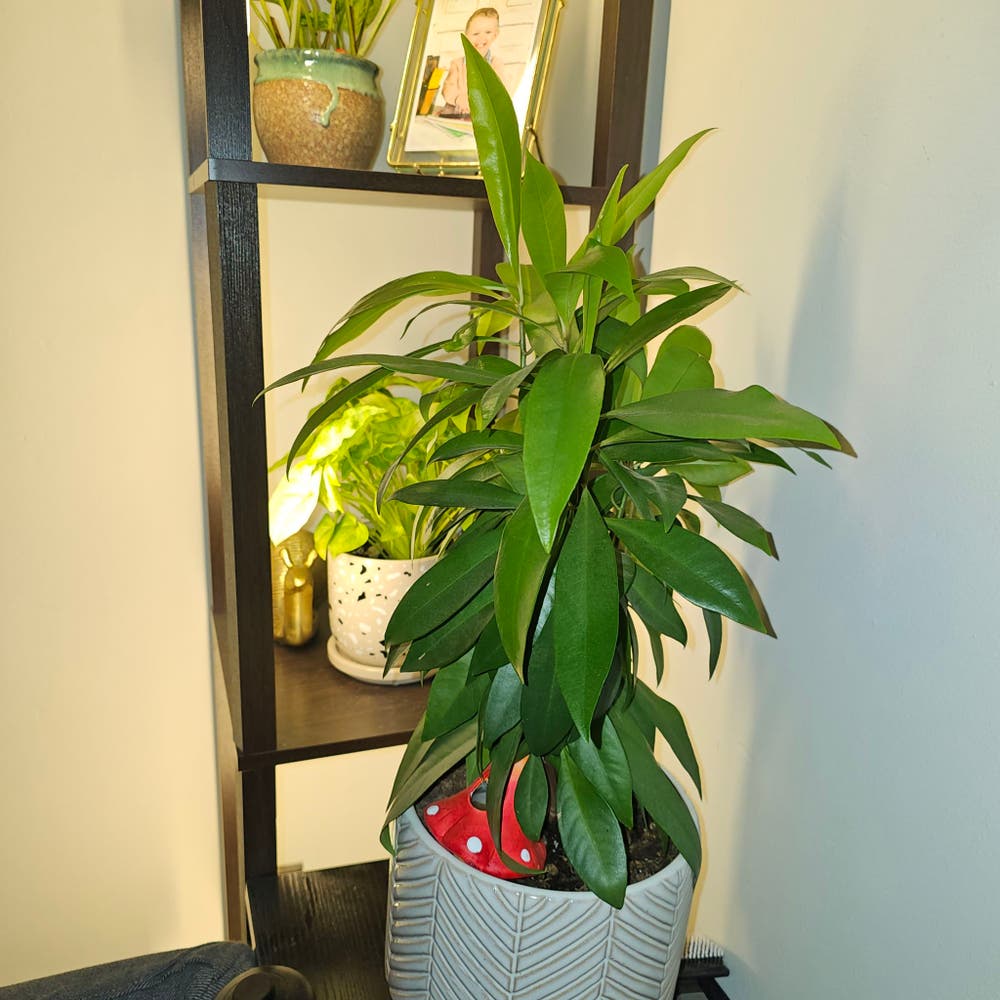
Ultimate Guide to Fixing Curling Leaves on Ardisia 🔧
Ardisia awarum
By the Greg Editorial Team
Nov 26, 2024•6 min read
This article was created with the help of AI so we can cover more plants for you. May contain errors. See one? Report it here.
Revive your Ardisia's vitality 🌱 by preventing curling leaves with these essential care tips for thriving plants!
- 🌱 Curling leaves on Ardisia stem from pests, watering issues, and environmental stress.
- 🌡️ Maintain 65°F to 80°F temperature and 50%-70% humidity to prevent leaf curling.
- 🐜 Check for pests like spider mites; they contribute to leaf curling and distress.
Causes of Curling Leaves
🌡️ Environmental Stress Factors
Temperature plays a crucial role in the health of your Ardisia. The ideal range is between 65°F to 80°F (18°C to 27°C), and fluctuations outside this range can lead to stress and curling leaves.
Humidity is another key factor. Ardisia thrives in environments with 50% to 70% humidity; dry air can cause significant stress, leading to leaf curl and other issues.
Light exposure also matters. While these plants enjoy bright conditions, too much direct sunlight can scorch their leaves. Indirect light is the best choice for maintaining healthy foliage.
🐛 Pests and Diseases
Pests can wreak havoc on your Ardisia, causing curling leaves and other distress signals. Spider mites are common culprits, leaving behind webbing and stippled leaves as telltale signs of their presence.
Aphids are another pest to watch for. They often cluster on new growth and leave a sticky residue that can attract further problems. Additionally, fungal infections can lead to leaf curl and discoloration, further complicating care.
🌱 Nutrient Deficiencies
Nutrient deficiencies can also contribute to curling leaves. A nitrogen deficiency often manifests as yellowing leaves and stunted growth, signaling that your plant isn't getting enough of this essential nutrient.
Potassium deficiency is another concern, causing leaf edges to curl and turn brown. Maintaining balanced fertilization is vital for overall plant health, ensuring your Ardisia has the nutrients it needs to thrive.
💧 Watering Issues
Watering practices are critical in preventing curling leaves. Overwatering is a common mistake, with symptoms including yellowing leaves, mushy stems, and root rot. Ensuring well-draining soil is essential to avoid these issues.
On the flip side, underwatering can also cause problems. Signs include dry, crispy leaves and wilting, indicating that your plant is not retaining enough moisture. Regularly checking soil moisture can help you strike the right balance.
Understanding these causes is the first step in addressing curling leaves on your Ardisia. With the right care and attention, you can help your plant recover and thrive. Next, we’ll explore how to diagnose the specific issues affecting your plant.
Diagnosing Curling Leaves
Identifying Symptoms of Leaf Curl 🌿
Curling leaves can signal various issues with your Ardisia.
- Upward curling often indicates underwatering or pest problems.
- Downward curling typically points to overwatering or nutrient deficiencies.
Differentiating Between Causes 🔍
To effectively diagnose the issue, start by inspecting for pests.
- Check the undersides of leaves for insects and look for webbing or sticky residue.
- Next, evaluate environmental factors by assessing humidity levels and ensuring temperature consistency.
Assessing Plant Health 🏥
A thorough assessment of your plant's health is crucial.
- Check soil moisture using a moisture meter or your finger; the top 1-2 inches should be dry before watering.
- Observe overall growth; healthy plants should display vibrant foliage and steady growth.
By carefully identifying symptoms and assessing your plant's environment, you can pinpoint the cause of curling leaves. This understanding sets the stage for effective treatment and care.
Treating Curling Leaves
🌊 Step-by-Step Treatment for Overwatering
Overwatering is a common issue that can lead to curling leaves. Start by assessing the soil moisture; it should be dry 1-2 inches down before you consider watering again.
Next, adjust your watering schedule. Water only when necessary, typically every 1-2 weeks, to prevent further stress on your plant. If you suspect root rot, improving drainage is crucial. Repot your Ardisia in a well-draining mix to allow excess moisture to escape.
🐛 Pest Control Methods
Pests can also contribute to curling leaves, so it's essential to tackle them promptly. Begin with manual removal; wipe leaves with a damp cloth to eliminate any visible pests.
For more persistent infestations, consider using insecticidal soap. Follow the instructions carefully to ensure effective treatment. Neem oil is another natural remedy; apply it every 7-14 days to keep pests at bay.
🌱 Nutrient Supplementation
Nutrient deficiencies can lead to curling leaves as well. Establish a fertilization schedule using a balanced fertilizer every 4-6 weeks during the growing season to support healthy growth.
Additionally, conduct soil testing to determine nutrient levels. This will help you amend the soil accordingly, ensuring your plant receives the essential nutrients it needs.
🌬️ Adjusting Humidity and Temperature Levels
Humidity and temperature play significant roles in the health of your Ardisia. To increase humidity, consider using a humidifier or placing a pebble tray filled with water near your plant.
Grouping plants together can also create a beneficial microclimate. For temperature regulation, keep your Ardisia away from drafts and heating vents to maintain a stable environment.
By addressing these key areas—overwatering, pests, nutrients, and environmental conditions—you can effectively treat curling leaves on your Ardisia. This proactive approach not only resolves current issues but also sets the stage for healthier growth moving forward.
Next, let’s explore how to prevent curling leaves from becoming a recurring problem.
Preventing Curling Leaves
🌱 Best Practices for Care
Establishing a regular watering routine is crucial for keeping your Ardisia healthy. Tailor your schedule to the plant's needs, ensuring it receives just the right amount of moisture.
Fertilization plays a key role in maintaining nutrient levels. Opt for slow-release fertilizers to provide a steady supply of essential nutrients throughout the growing season.
🔧 Regular Maintenance Routines
Pruning is an effective way to promote healthy growth. Regularly remove dead or damaged leaves to encourage new foliage and improve the plant's overall appearance.
Cleaning your Ardisia's leaves is equally important. Wipe them down regularly to prevent dust accumulation, which can attract pests and hinder photosynthesis.
🌡️ Monitoring Environmental Conditions
Keeping an eye on environmental conditions can make a significant difference. Use a hygrometer to track humidity levels and ensure they stay within the ideal range.
Regularly check temperature and light exposure as well. This vigilance helps maintain optimal conditions for your plant's growth and vitality.
🌿 Choosing the Right Potting Mix
Selecting the right potting mix is essential for healthy root development. A blend of peat, perlite, and orchid bark provides excellent aeration and drainage.
Don't forget about pot selection! Ensure your pots have drainage holes to prevent waterlogging, which can lead to root rot and curling leaves.
By following these preventive measures, you can keep your Ardisia thriving and free from curling leaves. Next, let’s dive into diagnosing curling leaves to understand how to identify and address any issues that may arise.
⚠️ Safety First
This content is for general information and may contain errors, omissions, or outdated details. It is not medical, veterinary advice, or an endorsement of therapeutic claims.
Always consult a qualified healthcare professional before using any plant as food, medicine, or supplement.
Never eat any plant (or feed one to pets) without confirming its identity with at least two trusted sources.
If you suspect poisoning, call Poison Control (800) 222-1222, the Pet Poison Helpline (800) 213-6680, or your local emergency service immediately.
Spotted an error? Please report it here.
Keep your Ardisia's leaves curl-free and thriving 🌱 with Greg's tailored care tips and reminders that ensure optimal watering and pest control!