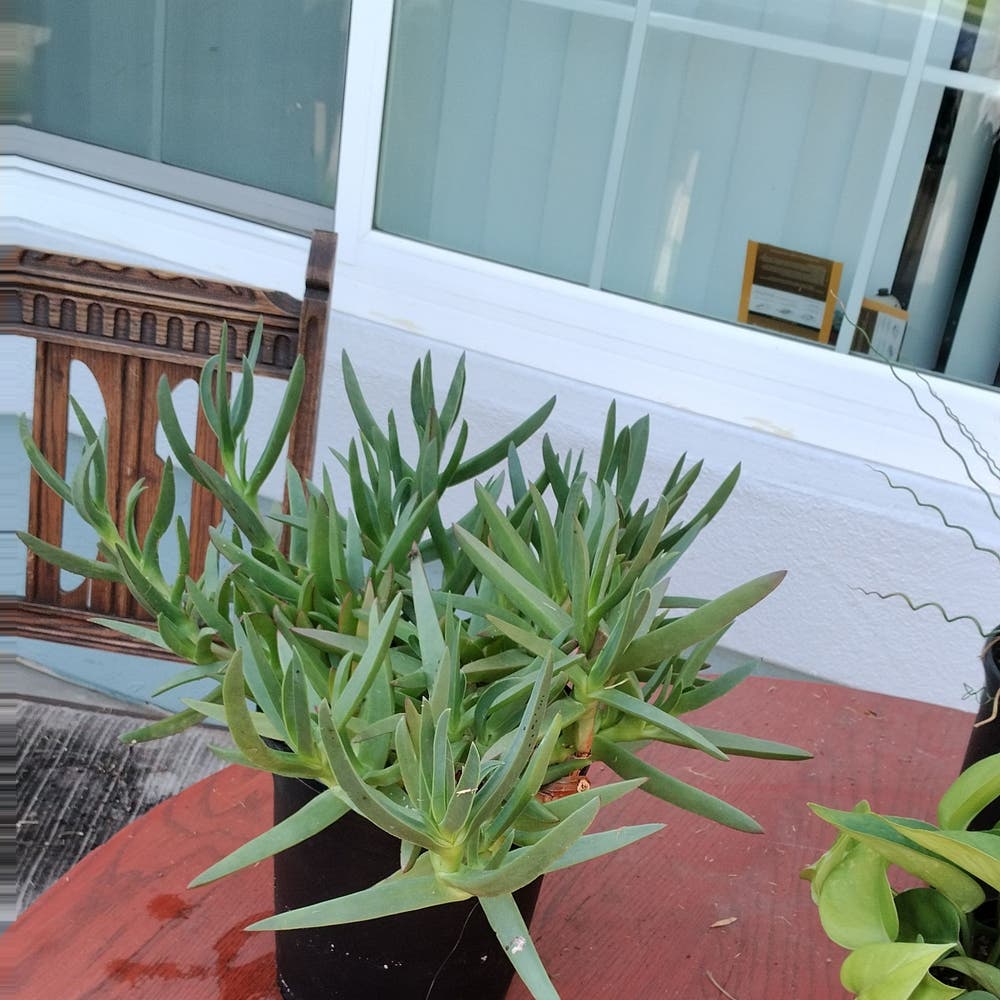
What Should I Do When Angular Sea-Fig Leaves Turn Yellow? 💛
Carpobrotus glaucescens
By the Greg Editorial Team
Jun 16, 2024•4 min read
This article was created with the help of AI so we can cover more plants for you. May contain errors. See one? Report it here.
Turn your Angular Sea-Fig's frown 🍂 upside down with life-saving yellow leaf solutions!
- Natural aging or distress? Yellowing can signal various issues.
- Nutrients, water, light: Balance these for healthy Angular Sea-Fig leaves.
- Regular checks and care prevent and address yellowing effectively.
Spotting Trouble: Identifying Yellow Leaves
Yellowing leaves on Angular Sea-Fig can range from a natural aging process to a distress signal.
👀 Visual Cues
Uniform yellowing often indicates the plant's older leaves are making their exit. However, when new growth starts to pale, it's time to take action. Look out for yellow spots, which could point to pests or disease, while yellow tips may suggest a need for water or nutrients.
🕵️ Early Detection
To catch issues early, observe your plant's soil moisture and light exposure. A soil that's too damp or too dry can lead to yellow leaves, as can improper lighting. Regular checks can help you adjust care before yellowing becomes widespread.
Rooting Out the Causes
💡 Nutrient Shortfalls
Nitrogen is often the missing link when leaves turn yellow. Your Angular Sea-Fig might be signaling a deficiency. Look for leaves losing their lush green color, starting with the older ones. It's a plant's SOS for nutrients.
🚰 Water Woes
Too Much Love
Overwatering is a silent killer. Yellow, swollen leaves are a cry for less water. Root rot sets in when the soil stays wet for too long. If the roots are brown or black and mushy, it's time to take action—fast.
Thirsty Roots
Conversely, underwatering leaves your plant parched. Soil that's dry as a bone and leaves that are crispy point to a need for more hydration. Check the top inch of soil; if it's dry, it's time to water.
🌞 Climate Conundrums
Temperature's Toll
Too much heat can stress your Angular Sea-Fig, leading to yellow leaves. Ensure your plant isn't getting cooked in a hot spot.
Sunburn and Shade
Too much direct sunlight can scorch leaves, while too little leaves them pale. Aim for a spot with bright, indirect light. It's about finding that sweet spot where your plant thrives without getting fried or fading away.
Turning Over a New Leaf: Fixes and Solutions
💡 Feeding Your Plant Right
Balanced nutrition is crucial for the Angular Sea-Fig. Opt for a water-soluble fertilizer with an even NPK ratio to green up those leaves. Apply it sparingly; think of it as giving your plant a light snack rather than a feast. Stick to the growing season for these nutrient boosts, and always water your plant before feeding to avoid root burn.
🏜️ Soil TLC
Revitalize your plant's environment with a soil swap. Ditch the old, compacted dirt for a well-draining mix that allows roots to breathe. If the soil pH is off, mix in some organic matter to balance it out. Remember, a good soil mix is like a solid foundation for a house—it's essential for plant health.
🚰 Watering Wisdom
Consistency is key when watering your Angular Sea-Fig. The soil should be dry an inch below the surface before you water again. Adjust your routine with the seasons—less is needed in winter. And always water at the base of the plant to ensure the roots get their fill without promoting fungal growth.
🍽️ Drainage Do's and Don'ts
Ensure your pots have drainage holes to prevent water from pooling. Terracotta pots are a smart choice—they're like breathable workout gear for your plant's roots. Overwatering leads to soggy soil and root rot, while underwatering leaves your plant thirsty. Aim for moist, not soggy, soil—like a well-wrung sponge.
Keeping the Green: Prevention Tactics
🕵️ Vigilant Care
Regular checks are your plant's lifeline. Like a personal trainer for your Angular Sea-Fig, you need to spot the signs of distress early. Ensure consistent conditions; stability is key to keeping those leaves a vibrant green.
Maintenance Mastery
Pruning isn't just about aesthetics; it's a strategic trim-fest to direct energy to the healthiest growth. Repotting should be timed like a well-orchestrated dance, giving your plant room to groove without tripping over its own roots.
⚠️ Safety First
This content is for general information and may contain errors, omissions, or outdated details. It is not medical, veterinary advice, or an endorsement of therapeutic claims.
Always consult a qualified healthcare professional before using any plant as food, medicine, or supplement.
Never eat any plant (or feed one to pets) without confirming its identity with at least two trusted sources.
If you suspect poisoning, call Poison Control (800) 222-1222, the Pet Poison Helpline (800) 213-6680, or your local emergency service immediately.
Spotted an error? Please report it here.
Banish the guesswork in caring for your Angular Sea-Fig and keep it radiantly green 🌿 with Greg's personalized watering and sunlight reminders based on your home environment!