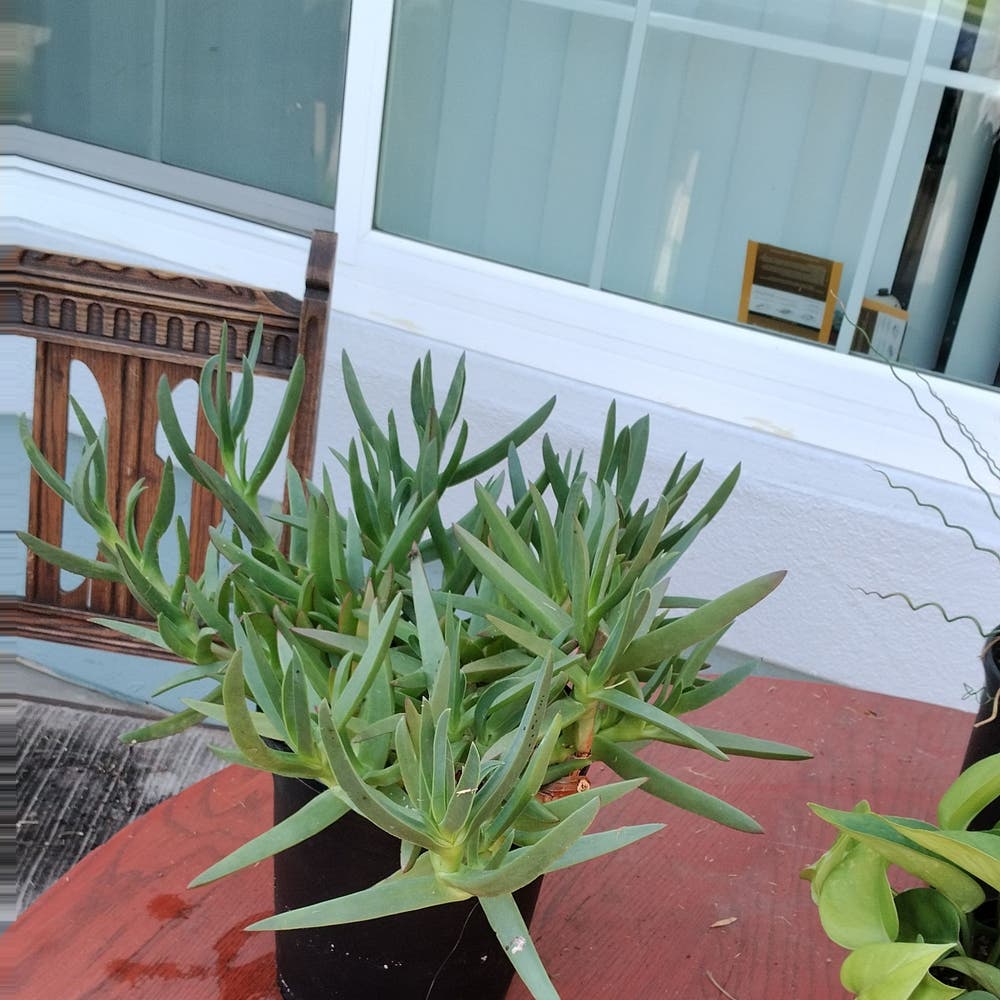
Why Are My Angular Sea-Fig Leaves Dropping?
Carpobrotus glaucescens
By the Greg Editorial Team
Jun 16, 2024•4 min read
This article was created with the help of AI so we can cover more plants for you. May contain errors. See one? Report it here.
Halt your Angular Sea-Fig's leaf loss 🍂 and master its care for a perpetually lush plant!
- Overwatering and underwatering both lead to leaf loss; water based on soil dryness.
- Consistent climate and humidity are key to preventing leaf drop in Angular Sea-Fig.
- Proper light and repotting can save a leaf-shedding Angular Sea-Fig.
When Water Works Against You
💦 Overwatering Overkill
Overwatering can turn your Angular Sea-Fig's roots into a mushy mess, leading to leaf loss. It's a classic case of too much love. To combat this, water only when the soil feels dry an inch below the surface. Ensure drainage holes are clear to prevent water from pooling and creating a soggy environment.
🏜️ Underwatering Woes
Your Angular Sea-Fig might be silently begging for water if you notice droopy leaves. Underwatering stresses the plant, causing leaves to fall in a desperate attempt to conserve water. Establish a watering schedule based on the dryness of the soil, not the calendar, and adjust as needed for your plant's non-verbal cues.
Feeling Hot, Hot, Hot or Not
🌡️ The Chills and Thrills of Temperature Stress
Temperature swings are the silent killers of Angular Sea-Fig leaves. Your plant won't throw a visible fit, but it will shed leaves like a dog in summer if it's not feeling the temperature love. Aim for a consistent, plant-comforting climate—no sudden drops or spikes.
To avoid a leaf-dropping drama, keep indoor temperatures steady. Avoid placing your plant near drafty windows or heat sources, which can create a mini-climate crisis for your leafy friend.
💦 Humidity: The Invisible Leaf-Saver
Humidity might be invisible, but its effects are anything but. If your Angular Sea-Fig's leaves are falling off, it could be a cry for moisture in the air. Think of humidity as the plant's invisible support system—without it, leaves go bye-bye.
Boosting humidity can be simple. Use a humidifier or place a water-filled pebble tray beneath the plant. Remember, your Angular Sea-Fig isn't asking for a rainforest; just a sip of atmospheric moisture to keep its leaves from giving up the ghost.
Let There Be Light (But Not Too Much)
⛅️ The Dim Dilemma: Insufficient Light
In the shadowy world of insufficient light, your Angular Sea-Fig's leaves might drop as if they're too tired to hold on. Bright, indirect light is the sweet spot for this plant. It's about finding that cozy nook where your plant can soak up the rays without squinting.
🌞 The Scorching Truth: Too Much Sun
Conversely, when your plant's leaves start looking like they've had a rough day at the beach, it's a clear sign of too much sun. Crispy, sunburnt leaves are the plant's way of crying out for a break from the intense light. Rotate your plant to ensure even exposure and consider a sheer curtain to diffuse that harsh sunlight.
The Rescue Routine: Saving Your Angular Sea-Fig
🚑 Immediate Interventions
If your Angular Sea-Fig is shedding leaves like a tree in autumn, it's time for some quick action. Trim any damaged roots and repot into fresh, well-draining soil. Consider a fungicide dip to ward off any lingering root rot spores.
🛠️ Quick Fixes
Reduce watering immediately. Let the soil dry out between drinks to prevent further root suffocation. If the leaves are dropping due to too much sun, relocate your plant to a spot with indirect, but bright light.
🌱 Long-Term Love: Preventative Care
Building resilience in your Angular Sea-Fig is a marathon, not a sprint. Establish a care routine that supports robust health and prevents future leaf loss.
🌿 The Right Soil Mix
Craft a soil mix that's the botanical equivalent of a bespoke suit—tailored to your plant's needs. Aim for a balance of drainage and nutrient retention.
🏺 The Perfect Pot
Choose a pot that's like the ideal home—just the right size with plenty of drainage holes. Remember, a pot too large is a recipe for soggy soil disasters.
🌦️ Seasonal Watering Adjustments
Adjust your watering schedule with the seasons. Your Angular Sea-Fig's thirst changes with the temperature and light levels, so stay flexible.
🌱 Fertilization Finesse
Fertilize with a light hand. Think of it as seasoning food—too much and you'll overpower the dish, or in this case, risk fertilizer burn.
👀 Routine Monitoring
Keep a keen eye on your plant. Regular checks can catch issues before they escalate into a full-blown leaf-drop crisis.
By integrating these strategies, you're not just preventing leaf drop; you're setting the stage for a thriving Angular Sea-Fig.
⚠️ Safety First
This content is for general information and may contain errors, omissions, or outdated details. It is not medical, veterinary advice, or an endorsement of therapeutic claims.
Always consult a qualified healthcare professional before using any plant as food, medicine, or supplement.
Never eat any plant (or feed one to pets) without confirming its identity with at least two trusted sources.
If you suspect poisoning, call Poison Control (800) 222-1222, the Pet Poison Helpline (800) 213-6680, or your local emergency service immediately.
Spotted an error? Please report it here.
Ensure your Angular Sea-Fig stays leafy and lush 🍃 with Greg's personalized care reminders, helping you balance water, light, and love with ease!