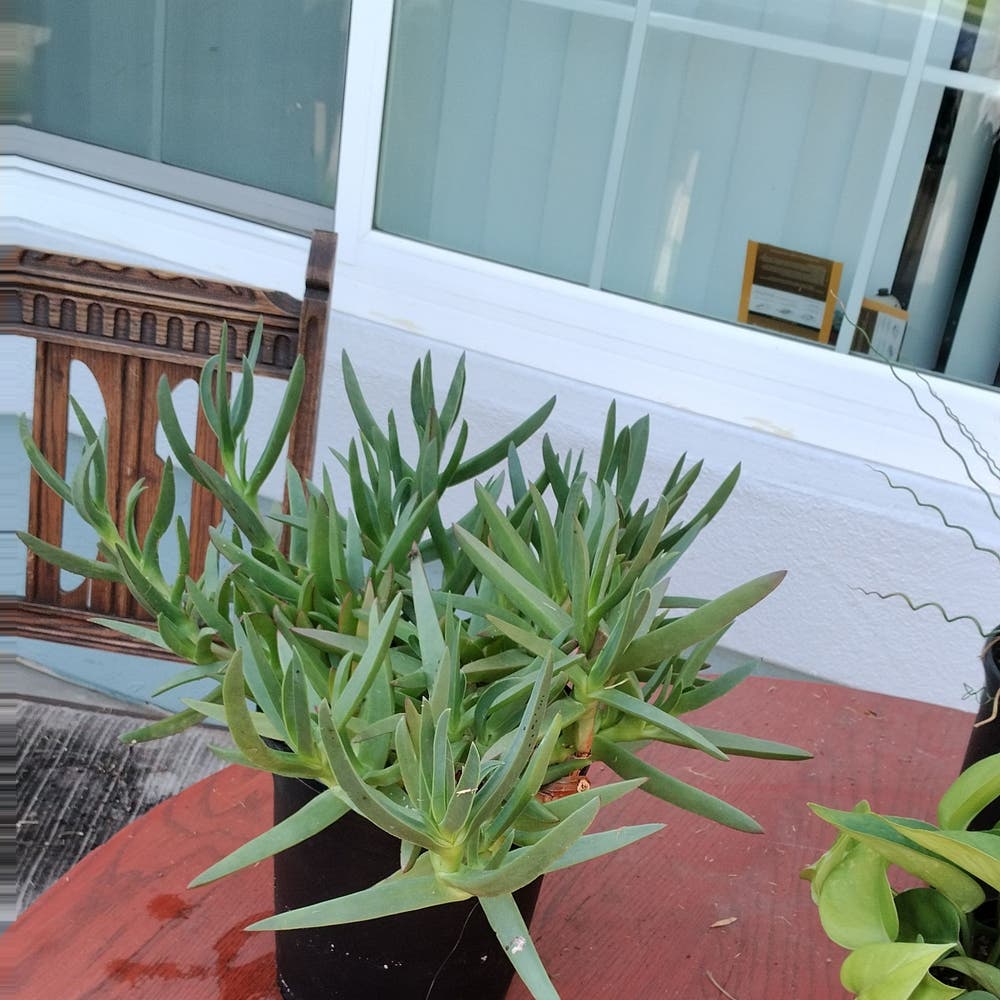
🌞 Is Direct Sunlight Good for My Angular Sea-Fig?
Carpobrotus glaucescens
By the Greg Editorial Team
Jun 16, 2024•3 min read
This article was created with the help of AI so we can cover more plants for you. May contain errors. See one? Report it here.
Master the sun's embrace for a thriving Angular Sea-Fig with our essential light guide! 🌞🌱
- Direct sunlight can be too intense for Angular Sea-Fig plants.
- Window direction matters: North for consistency, East for gentle mornings.
- Seasonal sun shifts: Adjust plant's position to prevent sun stress.
When the Sun Kisses the Angular Sea-Fig
🌞 What Does Direct Sunlight Mean for Your Leafy Buddy?
Direct sunlight is the unfiltered solar spotlight, beaming down with all its might. It's the midday sun that casts the shortest shadows, the kind that could have your Angular Sea-Fig reaching for sunglasses. Indirect sunlight, however, is the sun's softer side, filtered through curtains or bouncing off walls, giving your plant a break from the intense gaze of the sun.
Can Angular Sea-Fig Soak Up the Sun?
Yes, your Angular Sea-Fig can handle some direct sun, but it's not a sunbather by nature. It thrives in a balance of light environments, much like a beachgoer who loves the sun but retreats to the shade to avoid a burn. Too much direct sunlight, and you might see your Sea-Fig's leaves turning as crispy as a forgotten slice of toast. It's all about finding that sweet spot where your plant gets enough light to thrive without feeling like it's in a solar oven.
Setting Up the Perfect Sunbath
🌞 Picking the Best Window for Your Plant
Your Angular Sea-Fig's tan depends on the window direction. North-facing windows provide a gentle, consistent light, ideal for those not seeking a sunburn. East-facing windows offer a soft morning light, perfect for a gentle wake-up call to your plant. South-facing windows? They're the solar powerhouses, especially in the Northern Hemisphere—great for a winter boost but watch out for the summer scorch. West-facing windows can be harsh with their intense afternoon rays, so you might want to ease up on the exposure there.
Hemisphere Hints: North or South, What's Best for Your House?
Your global address isn't just for mail; it's crucial for your Angular Sea-Fig's sun exposure. In the Northern Hemisphere, south-facing windows are your winter sun champions. Down under in the Southern Hemisphere? North-facing windows will be your plant's best friend. But remember, as the seasons shift, so should your plant's position—closer to the window when the sun is timid in winter, and a step back during its summer enthusiasm. Use sheer curtains to diffuse direct sunlight and prevent your plant from getting too toasty.
Seasonal Sun Shifts and Angular Sea-Fig Care
🌞 Summer vs. Winter Sun: What's the Difference?
As the seasons pivot, so does the sun's trajectory, impacting your Angular Sea-Fig's light diet. Summer brings a high-riding sun, dishing out intense rays for extended hours. Your plant might revel in this solar party at first, but without moderation, it's a straight path to leaf burn. Winter, however, ushers in a lower-hanging sun, offering a gentler touch of light. This could mean your green buddy will be craving more sun-time, possibly nudging you to relocate it to a brighter spot.
Spotting Sun Stress in Angular Sea-Fig
Keep a sharp eye for your Angular Sea-Fig's SOS signals. Too much sun and you'll see leaves turning a telltale crispy brown, like overdone toast. On the flip side, too little light and your plant may start stretching out, reaching for rays like a sun-starved zombie. Remember, the goal is to hit that sweet spot where your plant is neither sun-drunk nor light-starved. Adjust its spot, rotate it for even exposure, and consider supplemental lighting if the sun's playing hard to get.
⚠️ Safety First
This content is for general information and may contain errors, omissions, or outdated details. It is not medical, veterinary advice, or an endorsement of therapeutic claims.
Always consult a qualified healthcare professional before using any plant as food, medicine, or supplement.
Never eat any plant (or feed one to pets) without confirming its identity with at least two trusted sources.
If you suspect poisoning, call Poison Control (800) 222-1222, the Pet Poison Helpline (800) 213-6680, or your local emergency service immediately.
Spotted an error? Please report it here.
Find your Angular Sea-Fig's sweet spot 🌞 with Greg's reminders to shift its perch with the seasons for just the right light touch!