💧 Why Are My Angular Sea-Fig Leaves Droopy?
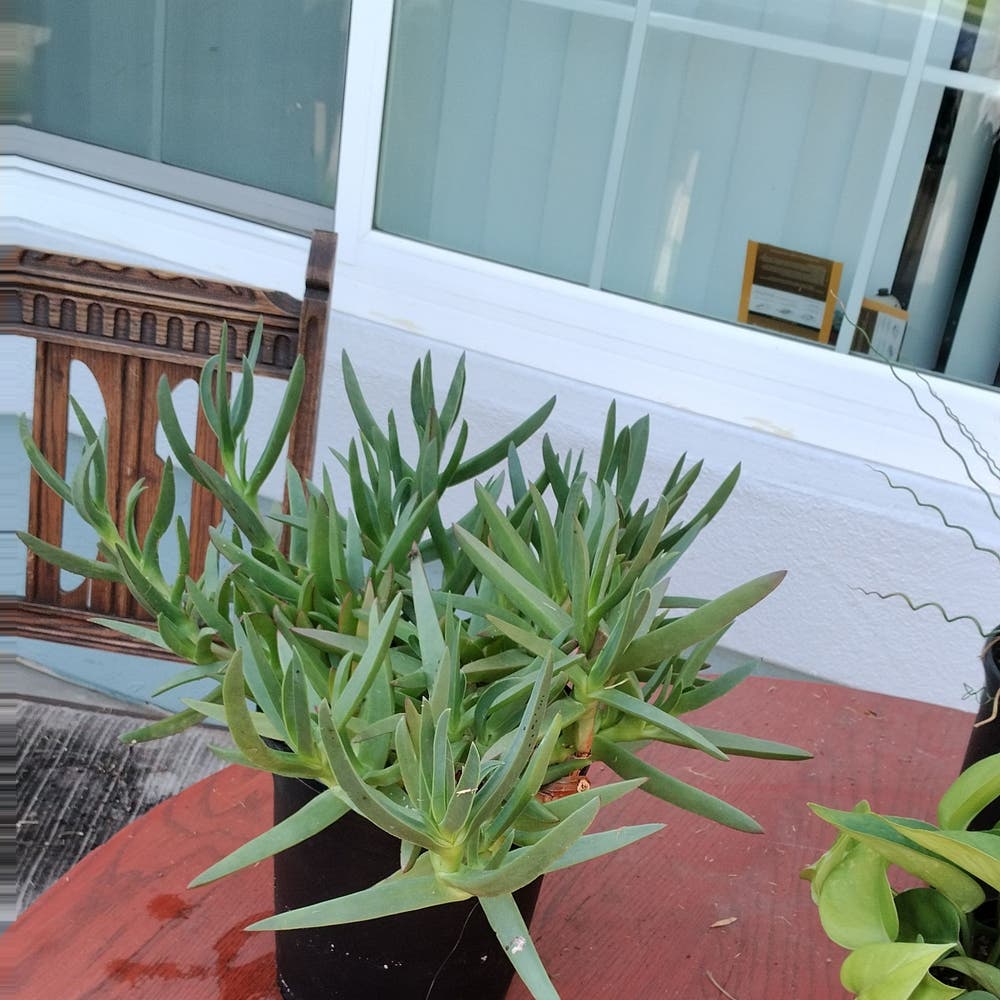
Carpobrotus glaucescens
By the Greg Editorial Team
Jun 16, 2024•4 min read
This article was created with the help of AI so we can cover more plants for you. May contain errors. See one? Report it here.
Perk up your Angular Sea-Fig 🌿 and banish droopiness with these fail-proof plant care secrets!
- Droopy leaves signal distress; check soil moisture and leaf health.
- Bright, indirect sunlight and moderate climate are key for Angular Sea-Figs.
- Establish a consistent watering routine using tools like moisture meters.
Spotting the Signs of Distress
🚩 Identifying Droopy Leaves: What to Look For
Droopy leaves are the plant's white flag—a sign something's amiss. Check for leaves that hang lower than your friend's energy on a Monday morning. If they're more limp than al dente pasta, it's time to investigate. Look for discoloration, spots, and leaves that curl inwards like they're trying to roll themselves up and disappear.
🕵️ Quick Checks to Assess the Urgency of the Situation
Probe the soil—it should feel like a wrung-out sponge, not a desert or a swamp. Next, eye the light situation. Your Angular Sea-Fig is no vampire; it craves that bright, indirect sunlight. If it's stretching out like it's trying to catch a tan or hiding in the shadows, you've got light issues. And don't forget to inspect the underside of leaves; pests are sneaky little critters. Black spots or browning tips? That's your plant screaming for help—don't put it on mute.
Getting to the Root of the Problem
💧 Underwatering Woes
Dry soil is a dead giveaway that your Angular Sea-Fig is parched. If the top inch feels like a desert, it's time to hydrate. But don't just flood the scene; moderation is key.
💦 Overwatering Overkill
Yellow, swollen leaves that burst at a poke? You might be loving your plant to death with water. Root rot is the silent killer here. If the soil feels more swamp than soil, cut back on the H2O, stat.
🌞 Light: Finding the Sweet Spot
Leaves drooping like they've lost the will to live could be a cry for light – or a plea for less. Rotate your plant to avoid a lopsided light diet. Consistent indirect sunlight is what you're aiming for.
🌡️ Temperature and Humidity Tango
Too hot, too cold, too dry, too damp – leaves can't cope with these extremes. Aim for a steady climate, like setting the mood for a perfect plant date that doesn't end in a droop disaster.
First Aid for Droopy Leaves
💦 Watering Revival Techniques
Resuscitating your Angular Sea-Fig starts with mastering the watering can. If the soil feels like a dry conversation, it's time to get watering. Deeply water your plant, but then play hard to get—let the soil dry out before the next flirtation with the watering can.
Tools and tricks for perfect watering
For those who trust technology more than their green thumb, consider a moisture meter. It's like having a plant whisperer at your disposal. Self-watering pots can also be a godsend, but don't let them become a crutch for your overwatering tendencies.
🌞 Light and Location Lifesavers
If your plant's leaves are as droopy as a Monday morning, it might be craving a change of scenery. Move it to a spot with bright, indirect light, like an east-facing window. It's like giving your plant a pair of chic sunglasses—it gets the light without the glare.
💡 When to consider artificial lighting
If your home is more dungeon than sunroom, grow lights can be the spotlight your plant needs. Just don't go full Broadway show on it; too much artificial light can be just as bad as too little.
🌡️ Climate Control Comeback
Your Angular Sea-Fig doesn't want to live in a climate that's as unpredictable as a teenager's mood. Aim for tropical vibes—steady, warm, and not too dry.
DIY humidity hacks for your plant's environment
If your air is drier than a stand-up comedian, try a pebble tray or a humidifier to bring some moisture back. It's like creating a mini oasis for your plant in the midst of a desert home.
Keeping Your Angular Sea-Fig Perky
💧 The Watering Rhythm
Your Angular Sea-Fig craves consistency. Establish a watering schedule that syncs with its natural needs. Observe its response and tweak as necessary—this isn't about slavishly following a calendar, but about dancing to your plant's beat.
- Use technology to keep track. Moisture meters or smart watering systems can be lifesavers for the forgetful gardener.
🌞 Light and Location Harmony
Light is like your plant's favorite song—it needs to hear it just right. Keep the light consistent, especially as seasons change and the sun shifts its angle.
- Don't play musical chairs with your plant. Find a spot where the light is steady and leave it there. If natural light wanes, consider supplementing with artificial lighting.
🌡️ Climate Consistency
Stable temperature and humidity are the backdrop to your plant's performance. Dramatic fluctuations are the equivalent of a stage disaster.
- Use tools like thermometers and hygrometers to monitor your plant's climate. DIY solutions like pebble trays can help maintain humidity levels without a fuss.
⚠️ Safety First
This content is for general information and may contain errors, omissions, or outdated details. It is not medical, veterinary advice, or an endorsement of therapeutic claims.
Always consult a qualified healthcare professional before using any plant as food, medicine, or supplement.
Never eat any plant (or feed one to pets) without confirming its identity with at least two trusted sources.
If you suspect poisoning, call Poison Control (800) 222-1222, the Pet Poison Helpline (800) 213-6680, or your local emergency service immediately.
Spotted an error? Please report it here.
Turn your Angular Sea-Fig's frown upside down with Greg's tailored care reminders 🔄, ensuring perfect watering and light for those once-droopy leaves!