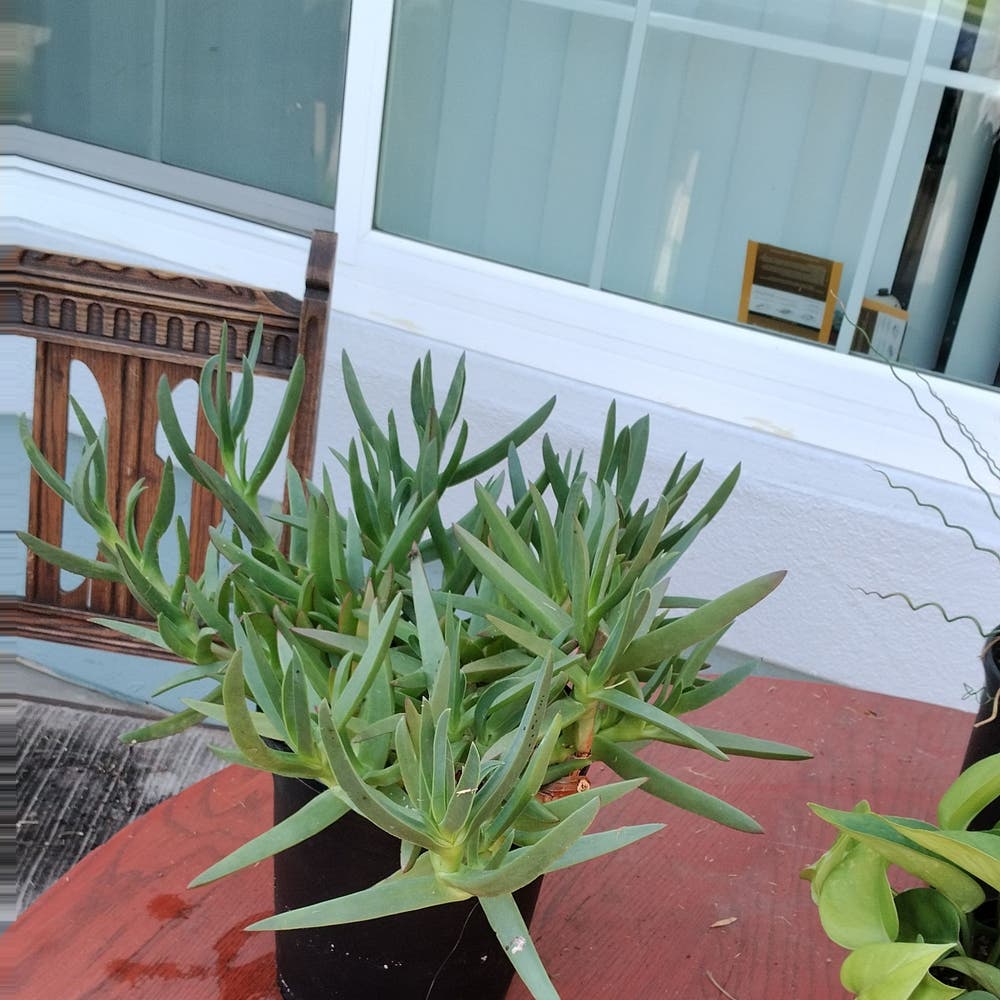
What Temperature Does My Angular Sea-Fig Need?
Carpobrotus glaucescens
By the Greg Editorial Team
Jun 16, 2024•4 min read
This article was created with the help of AI so we can cover more plants for you. May contain errors. See one? Report it here.
Discover the cozy sweet spot 🌡️🌿 to keep your Angular Sea-Fig thriving and stress-free!
- 65°F to 75°F (18°C to 24°C) is the Angular Sea-Fig's ideal temperature range.
- 🍂 Leaf discoloration and droopiness signal it's too cold; sunburned leaves mean too hot.
- Monitor and adjust humidity with hygrometers, pebble trays, or dehumidifiers for plant health.
When Your Angular Sea-Fig Feels Chilly
❄️ Signs Your Plant is Too Cold
Leaf discoloration and droopiness are the Angular Sea-Fig's non-verbal way of saying it's too cold. If you notice a translucent look to the leaves or them curling inward, it's time to reassess your plant's location.
When the Angular Sea-Fig is too cold, it may stop growing and exhibit black or brown patches on new leaves. This isn't a new trend; it's a cry for help.
🛡️ Protecting Your Plant from the Cold
To shield your Angular Sea-Fig from the cold, avoid drafty windows and areas near doors that frequently open to the outside. Consider using a plant blanket or moving it to a warmer spot during cold snaps.
Stable temperatures are key, so watch out for that sneaky draft or an overzealous air conditioner. It's not just about light; it's about providing consistent warmth.
Turning Up the Heat: The Angular Sea-Fig's Comfort Zone
In the quest for the perfect temperature for your Angular Sea-Fig, precision is key.
🌡️ The Sweet Spot
The Angular Sea-Fig thrives in a warm embrace, preferring temperatures that mirror a spring morning rather than a scorching midsummer day. 65°F to 75°F (18°C to 24°C) is the goldilocks zone for this plant, fostering robust growth without the risk of overheating.
When It's Too Hot to Handle
Beware of the signs of a plant in distress; leaves that look sunburned or crispy around the edges are waving a red flag. If your Angular Sea-Fig's leaves are curling up as if trying to escape the pot, it's time to dial down the heat and hunt for some shade.
The Balancing Act: Temperature Fluctuations and Stress
Keeping your Angular Sea-Fig's temperature consistent is key to its health. Let's dive into the common causes of temperature stress and how to respond effectively.
🌡️ Causes of Temperature Swings
Drafts and heating/cooling systems can wreak havoc on your plant's comfort. Avoid placing your Angular Sea-Fig near windows that are frequently opened or air vents where blasts of air can cause sudden changes in temperature.
Seasonal changes also pose a challenge. As we transition from winter to summer and vice versa, indoor temperatures can fluctuate significantly. Be mindful of these shifts and adjust your plant's location if necessary.
🌡️ Responding to Temperature Stress
When your Angular Sea-Fig shows signs of temperature stress, act swiftly. If it's too cold, move it to a warmer spot, away from windows that leak chilly air. Conversely, if it's too hot, find a cooler location away from direct sunlight or heat sources.
Thermostats are your allies. Use them to monitor the room's temperature and maintain it within the Angular Sea-Fig's comfort zone.
Remember, stability is the goal. Sudden temperature changes are as unwelcome to your plant as a downpour at a picnic. Keep the environment as steady as possible, and your Angular Sea-Fig will thank you.
A Quick Nod to Humidity
Humidity: the silent partner in your Angular Sea-Fig's comfort. It's not just about the warmth; the air's moisture level is a key player.
💃 The Humidity-Temperature Tango
Your Angular Sea-Fig doesn't just bask in the sun; it soaks up the surrounding air moisture. As temperatures climb, so does the need for humidity. Conversely, when the mercury falls, a drier environment might be in order.
🌡 Keeping Humidity in Check
Hygrometers are your best friends here, letting you monitor the moisture in the air with ease. If the air is too dry, consider a pebble tray or grouping plants to create a mini oasis. Too humid? Time to open a window or run a dehumidifier.
🌍 Real-World Adjustments
Your home's climate control can turn it into a humidity battleground. Heating systems can parch the air; air conditioners can make it clammy. Stay vigilant and adjust your plant care to maintain that perfect balance.
👩🌾 Your Comfort, Their Comfort
Sometimes, your skin is the best indicator. Feeling dry? Your Angular Sea-Fig might be too. Sticky? It's probably time to dial down the humidity. Keep your comfort in mind—it often aligns with your plant's needs.
Remember, good air circulation is vital. It helps prevent mold and ensures even humidity distribution. A gentle fan or a slightly open window can work wonders.
⚠️ Safety First
This content is for general information and may contain errors, omissions, or outdated details. It is not medical, veterinary advice, or an endorsement of therapeutic claims.
Always consult a qualified healthcare professional before using any plant as food, medicine, or supplement.
Never eat any plant (or feed one to pets) without confirming its identity with at least two trusted sources.
If you suspect poisoning, call Poison Control (800) 222-1222, the Pet Poison Helpline (800) 213-6680, or your local emergency service immediately.
Spotted an error? Please report it here.
Ensure your Angular Sea-Fig stays happy and healthy 🌡 by relying on Greg's custom reminders to keep it cozy in its 65°F to 75°F sweet spot.