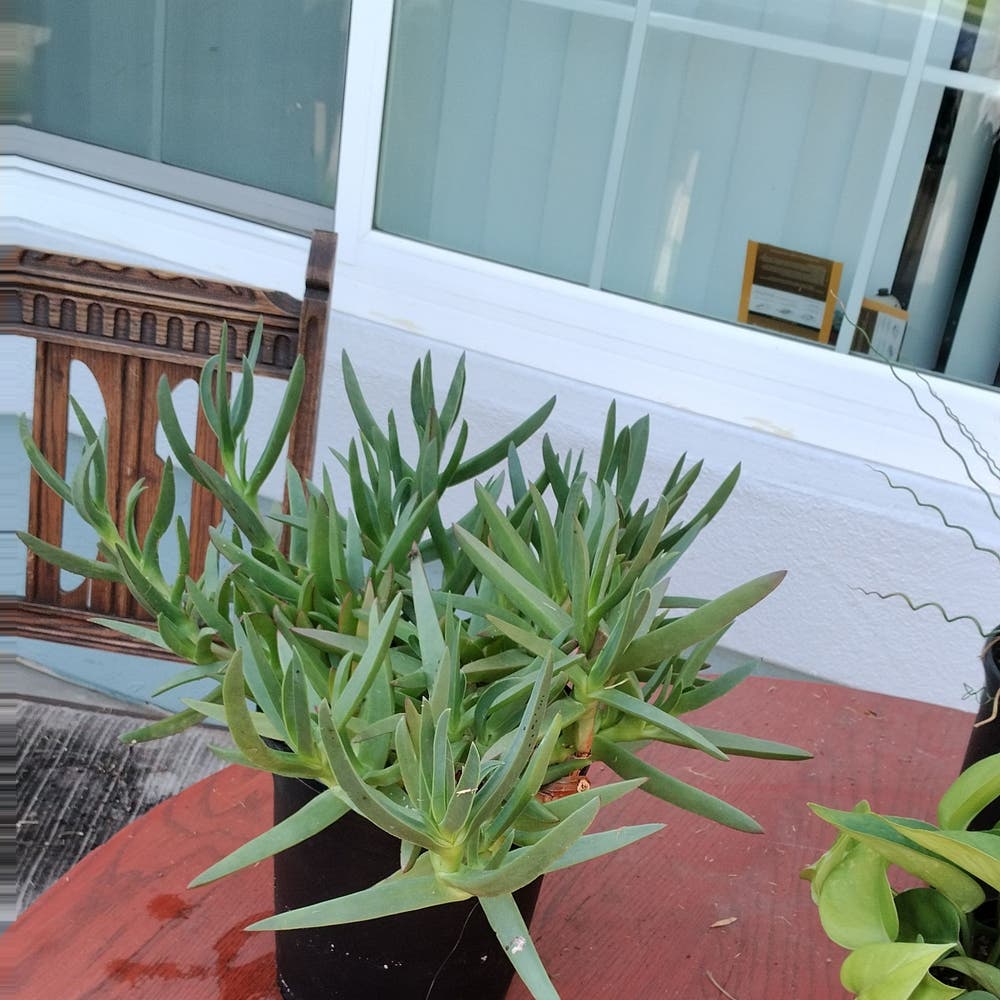
💧 Why Are My Angular Sea-Fig Leaves Curling?
Carpobrotus glaucescens
By the Greg Editorial Team
Jun 16, 2024•4 min read
This article was created with the help of AI so we can cover more plants for you. May contain errors. See one? Report it here.
Solve your Angular Sea-Fig's leaf curling puzzle for a thriving, vibrant plant! 🌿🔍
- Leaf curling signals distress, often due to water, light, or nutrient issues.
- 🌱 Pests and diseases like aphids and fungi can cause leaves to curl.
- Consistent care prevents curling: proper watering, light, and soil management.
Spotting the Signs: When Leaves Take a Turn
🌿 Recognizing Leaf Curling
Leaf curling in Angular Sea-Fig plants is not subtle. You'll see leaves twisting or folding, a stark contrast to their natural state. This is your plant's distress signal, and it's time to pay attention. Look for edges curling inward or an upward cupping, often starting with the new growth.
📋 Quick Check-Up List
- Visual Inspection: Check for leaves resembling crumpled paper or those with crispy edges.
- Texture Check: Feel the leaves. Brittle or soft textures are a no-go.
- Color Clues: Spot any discoloration or spots? Red flag.
- Pest Patrol: Flip leaves. Find bugs? Evict them.
- Environmental Scan: Sudden changes? Your plant might be reacting to a shift.
- Water Wisdom: Ensure the soil isn't too wet or bone dry.
- Nutrient Note: Yellowing leaves could be crying out for nutrients.
Remember, regular monitoring is like a secret handshake with your plant—it unlocks the door to health.
Rooting Out the Causes: What's Bugging Your Plant?
🚰 Thirsty Roots or Drowning Sorrows
Watering is a balancing act. Too much, and your Angular Sea-Fig's roots might as well be fish; too little, and you're basically desertifying them. Overwatering leads to soggy roots and leaves curling downwards, a classic sign of distress. Underwatering, on the other hand, results in leaves curling upwards, a desperate plea for moisture.
🌞 Light and Temperature Tango
The right light and temperature are crucial. Too much direct sunlight and your plant's leaves curl up, like they're trying to hide from the limelight. Not enough light, and they curl too, struggling in the dim backstage. Temperature swings are just as bad, with leaves curling in response to the fluctuating indoor climate.
💩 Soil and Substance
Soil quality can't be ignored. If it's as poor as a pauper, your plant will show it. Leaves curl when the soil is more swamp than sanctuary, lacking proper drainage or when it's as nutrient-poor as a fast-food diet. A lack of potassium is a common deficiency leading to curling leaves. Consider a balanced fertilizer to give your soil the boost it needs.
Pests and Pathogens: Unwanted Guests
🐜 Common Culprits
Aphids and spider mites are the usual suspects when it comes to leaf curling. These tiny terrorists suck the life out of your Angular Sea-Fig's leaves, causing them to curl and discolor. Mealybugs join the fray, leaving sticky residues that scream 'dinner time' to other pests. Fungal infections are stealthier, with symptoms like black spots or powdery mildew that can lead to leaf curling.
🦸♂️ Fight Back Strategies
Evicting Pests
When pests are partying on your plant, it's time to crash their bash. Insecticidal soap or neem oil can be your bouncers, showing these freeloaders the exit. For a more natural approach, consider releasing predatory insects like ladybugs or lacewings. They're the undercover cops in the insect world, keeping the peace in your plant's ecosystem.
Halting Pathogens
Fungal foes require a different tactic. Improve air circulation and avoid overhead watering to keep your plant's leaves as dry as a good martini. If fungal infections persist, a targeted fungicide might be necessary. Remember, always read the label and use as a last resort. Prevention is key—keep those leaves clean and dry to stop fungi from even getting a foot in the door.
Turning Over a New Leaf: Recovery and Prevention
💧 Water Wisdom
Consistency is key in watering your Angular Sea-Fig. Check the soil moisture before watering; the top inch should be dry. Water deeply but infrequently to encourage robust root growth. Use rainwater or filtered water to prevent mineral buildup. Remember, your plant's hydration needs will shift with the seasons.
🌿 Environmental Harmony
Your Angular Sea-Fig craves stable conditions. Avoid placing it where temperature swings are common. Aim for a spot with gentle, morning sunlight and shield it from the harsh midday rays. Consider a pebble tray or humidifier if your air is too dry. Good airflow is crucial—think of it as the plant's personal bouncer, keeping pests and disease out.
🌱 Soil and Feed Fundamentals
Use pots with drainage holes to prevent waterlogged soil. Mix in perlite or pumice to enhance aeration. Adjust your fertilization approach with the seasons, scaling back during the plant's dormant winter phase. A balanced, slow-release fertilizer will keep your Angular Sea-Fig's leaves happy and healthy.
⚠️ Safety First
This content is for general information and may contain errors, omissions, or outdated details. It is not medical, veterinary advice, or an endorsement of therapeutic claims.
Always consult a qualified healthcare professional before using any plant as food, medicine, or supplement.
Never eat any plant (or feed one to pets) without confirming its identity with at least two trusted sources.
If you suspect poisoning, call Poison Control (800) 222-1222, the Pet Poison Helpline (800) 213-6680, or your local emergency service immediately.
Spotted an error? Please report it here.
Banish the curl from your Angular Sea-Fig's leaves with Greg's custom care plan 🌟, tailored to ensure the perfect water, light, and pest control for your plant's unique environment.