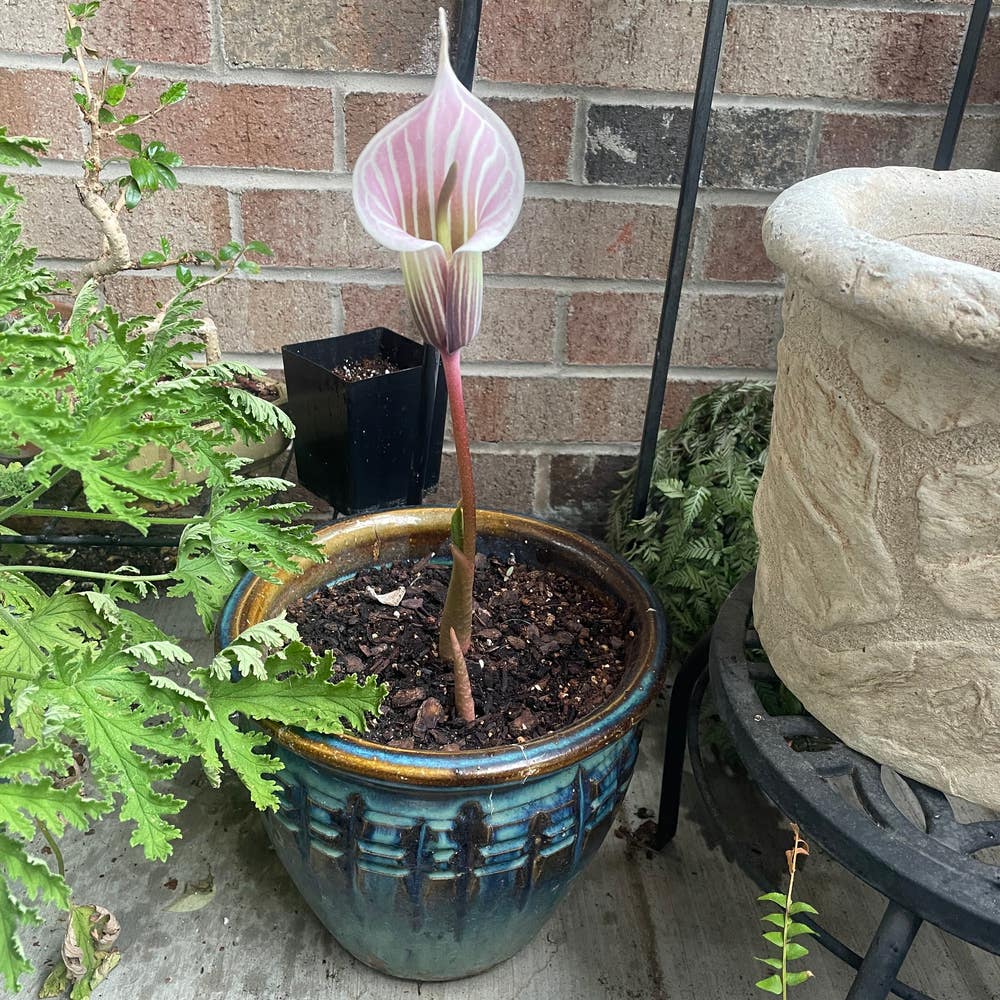
5 Ideal Locations to Plant Arisaema 🧑🌾
Arisaema ulugurense
By the Greg Editorial Team
Nov 26, 2024•5 min read
This article was created with the help of AI so we can cover more plants for you. May contain errors. See one? Report it here.
Cultivate stunning Arisaema 🌱 by mastering sunlight, soil, and companion planting for a thriving garden!
- 🌳 Arisaema thrives in full or partial shade, mimicking its natural woodland habitat.
- 🌱 Loamy, well-draining soil with a pH of 6.0-7.0 is essential for growth.
- 💨 Wind protection and proper spacing prevent overcrowding and support healthy Arisaema plants.
Sunlight Exposure Requirements
Full Shade vs. Partial Shade 🌳
Understanding sunlight exposure is crucial for growing Arisaema successfully. Full shade refers to areas that receive less than three hours of direct sunlight each day, while partial shade gets between three to six hours of filtered sunlight.
Arisaema thrives in dappled light, which closely resembles its natural woodland habitat. This type of lighting allows the plant to flourish without the stress of harsh sun exposure.
Effects of Direct Sunlight on Growth ☀️
Direct sunlight poses several risks to Arisaema. It can lead to leaf scorch, stunted growth, and overall reduced vigor.
Shade plays a vital role in protecting the plant from extreme temperatures and moisture loss. Ensuring your Arisaema is shielded from direct sunlight will promote healthier growth and a more vibrant appearance.
In summary, providing the right sunlight exposure is essential for the well-being of your Arisaema. Next, we will explore the ideal soil type and conditions to further support its growth.
Soil Type and Conditions
Preferred Soil Composition 🌱
Arisaema thrives in loamy, well-draining soil that is rich in organic matter. This type of soil not only provides essential nutrients but also ensures adequate aeration and moisture retention, which are crucial for healthy growth.
pH Level Considerations ⚖️
The optimal pH range for Arisaema is slightly acidic to neutral, specifically between pH 6.0 and 7.0. Maintaining this pH level is vital, as it significantly impacts the plant's ability to absorb essential nutrients from the soil.
Importance of Soil Texture 🧱
Soil texture plays a key role in the overall health of Arisaema. A well-balanced texture allows for proper drainage while retaining enough moisture, creating an ideal environment for root development.
Nutrient Availability 🍃
When the soil pH is within the optimal range, Arisaema can efficiently access nutrients. This accessibility is essential for robust growth and vibrant foliage, making it important to regularly test and amend your soil as needed.
In summary, ensuring the right soil type and pH level is fundamental for cultivating healthy Arisaema plants. With the right conditions, you can set the stage for a thriving garden that showcases these unique plants beautifully.
Next, we will explore how the proximity to other plants can further enhance the growth and health of your Arisaema.
Proximity to Other Plants
Companion Planting Strategies 🌱
Planting Arisaema alongside shade-loving companions can significantly enhance your garden's biodiversity. These plants create a natural habitat, fostering a thriving ecosystem that benefits all species involved.
Recommended companions include hostas, ferns, and other woodland plants that thrive in similar light and soil conditions. This combination not only looks stunning but also supports the health of your Arisaema.
Avoiding Overcrowding and Competition 🚫
Spacing is crucial when planting Arisaema to prevent competition for resources. Adequate space allows each plant to access necessary nutrients, water, and light, promoting healthy growth.
Aim for a spacing of 12-18 inches apart. This distance ensures proper air circulation and light penetration, which are vital for the overall vitality of your plants.
By carefully considering the proximity of your Arisaema to other plants, you can create a flourishing garden that showcases the beauty of these unique specimens. Next, let’s explore how to assess the best spot for planting, taking into account sunlight patterns and microclimates.
Assessing the Best Spot
🌞 Evaluating Sunlight Patterns
To find the perfect spot for your Arisaema, start by observing sunlight patterns throughout the day. This means taking the time to watch how light moves across your garden, noting areas that receive varying amounts of sunlight.
Consider using a sun calculator or conducting a shadow study. These tools help you pinpoint shaded areas that provide the ideal conditions for your plants.
🌡️ Understanding Microclimates
Microclimates are fascinating! They refer to small areas within your garden that have distinct climate conditions, differing from the surrounding environment.
To identify these microclimates, look for variations in temperature, moisture, and sunlight exposure. These subtle differences can significantly impact the growth and health of your Arisaema.
🌬️ Wind Protection Considerations
Wind can be a silent enemy for your plants, especially for delicate species like Arisaema. Providing shelter from strong winds is crucial to protect their foliage and ensure robust growth.
Consider using natural barriers such as trees, shrubs, or fences to create effective windbreaks. This not only shields your plants but also enhances the overall aesthetic of your garden.
By carefully assessing sunlight patterns, understanding microclimates, and ensuring wind protection, you can create an optimal environment for your Arisaema to thrive. Next, let’s explore the importance of drainage considerations to further support your plant’s health.
Drainage Considerations
Importance of Proper Drainage 🌧️
Proper drainage is crucial for the health of your Arisaema plants. Waterlogging can lead to root rot and other fungal diseases, which can quickly devastate your garden.
Signs of poor drainage include puddles forming after rain, compacted soil, and waterlogged areas. If you notice these issues, it’s time to take action to protect your plants.
Techniques for Improving Drainage 🛠️
One effective method to enhance drainage is using raised beds and mounding. Elevating the planting area allows excess water to flow away, keeping the roots dry and healthy.
Incorporating soil amendments like sand, perlite, or organic matter can also significantly improve soil structure and drainage. These materials create air pockets, allowing water to move freely and preventing the soil from becoming too compacted.
By ensuring proper drainage, you create a thriving environment for your Arisaema. This attention to detail will help your plants flourish and contribute to a vibrant garden.
Next, let’s explore how to assess the best spot for planting your Arisaema, focusing on sunlight patterns and microclimates.
⚠️ Safety First
This content is for general information and may contain errors, omissions, or outdated details. It is not medical, veterinary advice, or an endorsement of therapeutic claims.
Always consult a qualified healthcare professional before using any plant as food, medicine, or supplement.
Never eat any plant (or feed one to pets) without confirming its identity with at least two trusted sources.
If you suspect poisoning, call Poison Control (800) 222-1222, the Pet Poison Helpline (800) 213-6680, or your local emergency service immediately.
Spotted an error? Please report it here.
Grow vibrant Arisaema 🌿 by using Greg's tailored reminders and soil testing tips to create the perfect shady haven for your plants!