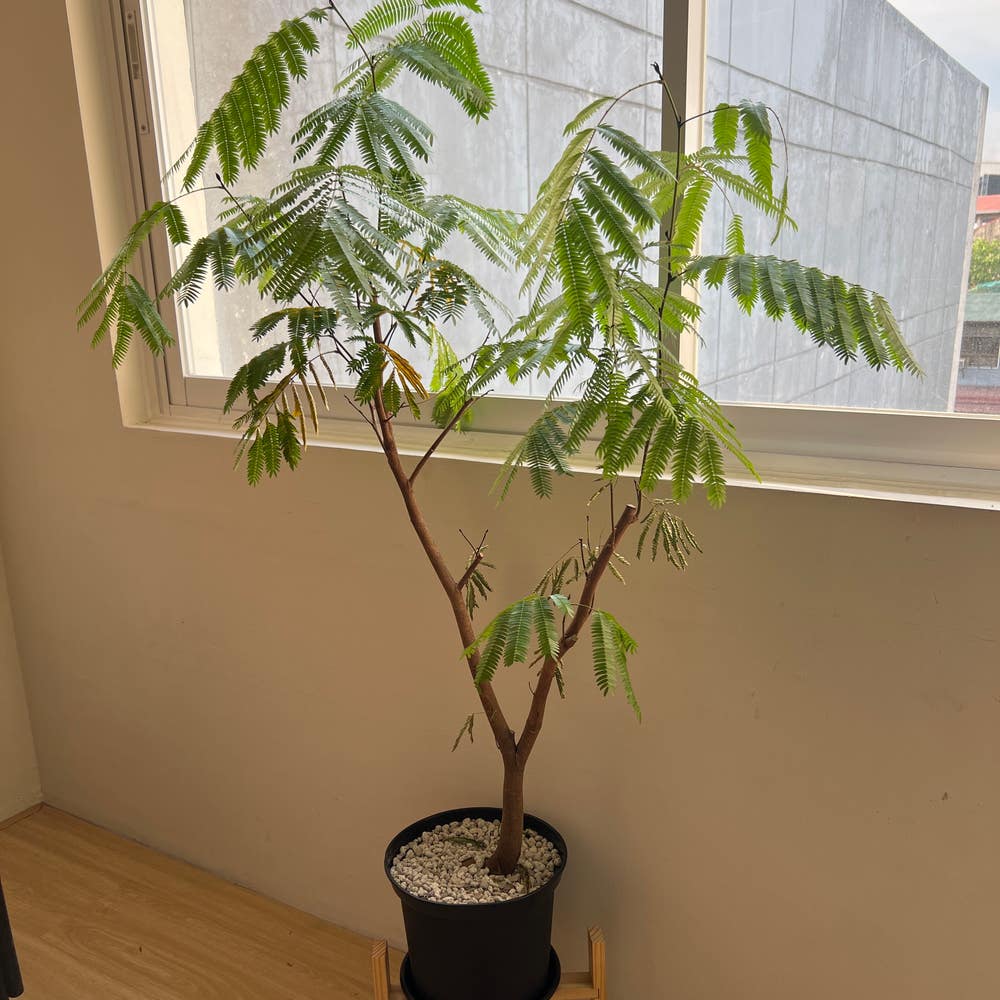
What to Do About Droopy Leaves on Your Siris Tree 🌳
Albizia amara
By the Greg Editorial Team
Nov 23, 2024•5 min read
This article was created with the help of AI so we can cover more plants for you. May contain errors. See one? Report it here.
- 💧 Overwatering and underwatering both cause droopy leaves; adjust your watering routine.
- 🌡️ Temperature and humidity fluctuations stress your Siris tree; maintain ideal conditions.
- 🐛 Pest infestations can lead to drooping; inspect regularly for early detection.
Causes of Droopy Leaves
💧 Overwatering and Its Effects
Overwatering is a common issue that can lead to droopy leaves on your Siris tree. Symptoms include yellowing leaves, soggy soil, and root rot, which can severely impact the tree's health.
When the roots are deprived of oxygen due to excess water, the tree struggles to absorb nutrients, resulting in wilting and drooping. To prevent this, maintain soil moisture at a consistently moist level, avoiding waterlogged conditions.
🌵 Underwatering and Dehydration
On the flip side, underwatering can also cause droopy leaves. Signs of dehydration include crispy leaf edges, wilting, and droopy foliage, indicating that your tree is thirsty.
Consistent watering is crucial, as drought conditions can lead to a loss of leaf turgidity. Adjust your watering frequency based on the season and the soil's moisture levels to keep your Siris tree healthy.
🥦 Nutrient Deficiencies
Nitrogen Deficiency
A lack of nitrogen can manifest as pale green leaves, stunted growth, and drooping. Nitrogen is essential for leaf health and overall growth, making it a critical nutrient for your tree.
Potassium Deficiency
Potassium deficiency presents symptoms like leaf tip burn, yellowing between veins, and drooping leaves. This nutrient plays a vital role in water regulation and helps the tree resist stress.
🌡️ Environmental Stress
Temperature Fluctuations
Your Siris tree thrives in temperatures ranging from 20°C to 35°C (68°F to 95°F). Extreme temperature fluctuations can negatively affect leaf health, leading to droopiness.
Humidity Levels
Humidity is another key factor for maintaining leaf turgidity. Low humidity can stress your tree, resulting in droopy leaves and wilting.
🐜 Pest Infestations
Aphids
Aphids are small green or black insects that can be found on leaves. Their sap-sucking behavior can lead to drooping leaves and overall poor tree health.
Spider Mites
Spider mites can be identified by fine webbing and stippled leaves. These pests reduce the tree's vigor, contributing to drooping foliage.
Understanding these causes is essential for diagnosing and treating droopy leaves effectively. Next, we will explore how to diagnose droopy leaves accurately, ensuring your Siris tree receives the care it needs.
Diagnosing Droopy Leaves
👀 Visual Signs to Look For
When diagnosing droopy leaves on your Siris tree, start by observing the leaf color. Yellowing, browning, or wilting leaves can indicate various issues, from water stress to nutrient deficiencies.
Next, check the leaf texture. Crispy leaves may signal underwatering, while mushy leaves often point to overwatering. These visual cues are essential for identifying the underlying problem.
💧 Soil Moisture Testing
Soil moisture testing is crucial for understanding your tree's hydration needs. You can use simple methods like the finger test, where you insert your finger into the soil to gauge moisture levels.
Alternatively, consider using a moisture meter or soil probe for a more accurate reading. Aim to keep the soil moist but well-drained, as this balance is vital for your Siris tree's health.
🐛 Checking for Pests and Diseases
Inspecting your tree for pests and diseases is another key step. Look under the leaves and along the stems for any signs of trouble.
Common indicators of pest damage include webbing, sticky residue, or visible insects. Early detection can prevent further damage and help your tree recover more quickly.
By carefully observing these signs and testing soil moisture, you can effectively diagnose the causes of droopy leaves. This proactive approach sets the stage for implementing the right solutions and restoring your Siris tree's vitality.
Solutions for Droopy Leaves
🌊 Adjusting Watering Practices
To address droopy leaves, start by evaluating your current watering schedule. Note how often and how much you water your Siris Tree.
Next, implement a new watering routine: aim to water deeply but less frequently. This approach encourages deeper root growth and helps the tree access moisture more effectively.
Finally, monitor soil moisture regularly. Adjust your watering based on seasonal changes to ensure your tree remains healthy and hydrated.
🌱 Fertilization Techniques for Recovery
Fertilization plays a crucial role in reviving droopy leaves. Consider using balanced NPK fertilizers or specific nitrogen and potassium supplements to provide essential nutrients.
Timing is key; apply fertilizers during the growing season for optimal recovery. This ensures your Siris Tree gets the nutrients it needs when it can best utilize them.
🕳️ Improving Soil Drainage
Well-drained soil is vital for the health of your Siris Tree. Poor drainage can lead to root rot and exacerbate drooping leaves.
To improve drainage, amend your soil with organic matter, such as compost. Alternatively, consider using raised beds to enhance drainage and root health.
🐞 Pest Control Methods
Pest infestations can also cause droopy leaves, so it's essential to address this issue promptly. Start with organic options like neem oil or insecticidal soap, which are effective and environmentally friendly.
For severe infestations, targeted chemical insecticides may be necessary. Always follow application guidelines to protect your tree while eliminating pests.
By implementing these solutions, you can help restore your Siris Tree's vitality and prevent future drooping. Next, let's explore preventative measures to keep your tree healthy year-round.
Preventative Measures
Best Practices for Care 🌱
Establishing a regular watering schedule is crucial for your Siris Tree. Adjust your watering based on weather conditions to ensure the tree receives adequate moisture without becoming waterlogged.
Fertilization is equally important. Implement a seasonal application routine to prevent nutrient deficiencies that can lead to droopy leaves.
Seasonal Adjustments in Care ☀️
During summer, increase your watering frequency and keep a close eye on potential pests. The heat can stress your tree, so proactive monitoring is key.
In winter, protect your Siris Tree from frost and reduce watering. The cooler temperatures mean your tree requires less moisture, so adjust accordingly to avoid overwatering.
Monitoring Environmental Conditions 📊
Utilize tools like thermometers, hygrometers, and soil moisture meters to keep track of your tree's environment. These instruments help you understand the conditions affecting your Siris Tree's health.
Adapting your care based on environmental changes is essential. Being proactive can prevent issues before they arise, ensuring your tree remains vibrant and healthy.
With these preventative measures in place, your Siris Tree will thrive, setting the stage for effective solutions if droopy leaves do occur. Next, let’s explore how to diagnose droopy leaves effectively.
⚠️ Safety First
This content is for general information and may contain errors, omissions, or outdated details. It is not medical, veterinary advice, or an endorsement of therapeutic claims.
Always consult a qualified healthcare professional before using any plant as food, medicine, or supplement.
Never eat any plant (or feed one to pets) without confirming its identity with at least two trusted sources.
If you suspect poisoning, call Poison Control (800) 222-1222, the Pet Poison Helpline (800) 213-6680, or your local emergency service immediately.
Spotted an error? Please report it here.
Keep your Siris tree thriving 🌱 by using Greg's personalized care reminders and moisture testing tools to prevent droopy leaves and ensure it stays healthy all year round!